The first thing I noticed when I turned onto my parents’ street was the mailbox.
It was still leaning.
Eight years had passed, and that crooked metal box still tilted toward the road like it had lost the will to stand upright. The post was warped, the paint was flaking, and one rusty hinge sagged whenever the wind hit it. I used to hate that mailbox when I was seventeen. It embarrassed me. I thought it made the whole house look tired.
At thirty-two, sitting behind the wheel of a government rental that smelled faintly of stale coffee and somebody else’s cologne, I looked at that mailbox and felt something I hadn’t expected.
Recognition.
Not comfort. Not nostalgia. Just the blunt certainty that some things in my family never really changed. They didn’t break all at once. They just leaned, year after year, until everyone around them started calling the angle normal.
The house glowed with warm light. Cars lined the curb. The front windows shone gold behind gauzy curtains, and every few seconds the front door opened and spilled out laughter, music, and the sharp, bright sound of glasses touching. It was the kind of laughter that had volume without warmth. The kind people use when they want a room to know they’re having a good time.
My phone buzzed in the cup holder.
Parking is full. Use the street.
No hello. No welcome home. No drive safe. Just parking instructions from a number I didn’t have saved, ending with a signature I didn’t need.
— Sabrina
Of course.
I stared at the text for a moment, then put the phone face down and stepped out of the car.
The evening air was thick with summer heat and cut grass. I stood there a second longer than I should have, one hand on the roof of the rental, looking at my parents’ house like it was a place I’d once served in rather than grown up in. I had worn my dress uniform because the invitation had said family celebration, cocktail attire, and because after eight years in the Army I had learned that nothing unsettled civilians more than a woman arriving exactly as she was.
My uniform wasn’t new. It had crossed continents. The fabric held the memory of long flights, desert wind, cold airfields, fluorescent corridors, and briefings conducted at strange hours in rooms without windows. It was clean and pressed, but lived in. My shoes were polished the old-fashioned way, not by money or convenience, but by repetition, pressure, and time.
When I stepped onto the porch, the middle board creaked in the same place it always had. I paused with my hand near the bell and heard my mother’s voice drift through the door, bright and high with the excitement she saved for public pride.
“And then the board approved it unanimously.”
A burst of applause followed.
Then Sabrina laughed.
Her laugh had not changed since childhood. Still musical. Still sharp around the edges. Still capable of convincing strangers they were hearing joy when I knew perfectly well it often meant blood in the water.
I rang the bell.
My mother opened the door almost immediately, smiling before she fully saw me, as if she had prepared the expression in advance and only needed a face to place it on. The smile softened for half a second when she recognized me, then tightened when her eyes moved over the uniform.
“Audrey,” she said.
“Hi, Mom.”
I leaned in to hug her. She returned it, but briefly, carefully, the way people touch expensive things they don’t fully trust.
“You made it,” she said.
“I said I would.”
She stepped aside, lowering her voice before I crossed the threshold. “Everyone’s here. Just… try not to make tonight complicated.”
I looked at her.
“Right,” I said. “Because my first instinct after eight years away was definitely to storm in and redirect attention from the shrimp.”
Her mouth flattened. My mother never liked it when I made jokes she couldn’t control.
My father appeared behind her, holding a lowball glass with two fingers and a thumb like he had been born expecting crystal. He looked me over in silence the way he always had—head slightly tilted, eyes moving in a slow appraisal that managed to feel both distant and critical.
“So,” he said at last, “you found the place.”
“Barely. The mailbox almost gave up and fell into traffic.”
One corner of his mouth twitched, though whether from amusement or annoyance I couldn’t tell. “Come in.”
The house looked expensive in the way homes do when no one is supposed to feel too much inside them. Pale walls. Neutral rugs. Decorative bowls with fruit no one would eat. Books arranged by color rather than subject. Candles that existed purely for display. Guests drifted through the open floor plan holding thin-stemmed glasses and speaking in polished voices about market fluctuations, expansion strategy, and school admissions.
The place didn’t smell like my parents. It smelled like catered appetizers, expensive perfume, and whatever floral diffuser my mother had chosen because it suggested both taste and money.
And right in the center of it all, accepting attention the way some people accept oxygen, stood Sabrina.
She wore white, of course. A fitted dress that looked effortlessly expensive in the way truly expensive things always do, and heels that probably cost more than the first used car I bought at nineteen. Her hair fell in precise waves over one shoulder. Her makeup was perfect. Her smile was bright. She looked like a woman who had turned herself into a brand and expected the room to pay subscription fees.
Her eyes found me immediately.
“Well,” she said, loudly enough that several conversations faltered at once, “look who survived government camp.”
There was scattered laughter.
I walked toward her at a normal pace, not fast enough to seem defensive, not slow enough to look hesitant.
“Good to see you too,” I said.
She leaned in to air-kiss one cheek, then the other, her perfume cold and sweet. “You actually wore the uniform,” she whispered. “Subtle.”
“You wore white to your own celebration,” I murmured back. “We all make choices.”
She pulled away still smiling, but her eyes sharpened. “Still snippy. That’s nice.”
Before I could answer, she turned and raised her glass toward the room. “Everybody, this is my sister Audrey. She’s in the Army. Some kind of operations… logistics… something with a lot of forms.”
A few people laughed again.
A man near the bar, maybe fifty, tan in the careful way wealthy people become tan, leaned closer and said, “Logistics like trucks and supply chains?”
Sabrina snapped her fingers. “Exactly. Very practical. Very… supportive.”
I met his gaze. “That’s one way to put it.”
My mother glided in at Sabrina’s side, radiant again now that the spotlight had returned to its preferred target. “Sabrina just completed her eighth year with the firm,” she announced to me and anyone else within reach. “And as of today, she’s officially Chief Financial Officer.”
There was another round of applause.
My father joined us, a hand briefly touching Sabrina’s shoulder with a pride I had spent most of my childhood chasing without ever catching. “She’s built something real,” he said.
Sabrina lowered her eyes modestly in a performance I had seen since we were children. False humility was her favorite accessory.
“It’s been a lot of work,” she said, then looked at me with bright sympathy sharpened into a blade. “But when you choose an actual career path early, momentum helps.”
The sentence landed exactly as intended. Polite enough on the surface to be deniable. Precise enough underneath to cut.
I nodded once. “Congratulations.”
“Thank you,” she said, almost purring. “And honestly, I admire what you’ve done too. In your way. Serving the country. Living with structure. Benefits. All of that.”
Someone near the kitchen chuckled. “At least the military has good healthcare.”
Sabrina smiled wider. “Exactly. Benefits. That’s what you settle for when you can’t really compete in the real world.”
A couple of guests laughed because they thought they were supposed to.
My mother, either trying to soften the moment or sharpen it—I could never tell with her anymore—pressed a glass of soda into my hand. No wine. No offer. Just a fizzy consolation prize.
I looked at Sabrina. “It’s funny,” I said. “I thought the real world included keeping people alive.”
Her expression shifted for the smallest fraction of a second.
“Oh, please,” she said. “Don’t be dramatic. You’re not out there personally saving villages. You’re military.”
She said the word the way other people say ornamental. Like a costume rather than a profession. Like she had reduced eight years of my life to camouflage and paperwork because the full truth was too far outside her vocabulary.
My father’s voice dropped a degree. “Your sister’s having a big night.”
I turned to him. “I noticed.”
My mother sighed, the sound of long-suffering patience she had weaponized since I was fourteen. “We’re just saying Sabrina committed. She stayed. She built a life here.”
There it was. Same wound. Same knife. Different decade.
I looked at her. “I didn’t disappear,” I said. “I enlisted.”
My mother folded her arms. “You left.”
The room around us kept moving. Ice in glasses. Light laughter. Someone praising the bruschetta. An invisible audience for a family script we had apparently never retired.
Sabrina slipped an arm through our mother’s and smiled at me as if she were granting me mercy. “Well, you’re home now. Maybe you can finally see what a real adult life looks like.”
I let out a short, humorless laugh. “Sure. Step one, apparently, is making passive-aggressive speeches over imported olives.”
Her smile tightened.
She tugged me toward a small cluster near the kitchen island. “Come on. Meet people. This is Jared—private equity. Denise founded a med-tech startup. Olivia’s a therapist.”
Olivia offered me a kind, uncertain smile.
“Might be useful,” Sabrina added sweetly.
I turned my head toward her. “What exactly did you tell them about me?”
She shrugged. “That you’re in the Army. People make assumptions.”
“You mean it helps when they underestimate me.”
“Oh my God, Audrey, relax. It’s not like your job is some classified mystery.”
At my hip, a second phone vibrated.
Not the personal one. The secure one.
The one that never vibrated by accident.
I excused myself with a nod that could have meant anything and walked into the hallway. Family photos lined the wall in matching silver frames: Sabrina at business school, Sabrina at some awards dinner, Sabrina and my parents in coordinated holiday red. My pictures got smaller the further down the hallway they went, until I vanished entirely around age twenty-four. It was like watching myself edited out in real time.
I stopped beneath a framed photo of my grandfather and checked the secure screen.
Encrypted personal monitor alert.
Unusual activity detected.
My pulse didn’t spike. Training teaches you not to waste energy on theatrical panic. I locked the phone, slid it back into place, and stood still for a moment in the dim hallway while the sound of my family’s party rose and fell beyond the archway.
Something had touched my records.
Something that mattered enough to push through safeguards.
When I returned to the living room, Sabrina was telling a story about “real-world resilience” and everyone was smiling on cue. She glanced at me, looking for damage.
I gave her nothing.
But for the rest of the evening, while I nodded through shallow conversations and swallowed every insult with the same chilled soda, one thought stayed sharp in the back of my mind:
Someone had reached into my life.
And if that someone was who I suspected, the party was the least of what Sabrina needed to worry about.
I didn’t stay after the last guest left. I barely stayed through dessert.
By ten-thirty the house had softened into the ugly, exhausted quiet that follows performative joy. Candle wax cooling. Dishwater running. My mother collecting wineglasses with the resigned efficiency of someone who thought appearances counted as peace.
She found me at the front door with my overnight bag in hand.
“You really aren’t staying here?”
I looked past her toward the hallway, where Sabrina’s shoes had already been kicked off beside the console table like evidence of ownership.
“No,” I said. “I like doors that lock.”
My mother frowned. “Audrey, don’t be dramatic.”
I almost smiled. “That accusation loses power when it comes from this house.”
I drove to a hotel off the interstate where the carpet smelled faintly of bleach and old cigarettes buried beneath years of failed deodorizer. The air conditioner coughed every few minutes like it was trying to clear its own throat. I closed the curtains, locked both deadbolts, and set up at the desk under a lamp with a crooked shade.
I keep strong firewalls around my personal finances. Not because I’m paranoid, but because I know better than most what happens when people assume systems are too boring to be targeted. Every deployment, every briefing, every secure channel I had ever worked inside had taught me the same thing: protection is not fear. It is respect for how inventive desperation can become.
I logged into the monitoring portal.
Three credit inquiries in four months.
All under my Social Security number.
I opened my checking account first. Normal. Savings. Normal. Credit cards. Stable.
Then I clicked into the veterans reserve account—the one I had built transfer by transfer, bonus by bonus, hazard pay check by hazard pay check. The one I rarely touched because I’d always intended to use it for something steady later. A house. A foundation. A future that didn’t have to be explained to anyone.
The page loaded.
Then froze.
Account status: restricted.
A blank stillness moved through me.
Restricted meant hold. Freeze. Investigation. Trouble.
I clicked deeper and stared at the balance summary until the numbers resolved into meaning.
Outstanding loan liability: $247,000.
The room seemed to pull back from me. The hum of the air conditioner grew louder. Ice cracked in the plastic cup by the sink. My hands stayed still on the keyboard.
Business loan issued under my name.
Borrowing entity: SV Strategic Holdings.
I said the initials aloud only once.
“Sabrina Vance.”
The whole thing opened in stages after that. Not as one catastrophic reveal, but as a chain of precise confirmations. Loan paperwork carrying a digital signature close enough to mine to pass casual inspection. Contact information drawn from an older administrative profile. An email account I used only for military-adjacent personal documentation. Dates matching a period when I had been overseas and largely unreachable except through channels she did not know existed.
She had studied me.
Not just my habits. My absences.
That was what turned the discovery from betrayal into calculation.
I downloaded every file. Every PDF. Every time stamp. Every confirmation record. I checked corporate registration databases next. SV Strategic Holdings existed, but barely. New LLC, aggressive valuation language, erratic reporting, and a capitalization narrative that read like someone had sprayed perfume over panic.
It took twenty-three minutes to find the metadata.
People forget documents have bones.
Under the polished surface of the uploaded signature packet sat the creation trail: device tag, software history, internal author ID.
SV-CFO-01.
I leaned back in the hotel chair and exhaled slowly through my nose.
She had not only stolen my identity.
She had done it sloppily.
The next morning I drove back to my parents’ house in jeans and a black shirt. No uniform. No medals. No visible armor. Just me and a file folder in a plain manila envelope.
Sabrina answered the door barefoot, holding coffee in a mug that said CEO ENERGY in gold script. Silk blouse, immaculate hair, no sign that she had slept badly or worried once.
“Oh,” she said. “You’re back.”
“We need to talk.”
She stepped aside with a smile that suggested she thought this might be fun. “Sure. Did someone finally teach you how venture capital works?”
The kitchen was full of morning light and tension. My father sat at the table behind a newspaper. My mother stirred sweetener into coffee she didn’t need to sweeten, the spoon tapping porcelain in a fast, anxious rhythm.
My father lowered the paper when I entered. “What’s going on?”
I took the loan summary from the envelope, set it on the counter between us, and looked at Sabrina.
“You tell me.”
My mother squinted at the document. “What is that?”
“A quarter-million-dollar business loan,” I said. “Issued under my name.”
Sabrina’s eyes dropped to the paperwork for less than a second.
Long enough.
Then she laughed.
“Oh my God,” she said. “You’re serious?”
“Completely.”
She leaned against the counter, coffee mug still in hand, and did something that told me more than denial ever could.
She did not pretend she didn’t understand the accusation.
Instead she rolled her eyes.
“First of all,” she said, “calm down. It’s not like I emptied your account.”
I looked at her. “You used my identity.”
“I used your credit,” she corrected. “There’s a difference.”
My father lowered the paper fully now. “Sabrina.”
She held up a hand toward him without taking her eyes off me. “The company needed a bridge. Audrey has perfect credit, stable government income, no dependents, no mortgage. It was temporary.”
My mother blinked. “Why wouldn’t you ask her?”
Sabrina gave a short laugh. “Because she would’ve said no.”
“Yes,” I said. “I would have.”
She turned toward me fully then, the patience leaving her face. “You don’t understand the pressure I was under. We were close to landing new investors. I just needed time.”
“You forged my signature.”
“It was digital.”
“That still counts.”
“Nobody goes to prison over a digital signature.”
“Yes,” I said calmly. “They do.”
For the first time something in her expression wavered. Not guilt. Annoyance.
“You’re actually threatening me?”
“I’m stating facts.”
My mother set down her spoon too carefully. “Audrey, let’s not make this extreme.”
I turned to her. “Extreme is opening a federal business loan under someone else’s name.”
My father stood. “Tell me she’s wrong.”
Sabrina threw up both hands. “This is how business works! You leverage assets available to you.”
“No,” I said. “This is how indictments work.”
My father swore under his breath. My mother looked pale, but even then I could see her searching for a softer story, some version where Sabrina had merely blurred a line rather than crossed ten.
Sabrina took a step closer to me. “You didn’t need that money.”
I stared at her.
She went on, confident now that she had found what she thought was the moral leverage in the room.
“You’re never home. You’re not buying a house. You’re not building a family. You don’t even use your credit. I was going to pay it off once the company stabilized.”
Something inside me went very quiet.
Not because the money mattered more than the betrayal.
Because I understood in that moment that Sabrina did not see my life as fully occupied territory. She saw it as flexible space. Spare land. Something she could mortgage because I wasn’t using it in a way she recognized.
“You froze my future,” I said.
She scoffed. “Your future is a pension and a duffel bag.”
My father rubbed a hand over his face. “Jesus Christ.”
My mother tried again. “Can’t this be handled privately?”
I looked at her. “It stopped being private when she attached my name to federal paperwork.”
Sabrina folded her arms. “You’re not going to the police.”
It wasn’t a question. It was an assumption.
She thought family still meant immunity.
“I haven’t yet,” I said.
That eased something in her shoulders. She smiled, small and sharp, taking my hesitation for weakness.
“See? Because you know this would destroy everything.”
I said nothing.
What I knew was that every document was already copied, every file preserved, every metadata trail backed up in three locations.
I left without another word.
Instead of returning to the hotel, I drove to my grandfather’s house at the far end of Maple Street.
He had taught me how to patch drywall in that garage, how to change brake pads in that driveway, how to sit still in silence without filling it just to make other people comfortable. When I enlisted, he was the only one in my family who shook my hand instead of asking whether I was sure.
I still had a key.
The house smelled like dust, lemon polish, and closed rooms.
But someone had been inside recently.
Boxes lined the living room wall. One stack was marked AUDREY in my mother’s handwriting. Another was labeled OFFICE — SABRINA.
I stared at the words until the front door opened behind me.
I didn’t need to turn around to know two things.
First, she hadn’t just stolen my credit.
Second, whatever came next was going to reach further back than money.
My parents stood in the doorway like people arriving late to a meeting they hoped to dominate anyway.
My mother still had her purse over one shoulder. My father had that familiar hard set to his jaw, the one he wore whenever he was about to disguise a selfish decision as practicality.
“We were going to call you,” he said.
I looked at the boxes again. A lamp wrapped in newspaper. Rolled architectural drawings. One carton half full of old tools and family photos. Another with folders sticking out in crisp labeled tabs.
“Then call,” I said. “Explain.”
My mother came in first, heels clicking against the hardwood my grandfather had refinished himself one summer when I was twelve. I remembered sitting on the stairs with lemonade while the stain dried. Remembered him telling me if a job was worth doing, it was worth doing straight.
“We made a decision,” she said.
I folded my arms. “About my grandfather’s house?”
“Sabrina needs a proper office,” she said, as if that were self-evidently important enough to rearrange the dead.
My father added, “Something permanent. Something useful.”
I looked from one of them to the other. “This house isn’t hers.”
“It can be,” he said.
The calm that came over me then frightened even me a little. Not because it felt fragile. Because it felt clean.
“Grandpa left this house to me.”
My mother’s eyes flicked away first.
“He changed some paperwork before he passed,” she said.
I laughed once, quietly, because even in that moment part of me couldn’t believe she thought I was stupid enough to accept the sentence as spoken.
“He told me three weeks before he died that the house was mine,” I said. “In plain English.”
My father’s voice hardened. “He said a lot of things near the end.”
“He put it in writing.”
“We updated the legal documents.”
“Show me.”
Silence.
My mother clasped and unclasped her hands. “It’s complicated.”
“No,” I said. “It’s a deed and a will.”
Sabrina entered behind them in a navy blazer and slim beige heels, carrying a folder under one arm like she was walking into a property walkthrough she expected to win. She took in the room, the boxes, my expression, and smiled.
“Oh good,” she said. “We can all stop pretending this is a surprise.”
I turned toward her. “You’re moving into Grandpa’s house?”
“It’s a better use of the space.”
“For who?”
“For the person actually building something,” she said.
She walked into the center of the room and turned slowly in a circle, surveying the house like inventory. “I already talked to a contractor. If we open this wall and convert the den, it’ll be perfect for client meetings.”
I looked at her in disbelief. “You’re not touching these walls.”
She shrugged. “You don’t live here.”
“That doesn’t make it yours.”
“Neither does sentiment.”
I stepped closer. “He left it to me.”
She smiled. “Allegedly.”
My father cut in too quickly. “The paperwork is already filed.”
“Show me,” I said again.
No one moved.
Something old and bitter lifted its head inside me then. Not a new pain. An old one. The one I had carried since childhood whenever my family decided that certainty counted more when it belonged to Sabrina.
My mother gestured toward the boxes with my name on them. “You can take what matters to you.”
I looked at her. Really looked.
The woman who used to iron my school uniforms and braid my hair before church. The woman who sent polite care packages overseas and signed every note Love, Mom even as she made choices that suggested something more conditional.
“What matters to me,” I said, “is the house.”
Sabrina laughed softly. “You don’t have roots here, Audrey.”
It was such a perfect sentence. So polished. So wrong.
I turned toward her slowly. “Roots aren’t measured by ZIP code.”
“No,” she said. “They’re measured by who stays.”
The room went still.
All at once I understood that this was not really about square footage. Not to her. Not to my parents either.
This was about the family story.
She stayed. She built. She succeeded.
I left. I disappeared. I became useful only as contrast.
I looked around the room. The mantel photo of my grandfather was gone. The old green chair where he used to sit with the sports page had been removed. Even before they could legally take the house, they had started editing him out.
Sabrina bent, grabbed the nearest box with my name on it, and dragged it toward the front door.
“What are you doing?”
“Helping.”
She hauled it onto the porch and shoved.
The box tumbled down the front steps and burst open in the yard. Books spilled into wet grass just as the first heavy drops of a summer storm hit the roof.
I stared.
Then the rain came hard and fast, sudden as an ambush.
Sabrina shoved another box. It split on impact too. Photo albums slid into puddles. A framed picture cracked against the stone path. A folded funeral flag from my grandfather’s service landed in mud.
For a second everything inside me went white.
I moved without thinking, down the porch steps, into the rain, lifting the flag with both hands before anything else. Water soaked through my shirt in seconds. Mud splashed up my jeans. My heartbeat slowed instead of quickened, a dangerous kind of calm.
Behind me, Sabrina stood under the porch roof, dry and furious. “You don’t get to act wounded,” she called over the storm. “You walked away from this family!”
I looked up at her through the rain.
“I enlisted,” I said.
“You abandoned us!”
My mother appeared with a trash bag.
For one wild second I thought she had come to stop this.
Instead she crouched near the yard and began scooping wet papers, broken frames, and soaked keepsakes into the bag with the brisk, practical movements of someone cleaning after a spill.
“Mom.”
She didn’t look at me. “It’s just stuff.”
She picked up my grandfather’s metal toolbox—the one he had given me the day I shipped out and told me to learn how to fix more than engines—and dropped it into the bag.
Something inside me broke cleanly then.
Not loudly. Not dramatically.
Just finally.
I gathered what I could carry: the folded flag, a waterlogged photo album, a tin of fishing lures, a graduation picture of me and my grandfather, the glass shattered out of the frame. Rain ran down my face and into my eyes. I couldn’t tell anymore what was storm water and what wasn’t.
Sabrina crossed her arms. “You don’t belong here.”
I looked at her and realized I believed her, though not in the way she intended.
I did not belong in this version of family. Not anymore.
That night, back at the hotel, I dried the flag as carefully as I could and laid it flat across the desk. I called an attorney. I made notes. I set my alarm for the probate hearing. And long after the storm had moved on, while headlights from the highway slid across the curtains, I stared at the house key on the nightstand and asked myself one question over and over.
If Sabrina had stolen my identity while my grandfather was alive, what exactly had she done after he died?
The county courthouse looked like all county courthouses: tired brick, metal detector at the entrance, old carpet holding decades of anxious footsteps, and a lobby that smelled like dust, coffee, and bureaucratic fatigue.
My attorney, Lena Park, met me on the front steps in a charcoal suit and flats sensible enough to suggest she trusted neither weather nor appearances. She had the kind of face that made people confess before she even asked the right question.
“You sleep?” she asked.
“Enough.”
She gave me a look that said she didn’t believe me, then nodded once. “Fine. First hearing is procedural. We establish the original will, challenge the revision, and request full authentication. Do not react to provocation.”
“From Sabrina or the court?”
“Either.”
We went inside.
Sabrina was already there with my parents, seated in the hallway outside the probate room like they were waiting for brunch rather than a legal reckoning. She wore another navy suit. My mother kept smoothing invisible wrinkles from her skirt. My father stood, sat, and stood again.
Sabrina smiled when she saw me. “Audrey. You came.”
“Always for family traditions,” I said.
Her smile sharpened. “You look tired.”
“You look reckless.”
Lena touched my arm lightly. “Save it.”
For twenty minutes nothing happened except clerks carrying stacks of files from one office to another and lawyers pretending they weren’t studying one another. Then Lena got called away to request a certified copy of an earlier filing, and I stepped outside to take a call from her assistant about witness signatures.
The sunlight hit hard after the dim courthouse hall. I ended the call and crossed toward my rental at the curb.
That was when I heard sirens.
Not passing by.
Coming for me.
Two police cruisers blocked the front and rear of my car. Doors flew open. Officers came out fast, hands on weapons.
“Step away from the vehicle!”
I froze only long enough to understand the geometry of the scene.
Three officers. Civilian bystanders on the courthouse steps. My parents and Sabrina across the street. Guns drawn. No cover nearby.
I raised both hands.
“On your knees!”
The asphalt burned through the fabric at my knees when I lowered myself. My palms stayed open. My breathing stayed even.
“We got a call,” one officer said. “Claiming you’re armed and threatening family members. Caller says you stated you’d open fire if you didn’t get the property.”
I looked straight ahead. “I’m unarmed.”
“We were also informed you’re a combat veteran with severe PTSD and violent instability.”
That nearly made me smile. Not because it was funny. Because it was so predictably cruel.
“You can search the vehicle,” I said.
“We will. Keep your hands up.”
Across the street, on the courthouse steps, Sabrina stood very still with my parents behind her.
Not frightened.
Watching.
Of course she was.
An officer came behind me and cuffed my wrists. Too tight. Metal cut into the skin over old calluses. Another searched the car. Glove box. Trunk. Back seat. Under the passenger seat. Nothing.
No gun.
No threat.
No breakdown.
Just my bag, two water bottles, and a folder full of evidence.
“You military?” the first officer asked.
“Yes.”
“What branch?”
“Army.”
He hesitated. “ID?”
“Inside jacket pocket. Left side.”
He retrieved my wallet, flipped it open, checked my license first.
Then the other identification.
His expression changed so subtly most civilians would have missed it. Not shock. Recalculation.
He turned the card slightly toward his partner.
“Take the cuffs off,” he said quietly.
The younger officer frowned. “What?”
“Take them off.”
The metal loosened. I stood slowly, rolling my shoulders once.
The officer handed my wallet back with both hands. “Ma’am.”
He didn’t say what he had seen. He didn’t need to. Respect had rushed into the space where suspicion had been two seconds earlier, and across the street I saw the exact moment Sabrina realized her plan had failed.
She had not wanted me investigated.
She had wanted me humiliated.
Instead, she had just handed officers a false report, body-cam footage, a vehicle search with no weapon, and a name she hadn’t expected them to recognize.
“We apologize for the inconvenience,” the officer said.
“Inconvenience,” I repeated.
He looked embarrassed. “If you’d like to file a false report complaint, we can assist.”
“I’m aware of my options.”
When I crossed back toward the courthouse, Sabrina stepped down from the curb to meet me.
“You really leaned into that,” she said.
I looked at her. “You called them.”
“I was scared.”
“Of what?”
“You’ve been acting unstable.”
I almost laughed. “Because I brought documents?”
“Because you threatened me.”
“No,” I said. “You threatened yourself the second you dialed.”
She leaned closer, her voice dropping. “You think because you know how to stand still under pressure that makes you superior?”
“No,” I said. “I think it makes me difficult to frame.”
Something flickered in her eyes then. Irritation. Fear. Maybe both.
Lena came down the steps at that moment, took in the scene in a single glance, and said only, “We’re being called.”
Inside, the hearing itself was brief and maddeningly procedural. The revised will was placed under formal challenge. The judge ordered authentication review and additional records. Sabrina’s attorney objected to “speculative insinuations.” Lena responded with polite precision. Dates were set. Papers stamped. Nothing resolved.
But something had shifted.
Because false reports are rarely isolated acts. They reveal how badly someone wants control.
Three days later I was back on base.
The contrast always hit me hardest after home visits. Clean lines. Clear badges. Purposeful silence. Rules that existed independent of mood. On base, authority was not inherited or improvised or disguised as concern. It was assigned, earned, and documented.
At 0700 my operations officer brought me a procurement file thick enough to stop a door.
“Fast-moving private medical supplier,” he said. “Aggressive expansion. Wants federal distribution access. Procurement flagged some inconsistencies. Final review requested through this command channel.”
He slid the folder across my desk.
I opened it.
SV Strategic Holdings.
I did not react. Years of intelligence work had burned the habit of reaction out of me long ago.
On the first page, under Chief Financial Officer, sat Sabrina’s full name.
A private med-supply proposal. Trauma kits. emergency field packs. Cold-chain capabilities. Expansion projections. Projected scale. Federal ambitions.
My officer leaned on the edge of the desk. “Compliance wants eyes on the capitalization records.”
“Send it through standard audit,” I said.
“We already started.”
“Expand it. Full digital review. Supplemental financial trail. External authentication.”
He raised a brow. “That serious?”
“Yes.”
I signed the routing slip and closed the file.
He left.
I sat alone for a moment with Sabrina’s name under my palm and sunlight striping the desk through the blinds.
She had spent years mocking my work, my silence, my “government life.”
Now she wanted into the exact system she thought existed beneath her.
What she didn’t know—and what made the moment almost elegant—was that she had already landed squarely on the desk of the one person in the room most qualified to understand exactly how dirty her paperwork might be.
For the next week, I let the process do what processes are supposed to do when competent people are allowed to use them.
Compliance asked for capitalization clarification. Procurement flagged identity-linked irregularities. Audit requested device origin review and supplemental disclosure. The proposal did not collapse all at once. It narrowed. Constricted. Tightened around every weak point Sabrina had tried to decorate away.
I formally recused myself from direct approval authority the moment personal conflict was acknowledged. That mattered to me. I wasn’t interested in revenge disguised as professionalism. I wanted the truth to stand without my fingerprints on its neck.
My parents invited me to dinner that Saturday.
Your father wants everyone together, my mother texted. Please come. No drama.
The phrase would have been funny if it weren’t so revealing.
I went anyway.
The house smelled like overcooked garlic and expensive red wine. My mother had made pasta. My father poured cabernet into three glasses and water into mine without asking. Sabrina arrived from the hallway smiling like she had been rehearsing.
We sat. For ten minutes we performed civility. Weather. Traffic. A neighbor repainting a fence the wrong shade of gray. All the minor subjects families use when the major ones are actively bleeding under the table.
Then Sabrina set down her fork and said, with studied lightness, “Big week coming up.”
My mother brightened instantly. “Tell her.”
Sabrina folded her hands beneath her chin. “We’re close to finalizing a major defense-related supply contract.”
I twirled pasta around my fork. “Really.”
“Yes.” She smiled. “High-level meetings. Senior military review. Very serious people.”
My father nodded, impressed already. “That’s excellent.”
“It is,” she said, eyes sliding to me. “Next week I’ll probably be working directly with generals.”
I chewed, swallowed, and took a sip of water.
“That must be a change.”
She laughed. “Not really. High-stakes environments are where I thrive.”
I looked at her steadily. “So I’ve heard.”
Her smile sharpened. “You wouldn’t know much about that side of things, of course. Your work is more… operational.”
There it was again. The family language. She made my life smaller because she had never been able to make herself taller any other way.
I set down my fork. “Federal procurement is strict,” I said. “They like clean documents.”
Something in her posture shifted.
“We’re fine.”
“I hope so.”
She watched me more carefully now. “You sound very informed.”
“I can read.”
My father laughed uncertainly, trying to break the tension and failing.
My mother cut in. “Let’s not turn dinner into business.”
Sabrina ignored her. “Do you actually think you have any idea how these contracts work?”
I met her eyes. “More than you think.”
She leaned back in her chair and smiled. “Cute. Are you trying to sound connected?”
“No,” I said. “I’m trying to sound exact.”
The rest of dinner stumbled downhill from there. My father made one effort to talk baseball and abandoned it. My mother served dessert no one wanted. Sabrina stayed smiling, but there was a tightness around her mouth now that hadn’t been there when I arrived.
When I stood to leave, she followed me into the foyer.
“You’ve been weirdly smug all night,” she said quietly.
I picked up my keys from the entry table. “Have I?”
“You think because you wear a uniform people should be impressed.”
“I think people should read what they sign.”
Her eyes narrowed. “What does that mean?”
“It means I hope your file is clean.”
I opened the door and left her standing there with that sentence in her hands.
The next morning, I sent the invitation.
Date. Time. Base visitor instructions.
One line beneath it: I’d like you all to attend a formal ceremony at my installation.
My mother replied first.
What kind of ceremony?
Recognition event, I wrote.
Sabrina texted ten minutes later.
Recognition for what? Retirement?
I stared at the screen for a second before typing back.
You’ll see.
She called within the hour.
“So this is it?” she asked, amused from the first word. “A little plaque, a handshake, maybe sheet cake in a conference room?”
“Are you coming?”
“Absolutely,” she said. “I wouldn’t miss your swan song.”
When the call ended, I stood in my office and looked out at the parade field.
She thought she was coming to the end of something.
She had no idea she was walking straight into the first room where her version of me would stop working forever.
The morning of the ceremony came bright and hard-edged.
Military mornings often feel like that—crisp enough to cut, the air already full of movement before the rest of the world has settled into its day.
I dressed before dawn. There is a particular quiet to putting on dress uniform alone. Fabric sliding over skin. Metal catching soft light before it lies flat. Buttons closing. Shoes tightening. Insignia aligned by memory and touch.
By the time I was ready, the sky outside had gone from slate to blue.
My parents’ SUV arrived at the visitor gate at 0900 sharp. I was already on the secure side when they climbed out.
Sabrina stepped onto the pavement first in a navy blazer, cream blouse, and heels too thin for practical walking—chosen, no doubt, because she believed every place in America would eventually reduce itself into a lobby if she carried herself the right way.
My father followed in a tailored sport coat. My mother clutched her bag with both hands.
The gate officer straightened when he saw me. “Morning, ma’am.”
“Morning.”
Sabrina noticed.
It was only the smallest change in her face, but I saw it: the tiny tightening between her brows as the first crack opened in whatever story she had brought with her.
The gate officer collected IDs. My father handed over his. My mother followed. Sabrina hesitated just long enough to reveal she wasn’t used to being processed.
“What exactly is this ceremony?” she asked lightly. “A retirement thing?”
The guard scanned the cards, printed visitor badges, and passed them across.
“Visitors remain with escort at all times.”
Sabrina gave a bright, brittle smile. “Wouldn’t want to wander into anything sensitive.”
She looked at me when she said it. I ignored her.
The walk from the gate to the auditorium cut past trimmed grass, brick administrative buildings, and service roads where government vehicles moved with the quiet certainty of purpose. Junior officers passed us and nodded.
“Ma’am.”
“Morning, ma’am.”
Sabrina’s eyes tracked each exchange now.
At the interior security desk, the staff officer behind the counter stood the second he saw me. “Auditorium is ready, ma’am.”
“Thank you.”
He glanced at my family. “Guest seating for visitors is to the right.”
Sabrina frowned. “We’re with her.”
“Yes, ma’am. Guest seating.”
My mother offered a small smile. “Can’t we go together?”
“She needs to report inside.”
That word—report—hung in the air longer than it should have.
When we reached the final controlled barrier, the guard there stepped aside as soon as I approached. “Good morning, ma’am.”
“Morning.”
He opened the access gate.
My family stopped.
“Visitors right,” he repeated.
Sabrina looked at me. “You’re not coming with us?”
“No.”
“Why?”
“I have duties before the ceremony.”
She laughed, but the sound was thinner now. “For a plaque?”
I held her gaze. “For the ceremony.”
She stepped a little closer, lowering her voice. “You really enjoy this, don’t you? Pretending you’re important.”
I looked past her for a moment at the secured hallway beyond the barrier, where uniformed personnel moved briskly under fluorescent light, carrying folders and tablets, purpose obvious in every step.
Then I looked back at her.
“I don’t pretend.”
The barrier closed behind me with a clean mechanical click.
Inside, movement accelerated. An aide met me with the printed program. Another confirmed guest seating. Someone adjusted a nameplate backstage. A protocol officer asked about timing. An honor guard waited in stillness near the side corridor, flags ready.
From the wing I could see into the auditorium.
Rows of uniforms. Family guests. My parents in the third row. Sabrina beside them, legs crossed, phone in hand, expression composed but impatient. She leaned toward my mother to say something. My mother nodded uncertainly.
Probably a service award, I imagined Sabrina saying.
Maybe retirement.
Maybe one last sentimental gesture before the institution spits her back out.
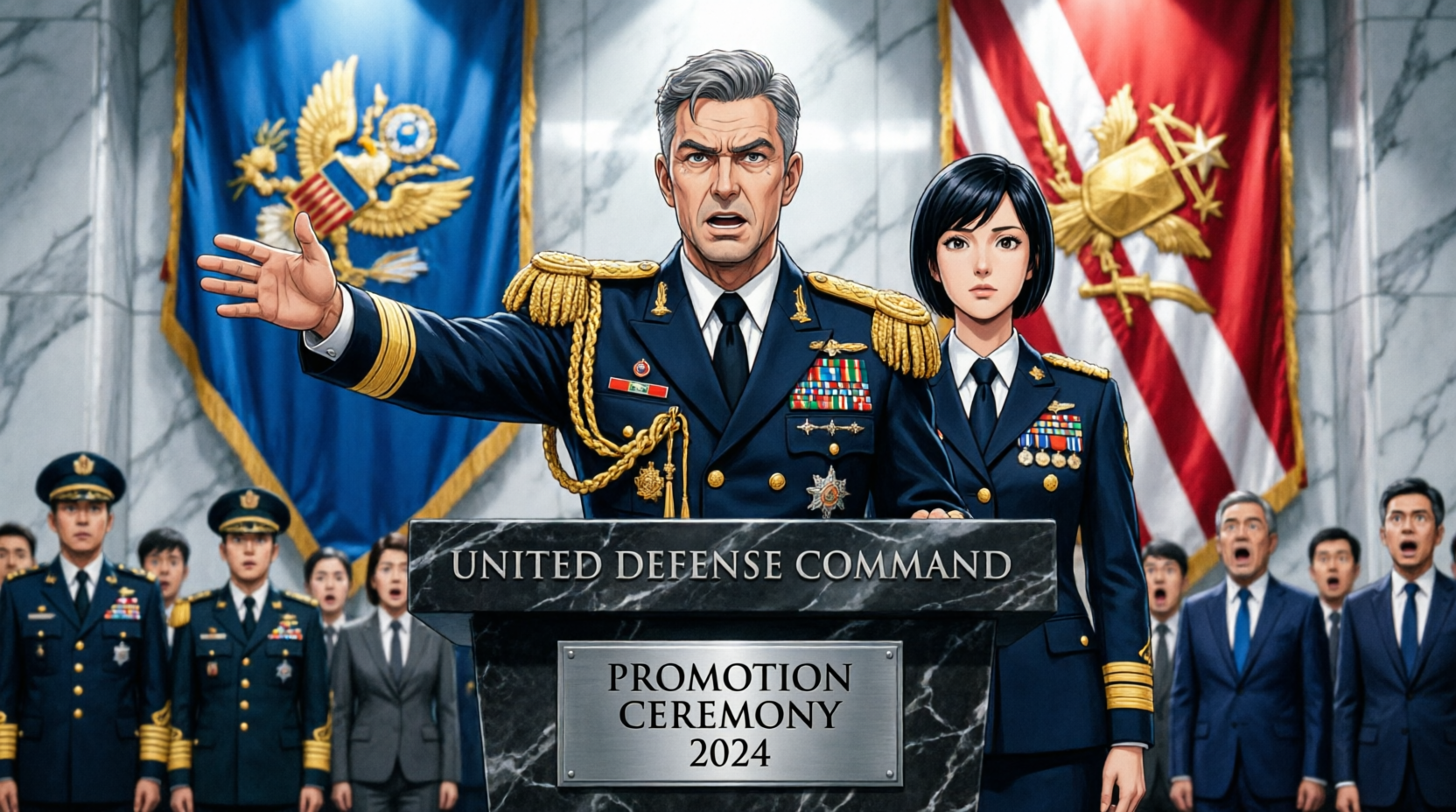
At exactly 1000, the master of ceremonies stepped to the podium.
“Ladies and gentlemen, please rise.”
The room stood. Colors were presented. The anthem played. People sat.
Routine acknowledgments came first. Unit commendations. Farewell thanks to outgoing personnel. Standard transitions. Enough ceremony to lull the unprepared into thinking they understood the shape of the morning.
Then the emcee said, “Please welcome General Marcus Thorne.”
Every soldier in the room rose instantly.
So did I.
General Thorne carried authority the way some men carry weather—effortlessly, permanently, with no need to announce it. Four stars. Quiet command. The kind of presence that changed a room before he spoke.
“Be seated,” he said once he reached the podium.
The room obeyed.
“We are not gathered here today for a retirement.”
I saw Sabrina’s phone pause in her hand.
“We are not gathered for a routine service commendation.”
My father frowned. My mother shifted.
“We are here to publicly recognize a career that has remained largely invisible by necessity.”
The auditorium went so still I could hear a chair settle at the back.
“For eight years,” General Thorne continued, “one officer in this command structure has served inside intelligence channels requiring complete discretion. No public accolades. No media profile. No explanatory interviews to satisfy curiosity. That invisibility protected operations. It also concealed extraordinary achievement.”
My parents were staring at the stage now.
Sabrina had lowered her phone.
“This officer has led multinational coordination across multiple theaters, disrupted hostile supply lines before they reached American personnel, and played a decisive role in identifying threats before they crossed into domestic channels.”
A ripple moved through the uniformed rows—the subtle response of people who knew the work, if not the details.
“Inside certain circles,” he said, “this officer has sometimes been referred to by an operational nickname.”
He glanced toward the wing.
“The Ghost.”
The word moved through the auditorium like a current.
“Today,” he said, “we use her name.”
He stepped slightly back from the podium.
“Major General Audrey Vance.”
It is strange how silence can be louder than applause.
For one perfect second, the whole room stopped breathing.
Then every soldier rose as one.
Boots struck floor. Seats snapped upright. Uniforms shifted. Metal glinted. Not applause yet. Respect first.
I stepped onto the stage.
The lights were cool and bright. The air felt almost cold against my face after the warm auditorium. I walked to center stage and stopped. General Thorne faced me.
“Congratulations, Major General.”
The title echoed.
Not logistics. Not support staff. Not “some kind of Army thing.”
Major General.
In the third row, Sabrina stood half a second too late, as if her body had obeyed before her mind could object. My mother’s hand flew to her mouth. My father went still as stone.
The citation began.
Not every detail could be spoken aloud. Much of my work would remain where it belonged: classified, unattributed, buried inside briefings and after-action reports. But enough of it could be named to redraw the map my family had been using for years.
Strategic intelligence integration.
Operational command across multiple theaters.
Oversight of sensitive supply chain evaluation.
High-level procurement compliance review.
That last phrase hit Sabrina hardest. I watched it happen.
Her posture changed by degrees. Shoulder tension. Chin lowering. Eyes narrowing in fast, silent calculation. She was trying to catch up to a truth that had already outrun her.
General Thorne stepped forward and pinned updated insignia. The metal was cool for an instant, then warmed against the fabric. He shook my hand and murmured, “Well earned.”
“Yes, sir.”
The applause came then—disciplined, measured, and real.
When I stepped to the podium, the microphone carried the faint metallic smell of too many rehearsed speeches. I adjusted it once.
“When you work in intelligence,” I said, “you become familiar with not explaining yourself.”
My voice carried cleanly through the hall.
“You get used to being misunderstood. You get used to people assuming your work is small because it isn’t visible.”
I didn’t look at my family. Not yet.
“You also learn something else. Records matter. Integrity matters. Clean documentation matters.”
That sentence moved through the room in a different way. Not as reflection. As direction.
In the third row, Sabrina had lifted her phone again.
Of course she had.
Already trying to salvage the moment. Rebrand it. Own it. I could nearly see the caption forming behind her eyes: Proud family day. My sister honored. Legacy. Service. Love.
I finished briefly.
“I served in silence because the mission required it,” I said. “Today I stand here not because I was seen, but because every decision I made could survive scrutiny.”
I stepped back.
General Thorne returned to the microphone, resting both hands lightly on the podium.
“There is one additional matter to address.”
The room shifted.
Not noisily. Not with gossip. With attention.
“This command,” he said, “also oversees strategic procurement review for critical defense supply channels. Recently, a private vendor submitted a proposal seeking significant medical distribution access.”
Sabrina’s phone lowered.
“Independent compliance screening on that proposal identified serious financial irregularities requiring formal review.”
My mother looked confused now. My father looked at me, then at Sabrina, then back at the podium.
General Thorne turned a page.
“I am informed that the vendor’s Chief Financial Officer is present.”
He lifted his gaze.
“Miss Sabrina Vance.”
The phone slipped out of her hand and cracked against the auditorium floor.
No one bent to pick it up.
Sabrina stood there staring at the stage with all the color draining out of her face, understanding at last that the room she thought she had come to evaluate had already been evaluating her.
General Thorne’s voice remained perfectly steady.
“Miss Vance, you submitted the proposal personally, did you not?”
She swallowed. “Yes.”
“An ambitious proposal.”
She clutched at confidence. “Thank you, General. We stand by our numbers.”
“I’m sure you do.”
He let the sentence settle.
“What you may not have been informed of is that final compliance oversight for this procurement channel falls within Major General Audrey Vance’s broader command authority.”
The room went still again.
I saw the exact second realization landed. Not only had she walked into my ceremony. She had walked into my arena.
General Thorne continued, “Upon recognition of a personal conflict, Major General Vance recused herself from direct review, as required. Independent audit proceeded without her involvement.”
That mattered. I wanted it on the record in front of everyone.
This was not revenge.
This was structure.
“That audit,” he said, “identified documentation inconsistencies, capitalization discrepancies, and an identity-linked financial instrument connected to the submitting CFO’s digital network.”
Sabrina found her voice. Barely.
“That’s a misunderstanding.”
General Thorne did not raise his tone. “This is neither the time nor the venue for argument.”
The sentence hit so cleanly it felt like glass breaking somewhere invisible.
“The proposal is suspended pending federal review.”
My father half rose from his seat and sat again. My mother gripped the armrests so tightly her knuckles blanched.
Sabrina turned toward me, no longer smiling, no longer polished, only exposed. “You did this.”
I looked at her from the stage.
“No,” I said. “You did.”
The applause that followed was not for her downfall. It was the formal close of the ceremony. Controlled. Professional. Final.
Then two military police officers entered through the side aisle.
No gasps. No dramatic soundtrack. Just the quiet, unmistakable shift of consequence entering a room.
They stopped at the end of Sabrina’s row.
“Miss Sabrina Vance?”
She stared at them as if her full name had become a foreign object.
“Yes?”
“You need to come with us.”
“For what?”
The taller officer opened a folder.
“Federal investigation regarding procurement fraud, identity misuse, falsified financial documentation, and a false report filed against a federal officer.”
My mother stood so abruptly her chair scraped backward. “There’s some mistake.”
The officer didn’t even glance at her. “Ma’am, please remain seated.”
Sabrina’s head snapped toward me. “Tell them this is a misunderstanding.”
I came down from the stage and stopped in the aisle, not too close, not too far.
“You have influence,” she hissed. “Do something.”
That was the saddest thing she had ever said to me. Not because it was desperate. Because it was honest. She truly believed authority existed to protect insiders from consequences. That was the family religion in a single sentence.
I shook my head.
“In the Army,” I said quietly, “betraying your own team is the unforgivable part.”
My father had reached the aisle now. “Audrey,” he said, voice rough. “She’s your sister.”
“She forged my identity.”
“She was under pressure.”
“She filed a false armed-threat report.”
My mother grabbed my arm. “Please. We can fix this privately.”
I looked at her hand on my sleeve, then at her face.
“There is no private version of fraud involving federal systems.”
Sabrina shook off the MP’s hand and pointed at me. “You always wanted to humiliate me.”
“No,” I said. “I wanted to be left intact.”
For the first time in my life, I watched a room refuse to rearrange itself around Sabrina’s feelings.
The MPs secured her hands. No roughness. No spectacle. Just procedure.
She looked at me all the way down the aisle, waiting for me to become the person she thought I was—the girl who would absorb damage to keep the family image unbroken. The girl who would say enough now, that’s my sister, let’s not ruin her future.
I didn’t move.
The doors closed behind them.
And just like that, the performance was over.
Outside the auditorium, after the guests had gone and the final handshakes were done, my parents waited near the exit.
My mother looked hollowed out. My father looked older than he had that morning, as if the past two hours had forced time through him.
“We were wrong,” my mother said.
No excuses. No careful phrasing. Just late truth.
My father stared past me at the parade field. “We didn’t understand.”
“You didn’t try to.”
Neither of them argued.
A week later, Lena handed me an envelope across her desk.
“We recovered the original estate copy,” she said.
The paper was thick, official, unremarkable in every way except what it held: my grandfather’s signature, the correct witness dates, and a clear line leaving the house to me.
I ran my thumb once over the edge of the document.
“So the later version?”
Her mouth tightened. “Let’s say it has authentication problems.”
I looked at the will again and felt something colder than anger settle in my chest.
Sabrina had not only gone after the living.
She had gone after the dead.
The next six weeks were a study in how slowly truth moves when it has to pass through official hands and how fast lies collapse once they are forced to stand on their own.
The loan tied back to Sabrina’s device. The digital signature analysis confirmed irregular formation patterns. The false police report traced to her phone. The estate revision failed authentication review. Witness statements shifted. A junior employee from her firm quietly admitted to being told the paperwork was “family-approved.” The federal procurement suspension became a full investigation.
Sabrina’s company unraveled faster than her legal defense did.
Investors pulled out. Board members resigned. The polished language from her celebration party—scalability, leverage, growth phase, strategic bridge—turned out to mean what such language often means when stripped of lighting and confidence: debt, panic, and smoke.
The day the court formally restored the house to me, I stood on my grandfather’s porch with the returned key in my hand and felt less triumph than I would have imagined. The lock still stuck the same way. You had to turn it backward a fraction before it would open.
Inside, the air smelled like old wood and long-shut rooms. Dust floated in the afternoon light. The wall Sabrina wanted knocked down still stood exactly where it belonged.
I walked from room to room slowly.
Living room. Den. Kitchen with the ugly yellow tile my grandfather insisted on keeping because it “worked just fine.” The upstairs bedroom where I used to sleep during college breaks. The narrow hall closet where his toolbox had once lived before my mother dropped it in a trash bag.
I found the toolbox in the garage later that day.
She must have changed her mind before throwing it out.
Or perhaps even she had limits.
My mother visited two days later with a plastic storage bin full of holiday linens and a face that looked ten years older in the doorway than it ever had in her own house.
“I left a few things,” she said. “May I put them in the closet?”
I let her in.
The house seemed to change around her, becoming more honest somehow, less curated, exposing all the places where life had actually happened.
She set the bin on the floor and stood in the kitchen for a moment looking at the counters, the old cabinets, the sunlight over the sink.
“You haven’t changed much,” she said.
“It’s been forty-eight hours.”
She nodded.
Then she turned toward me and said the one sentence I had waited years to hear and no longer needed.
“We failed you.”
I said nothing.
“We always told ourselves you were stronger,” she continued. “Less breakable. Easier to disappoint because you could take it.”
“Yes,” I said. “That was convenient.”
She flinched, tears filling her eyes, but she kept going. “I’m not asking you to forgive us.”
“Good.”
She folded her hands tightly. “She’s still your sister.”
“No,” I said. “She’s still your daughter.”
That landed.
“I watched her take your things,” my mother whispered. “I told myself it was temporary. That we’d sort it out. That nobody really meant…”
“Nobody really meant what?” I asked. “The fraud? The false report? The theft? The rain?”
She closed her eyes.
I didn’t yell. I didn’t need to. Precision was enough.
“I am not helping her,” I said. “I am not calling anyone. I am not writing letters. I am not making what she did smaller so you can survive it emotionally.”
My mother nodded once, slowly, as if each word had weight.
When she left, the house felt quieter.
Not emptier.
Truer.
Three days later I met Daniel Mercer on the porch.
Lena had suggested him when I mentioned, half joking, that I had inherited more rooms than I knew what to do with. He ran a veteran transition nonprofit across the county line and had the kind of calm that only shows up in people who have already survived whatever they’re not talking about.
Former Army medic. Civilian now. Practical boots. Weathered face. Eyes that paid attention without prying.
He stepped onto the porch and gave the swing an experimental push. It creaked alarmingly.
“This thing sounds mutinous,” he said.
“It always did.”
We walked through the house together. He didn’t comment on the sentiment first. He commented on function.
“The downstairs room could be made accessible.”
“The den could become a counseling space.”
“Upstairs front bedroom would work for short-term housing.”
“Kitchen’s dated, but usable.”
“Good bones.”
In the back room he turned and asked, “Why keep it?”
I looked around. Light through old blinds. Dust in corners. The faded outline on the wall where my grandfather’s bookshelf had stood for years.
“Because he wanted it to matter,” I said. “And because I’m done letting it be used for the wrong thing.”
Daniel nodded once. “That’s enough reason.”
By the end of the month, the porch swing had been repaired. The gutters replaced. The downstairs guest room painted a soft gray-blue meant to settle nervous systems rather than impress visitors. We restored the den instead of opening it. I put my grandfather’s fishing photo back over the mantel. I hung the dried funeral flag in a shadow box in what became the office.
The house turned into a short-term transition retreat for veterans and service members navigating life after injury, discharge, burnout, or bureaucratic freefall. Not a grand institution. Not a glossy charity fantasy. Just a practical, steady place with legal resource referrals, job counseling, quiet rooms, peer dinners, and doors that locked.
The first resident arrived on a Thursday with a duffel bag small enough to make me ache.
Most transitions fit inside too little luggage.
That evening, after Daniel showed him the downstairs room, I stood in the kitchen listening to unfamiliar footsteps move overhead. The house did not resist. It seemed, if anything, relieved.
A week later, a letter arrived at the office.
Return address: county detention facility.
Sabrina’s handwriting was unmistakable.
I left it unopened until sunset, then sat at the desk under the shadow box holding my grandfather’s flag and slit the envelope open with a kitchen knife.
The first line read: I need you to tell the truth for once.
I laughed aloud at that.
Then I read the rest.
It was exactly what I should have expected: pressure, blame, revision, family context, business stress, misunderstood intent. She never used the word sorry in any way that belonged to me. She used the word unfair three times.
A second letter came four days later. Then a message relayed through my mother asking if I would consider visiting.
I ignored the first two. Then, one Wednesday afternoon, I drove to the detention facility anyway.
Not because I owed her anything.
Because endings are easier when you stop imagining the other person might suddenly become someone else.
The visitation room was cold enough to keep everyone slightly uncomfortable. Gray walls. Bolted chairs. Sanitizer in the air. Bad coffee from a vending machine somewhere outside the double doors.
Sabrina came in wearing county khaki and no makeup, which made her look less glamorous and somehow more herself. Stripped of polish, there was still the same sharpness around the mouth, the same restless intelligence in her eyes, the same refusal to soften first.
She sat across from me and laughed once under her breath. “Wow. You actually came.”
“I had time.”
She folded her hands. “Still efficient.”
I said nothing.
She exhaled. “They’re making me sound like some criminal mastermind.”
“You forged documents.”
“I made bad decisions.”
“You made deliberate decisions.”
She leaned forward. “I needed a bridge loan.”
“You needed my identity.”
“I needed the company to survive.”
“You needed someone you believed wouldn’t fight back.”
Her jaw tightened.
For a moment she looked tired enough to be honest. Then she chose pride instead.
“You don’t understand the pressure I was under,” she said. “You disappeared into this world where rules are everything. Some of us had to stay here and deal with actual life.”
I looked at her steadily. “Actual life doesn’t include stealing from family because you think they won’t matter.”
“You left!” she snapped.
There it was.
The real wound, or at least one version of it.
“You left and everything in this family bent around your absence,” she said. “The calls. The fear. Grandpa asking about you. Mom crying every time there was a news alert. Even when you were gone, you took up space.”
I let that sit for a moment.
Then I said, “And that made you angry.”
Her face flickered.
“It made me invisible.”
There was truth in that. Not enough to save her. Not enough to excuse anything. But enough to explain the flavor of the damage.
“You were never invisible,” I said. “You were centered. You just couldn’t stand that one thing in this family wasn’t about you.”
She looked away first.
Somewhere behind us another visitor started crying softly. A guard shifted his weight near the wall.
“My lawyer says a statement from you would help,” Sabrina said finally.
And there it was. The reason for the letters. The reason for the visit.
“No.”
“You haven’t even heard the ask.”
“I don’t need to.”
“She says if you explain the family situation, the stress, the misunderstanding with the contract—”
“It wasn’t a misunderstanding.”
Her voice sharpened. “You are unbelievably rigid.”
“No,” I said. “I’m unbelievably done.”
She stared at me.
“Mom is falling apart,” she said.
“That’s between you and Mom.”
“Dad won’t say it, but he’s ashamed.”
“That’s between you and Dad.”
“And us?”
I looked at her for a long moment.
“There is no us.”
That one reached her.
Not because she loved me in any useful way. Because she finally understood the door she kept pushing against was not stuck.
It was closed from my side.
The guard called time a minute later.
She stood. “You always wanted to win.”
I rose too. “No,” I said. “I wanted not to be collateral.”
I left without looking back.
The sentencing hearing came in November under fluorescent lights and a sky threatening rain that never fell.
Courtrooms flatten people. Even beautiful ones. Especially beautiful ones. Sabrina wore a tailored gray suit and tried to hold herself like a woman trapped in a misunderstanding rather than a woman standing inside the shape of her own choices. My parents sat behind her, smaller than I had ever seen them.
The prosecutor spoke in clean lines. Identity misuse. Fraudulent loan. False police report. Misrepresentation in procurement filings. Estate interference indicative of pattern.
Patterns matter in court.
Sabrina’s attorney talked about pressure, rapid growth, family confusion, emotional strain. He said family so often it almost sounded like a plea for exemption.
Then the judge asked if there was a victim statement.
Lena glanced at me. I stood.
The courtroom smelled like paper, old wood, and toner. I rested my hands lightly on the lectern.
“My sister did not make one reckless mistake,” I said. “She made a series of calculated choices. She studied my records. She used my identity. When confronted, she minimized it. When legal scrutiny approached, she escalated by filing a false armed-threat report. She interfered with my grandfather’s estate. None of those actions were impulsive. They formed a pattern of entitlement built on the belief that family could be exploited without consequence.”
The judge watched me closely.
“I am not here asking for cruelty,” I said. “I am asking for accuracy.”
I stepped back.
That was enough.
The sentence wasn’t cinematic. Most real consequences aren’t. Structured custodial time on the fraud counts. Restitution. probation conditions. Restrictions on future financial authority. Permanent federal contracting disqualification. Licensing review referrals. Boring language. Life-changing effect.
My mother cried. My father didn’t.
Sabrina turned once before the deputies led her through the side door, and there was anger in her face but not surprise anymore. Even she understood by then that the story had ended.
Outside, my parents caught up to me on the courthouse steps.
“We know we can’t ask much,” my father said.
“Then don’t ask beyond what exists.”
My mother clutched a damp tissue in both hands. “Can we at least visit the house sometime?”
I considered that more seriously than they deserved, not because I owed them anything, but because truth matters more when spoken deliberately.
“It’s not a family house anymore,” I said. “It’s a retreat.”
My mother winced. “That’s not what I meant.”
“I know.”
She looked at me with that raw, late grief people wear when they realize regret is not a key, only a weight. “Is there any path back?”
“There’s a path to civility,” I said. “Not to what we were.”
My father nodded once, slowly, as if he had been expecting exactly that.
I left them on the steps.
By winter, the retreat was nearly always full.
The front room housed a Marine who hated being thanked and loved old western reruns. Upstairs, a former Army specialist slept with the hallway light on for the first ten nights and then, one morning, switched it off and never turned it back. Daniel expanded the programming. Legal clinics twice a month. Resume workshops. Peer meals every Thursday. Quiet hours that were actually quiet. No one here needed to perform being okay in order to deserve a bed.
The porch swing was used more than any other seat in the house.
I kept my grandfather’s toolbox in the hall closet, right where it belonged. The funeral flag stayed safe under glass. The fishing photo watched over the living room again. The yellow tile in the kitchen remained ugly and functional, which I had come to think was one of the noblest combinations a thing could be.
My parents found a new shape around me.
Holiday cards with careful handwriting.
A donation made through the nonprofit without a note.
A box of books left on the porch for the retreat library.
One awkward, quiet visit to deliver winter coats for residents, which I accepted because the coats were useful, not because the gesture repaired anything.
Sparse. Formal. Honest.
As for Sabrina, two more letters came.
I read the first. She blamed the market, our upbringing, pressure, my rigidity, the government, and timing. She never once said I am sorry in a way that acknowledged the damage rather than the inconvenience of consequence.
I did not open the second.
I fed it straight into the office shredder while the old furnace clanked alive for the season. The paper became pale strips and disappeared. It felt clean.
One late October evening, after the last support group had left and Daniel was locking the front door, I stepped onto the porch with a mug of coffee and sat on the swing.
The air smelled like leaves, cold earth, and someone’s faraway wood smoke. Light glowed from the front room window. Inside, two residents were playing cards at the coffee table. One of them laughed. A real laugh. No calculation in it. No teeth.
Daniel leaned against the railing. “You ever miss the noise?”
“Which noise?”
He smiled. “The kind that tells everybody who matters.”
I thought about Sabrina’s parties. Crystal glasses. bright voices. People using success as volume control. Then I thought about operations floors at 0300. Radios clicking alive. Quiet commands. Engines warming in darkness. Men and women doing impossible things without ever needing applause.
“Some noise,” I said. “Not that kind.”
He nodded like he understood exactly what I meant.
We sat there in silence after that.
Not the punishing silence of childhood. Not the operational silence of classified work. Not the silence after betrayal, when every quiet room becomes a courtroom in your own head.
This was a different kind.
Built. Earned. Voluntary.
I looked at the house my grandfather had left me.
Not theirs.
Not hers.
Mine.
Not because a court said so, though it had. Not because I won. The word win felt too loud and too thin for what this actually was.
Victory is noisy. It needs witnesses. It fades fast.
What I had felt steadier.
I had let the truth run on its own legs.
I had not bent facts to save faces.
I had not mistaken blood for loyalty.
I had not forgiven what should never have been offered up for forgiveness.
My sister mocked my eight years in the Army. She mocked the pay, the distance, the silence, the uniform, the parts of my life she thought existed below her field of vision. She introduced me to strangers as a cautionary tale while wearing a white dress and drinking champagne in my parents’ living room.
Then she walked into a military auditorium expecting to watch me close a chapter, and instead heard the room speak my real name.
Major General Audrey Vance.
She froze.
And in the end, that wasn’t the most satisfying part.
The most satisfying part was this:
When the applause ended, when the investigation moved, when the courts finished with her and my family’s excuses finally thinned into silence, I still had something she never managed to build.
A life that could withstand inspection.
A record that held.
A house restored to purpose.
A peace that did not depend on anyone finally admitting I deserved it.
The porch swing creaked once beneath me. Inside, someone set down a mug on wood. A door clicked softly upstairs. The old house breathed around the living instead of being staged for the ambitious.
I wrapped both hands around the warm coffee cup and looked out into the dark line of trees beyond the yard.
For the first time in a long time, nothing in me felt like I was just passing through