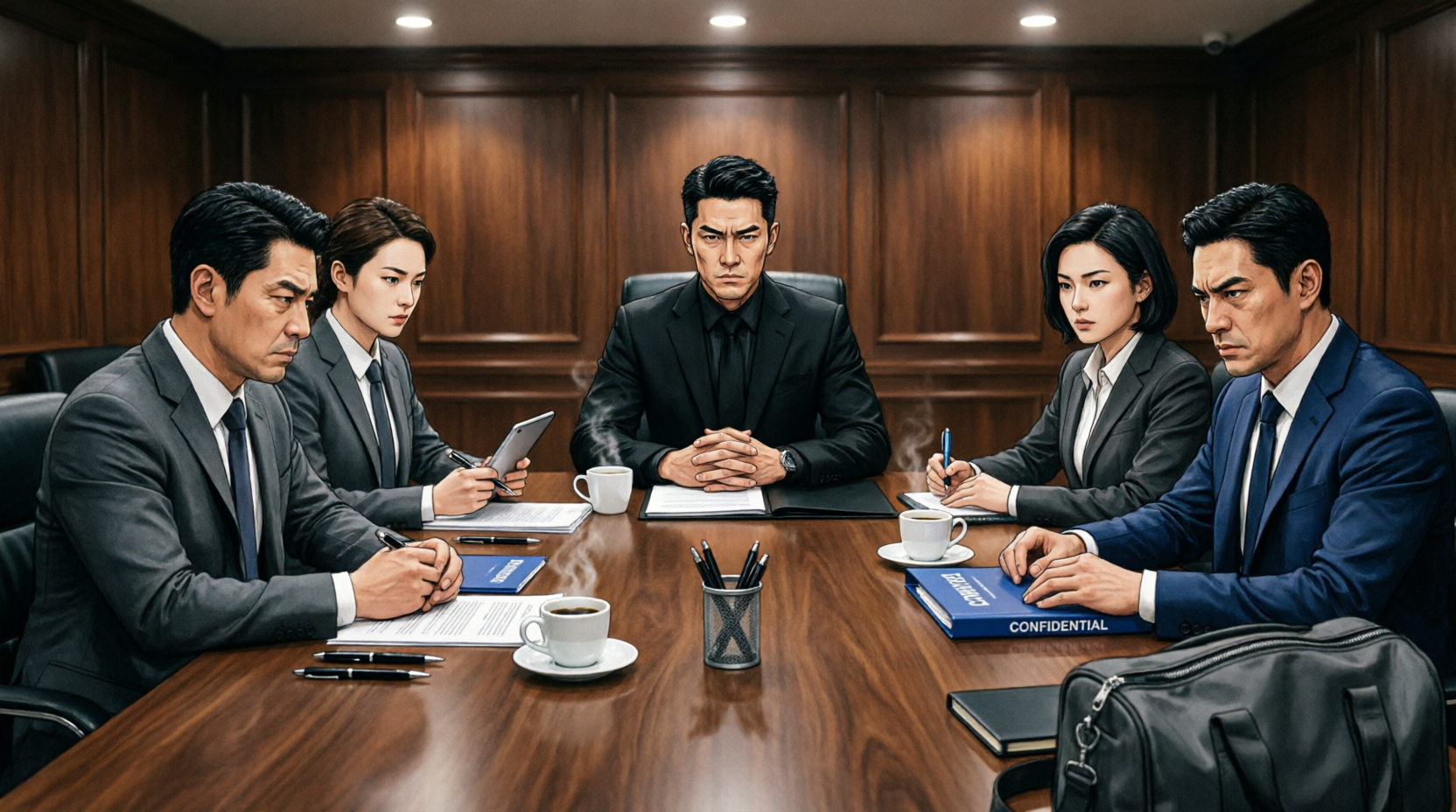
They were ready for me to break.
They were not ready for silence.
So I stood, picked up the old canvas bag, took the envelope, and walked out of that room with less than my grandfather used to tip waiters at Christmas.
The drive to the cabin felt longer than I remembered, though maybe it only felt that way because I had nowhere else left to go.
Highway became county road. County road became gravel. Gravel became dirt. By the time I reached the gate, my phone had already lost service.
The lock jammed twice before the key finally turned.
When I pushed the door open, it groaned like it resented being disturbed.
The smell hit first.
Cedar dust. Cold stone. Old canvas.
It wasn’t pleasant.
But it was honest.
The cabin didn’t pretend to love me while reaching into my pocket.
Inside, everything sat where memory had left it. Cast-iron stove in the corner. Narrow bed frame. Cracked enamel sink that hadn’t seen running water in years. My grandfather’s workbench beneath the window. A faded landscape hanging crooked on the back wall. Three tins of nails beside a lantern and a box of matches that looked older than I was.
It was worse than I remembered.
And somehow better.
Because nothing here was fake.
That first night, I slept in my coat under two army blankets and woke at dawn with my teeth aching from the cold. The next days blurred into the practical misery of claiming a place no one wanted. I cleared mouse droppings from the cupboards, found old coffee mugs wrapped in newspaper, drove into town for soup, batteries, and lamp oil, discovered my grandfather’s dented thermos under the bed.
On the fifth day, I noticed something strange.
One wall sounded different.
Not dramatically. Just a little hollow when the wind pushed against it from the west.
I ignored it at first.
Because I wasn’t ready to start looking for meanings I couldn’t yet name.
Then the rain came.
Hard and steady, the kind that makes a place like that feel smaller with every passing hour. I couldn’t sleep, so I got up, lit the lantern, and began fixing little things just to keep my hands occupied.
That was when my eyes landed again on the painting.
It had bothered me from the first day.
Not because it was crooked.
Because it was wrong.
The angle wasn’t natural. One side sat too low, like someone had taken it down and rehung it quickly.
I stood there a long moment.
Then I reached up and lifted it from the hook.
Behind it was a recess cut into the wall.
Inside it sat an envelope.
Thick. Cream-colored.
My grandfather’s handwriting on the front.
My name.
And beneath it, one sentence.
Open this after they think they’ve won.
I didn’t open it immediately.
I sat on the edge of the bed, lantern flickering near my knees, rain striking the roof like fists. The envelope felt heavier than paper had any right to feel.
Open this after they think they’ve won.
I read it once. Then again.
It didn’t feel sentimental.
It felt like instruction.
Like a trigger being handed to me after the mechanism was already set.
Finally, I broke the seal.
Inside were four handwritten pages, a folded survey map, and a small key taped to an index card.
The card said only three words:
Not the cabin.
My stomach tightened.
I unfolded the letter.
“Claire,” it began. “If you are reading this after Robert and Helen left probate smiling, then the hearing went exactly the way I expected.”
I stopped breathing for a second.
He knew.
Not suspected. Knew.
The letter went on.
“Let them have the loud things. The house. The truck. The fields they think they understand because they can point at them from the road.”
I could hear his voice as I read it, calm and deliberate.
“The cabin was never the gift. It was the cover.”
I read that line twice.
Then again.
The cabin wasn’t the inheritance.
It was the disguise.
A decoy.
Something left in plain sight so everyone would stop looking.
Three years earlier, he wrote, after my father had started talking about his death like it was a scheduling matter, he had moved the only thing that mattered out of probate.
Quietly.
Because, as he put it, quiet paper lasts longer than family promises.
He ordered me not to call my parents, not to call the attorney, not to tell anyone anything until I had the full packet in front of me.
Then came the next instruction.
Lift the stove plate.
My pulse didn’t race. It steadied.
I crossed the room, knelt by the cast-iron stove, and found the metal plate on the right side. It resisted at first, then came loose with a sharp scrape.
Underneath sat a black tin box.
Waiting.
Inside were documents, two more keys, and a survey map folded so many times it was nearly rigid.
The first page I opened was a trust certificate.
Not probate language.
Not inheritance language.
Ownership outside the story my parents thought they had won.
At the top: Carter Ridge Land Trust.
My grandfather listed as trustee.