My ambitious sister wed my ex, confident she would inherit his $400 million fortune. Mere days later, he passed away unexpectedly. Following the funeral, she claimed everything as his widow—until the will was read. His arrangements stunned everyone present and left her utterly speechless.
My sister had always possessed a hunger for things that were never meant for her.
It wasn’t merely a matter of finances. It was the craving for attention. The need for applause. The desire for that extra look across a crowded Thanksgiving table. She had a way of quietly claiming compliments intended for others as if they were her own. We were raised in a quiet, unassuming suburb outside Hartford, Connecticut. Our parents led stable, conventional lives—Dad was involved in municipal planning, while Mom spent her days teaching third grade. We weren’t wealthy by any stretch, but we lived comfortably.
Even so, Vanessa viewed the lives of those around her like displays in a high-end storefront, acting as though she possessed every right to shatter the glass and take what she wanted.
When I married Daniel Hartwell at the age of twenty-six, she pulled me into a hug during the reception and whispered, “You always managed to land on your feet, don’t you?”
On the surface, it sounded like a kindness.
It was anything but.
Back then, Daniel wasn’t worth four hundred million dollars.
He was simply a talented software engineer possessed by a relentless drive and a stubborn streak of focus. He spent his hours in a rented office characterized by exposed brick and furniture bought at secondhand shops. I sat beside him through countless investor pitches where the room barely paid attention. I stood by him when his first major product crashed and burned. We shared takeout meals on the floor of our apartment because spending money on a sofa felt like an act of financial irresponsibility.
I loved him during the years when his suits were plucked from clearance racks.
Vanessa only started appearing more frequently years later—after Daniel’s firm went public and the news headlines began attaching figures to his name that felt entirely fictional.
Four hundred million dollars.
The transition hadn’t been overnight, yet in retrospect, it felt instantaneous. The IPO redefined our entire existence. Our living situation changed. Our social circle underwent a massive shift. We started receiving invitations from people who hadn’t bothered to remember our birthdays just a few years prior.
Vanessa was paying close attention.
Her visits grew more and more common.
She began laughing just a bit too enthusiastically at Daniel’s anecdotes. She would lightly graze his arm whenever they spoke. She frequently brought up how she “understood the immense pressure of high-level success,” despite the fact that she had never managed to hold down a steady job for a significant length of time. I tried to convince myself that I was being paranoid. I told myself that sisters simply don’t betray one another in that fashion.
Mine, however, did exactly that.
The dissolution of my marriage happened with brutal speed.
Daniel sat across from me at our expansive marble kitchen island—the one he had insisted on installing shortly after the IPO—and couldn’t bring himself to meet my gaze.
“I’m just not happy anymore,” he muttered.
That was the extent of his explanation.
A mere three months after the divorce papers were finalized, Vanessa married him.
Three months.
She walked down the aisle in an ivory gown designed specifically to seize the room’s attention. Their ceremony took place at a lavish vineyard in Napa Valley. The pews were filled with venture capitalists; our family was conspicuously absent. I was sent an invitation, but I chose not to attend.
Nevertheless, I couldn’t escape the photographs.
She clung to him in every shot like a trophy she had finally secured.
In a brief video clip shared on someone’s Instagram story, I caught her saying, “Life has a way of rewarding the bold.”
Bold.
I suppose that is one way to characterize her actions.
A few days later, my phone vibrated on my nightstand at 5:12 a.m.
Calls that come before the sun rises are never the bearers of good tidings.
It was Daniel’s chief of staff on the line.
“There’s been an incident,” he informed me.
By six o’clock, the news had hardened into an unchangeable reality.
A heart attack.
He was forty-two.
There had been no warning signs.
He was gone.
Before noon, financial networks were already broadcasting tributes to his career. Market analysts began speculating on how the stock would react. Commentators spent the hour debating succession strategies for his company.
Vanessa made her appearance outside the hospital draped in oversized sunglasses and black silk.
The picture of the grieving widow.
The funeral took place in Manhattan at a historic chapel that smelled faintly of aged wood and incense. A long line of black cars stretched down the block. From a respectful distance, cameras flashed intermittently.
The pews were packed with high-ranking executives and hungry investors.
I took a seat in the very back row.
Vanessa was dressed in perfectly tailored black, her jewelry kept to a minimum, every hair on her head precisely in place. Her mourning appeared meticulously curated. When her eyes eventually found mine, her expression shifted—it wasn’t a look of grief, but one of cold calculation.
Once the service had concluded, she walked over to me.
“Emily,” she murmured softly, placing a manicured hand on my forearm. “I realize how incredibly difficult this must be for you.”
The scent of her perfume was suffocating.
“I’ll personally ensure that you are looked after,” she continued. “I’m a generous person by nature.”
I didn’t attempt to argue. I didn’t feel the need to point out how quickly she had moved into my place.
I only replied, “You were always someone who craved the spotlight.”
Her thin smile wavered for a second.
A week later, a group of us assembled at Daniel’s longtime legal firm, in a room overlooking Central Park.
Vanessa sat at the head of the long conference table, carrying herself as if she were already the chair of the board.
“Let’s get this started,” she announced as the lawyer entered the room. “I have several meetings to get to.”
The reading began with the routine bequests.
Millions were designated for various charities. Bonuses were allocated for the long-term staff.
Vanessa hardly seemed to be listening.
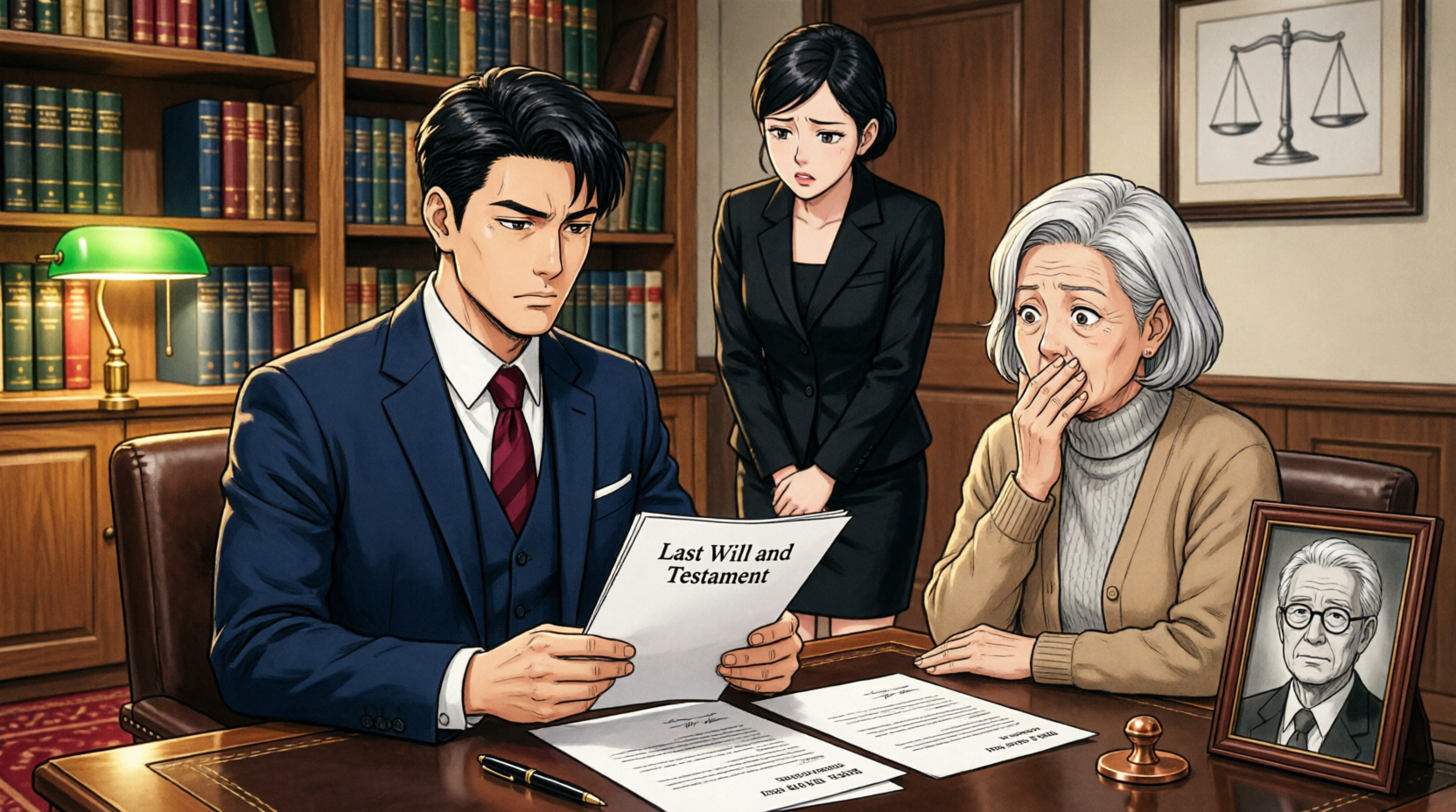
Then, the lawyer unfolded a specific letter.
“To my wife—and yes, I mean my wife, regardless of what the current law might say—”
Vanessa visibly stiffened in her chair.
“My marriage at the very end of my life was a profound error that I realized far too late. It was a union entered into under the weight of deception, immense pressure, and naked greed.”
Her hand slammed down against the table.
“To my former wife, the only person who truly loved me when I had absolutely nothing to my name—”
Vanessa’s head whipped around, her eyes boring into me.
“The entire balance of my estate has been moved into a protected trust,” the lawyer continued without emotion. “The sole beneficiary is Ms. Emily Hartwell.”
He used my former married name.
Vanessa sat there, staring in utter disbelief.
“I am his legal wife,” she hissed.
“You will receive exactly what the law mandates,” the lawyer responded.
He turned the page.
“One dollar.”
The silence in the room was suffocating.
“There is also a specific condition,” he added. “Should the current spouse attempt to contest the validity of this will, all remaining legal entitlements are immediately forfeited, and the documentation contained in Appendix C will be handed over to the relevant authorities.”
Vanessa’s face went bone-white.
It was clear she knew exactly what he was referring to.
She stood up and walked out without uttering another word.
Once the room had emptied, the lawyer handed me a smaller, private envelope that Daniel had specifically requested be given to me in confidence.
Inside was a short note.
I betrayed you. There is no way for me to undo that. But I can at least prevent my final error from destroying whatever shred of decency I have left.
I didn’t feel a sense of triumph.
I only felt a sense of closure.
Vanessa never made a move to contest the will.
She knew she couldn’t.
Within a few months, the luxury penthouse was sold. The expensive SUV vanished. The high-society invitations stopped arriving.
The headlines eventually moved on to someone else.
I went back to Connecticut for a period of time. I spent my afternoons sitting on my parents’ porch, listening to the sound of the cicadas as the sun went down. I tried to reconnect with the person I had been before the money had made everything so complicated.
Two months later, Vanessa reached out to me.
The boldness in her voice had completely evaporated.
She drove herself to Connecticut to see me.
Her designer wardrobe looked frayed and worn. Her eyes were heavy with exhaustion.
She wanted to know the contents of Appendix C.
“I’ve never even opened it,” I confessed to her.
A look of pure terror crossed her features.
Slowly, the reality of the situation came to light.
She had siphoned twenty-two million dollars out of Daniel’s personal accounts. She had dressed it up as “investments” and “tax strategies.” But he had caught on. He had been in the process of planning to annul the marriage on the grounds of financial fraud.
She insisted she hadn’t intended to cause any harm. She claimed she had merely introduced him to certain “health consultants.” She tried to argue that she had been unaware of his pre-existing heart condition.
Whether it was a result of genuine ignorance or total recklessness, the damage was already done.
“I need you to protect me,” she finally whispered.
“I won’t open Appendix C,” I told her. “But I’m not going to be your shield, either.”
She left looking smaller and more defeated than I had ever seen her.
I later had the lawyer confirm the contents for me: Appendix C consisted of a mountain of documentation regarding those financial transfers and several investigative reports. There was no evidence suggesting foul play regarding Daniel’s passing. There was only undeniable proof of her manipulation.
I decided to keep it sealed.
Rather than pursuing revenge, I chose to build something meaningful.
The Hartwell Innovation Grant began funding university scholarships and critical cardiac research. The wealth became a tool for progress rather than a symbol of status.
A few months later, the authorities launched an investigation into Vanessa’s offshore accounts. It wasn’t triggered by Appendix C—it happened because her own business associates had been careless.
She managed to avoid a prison sentence through restitution, but it cost her everything she had left.
The luxury was replaced by a mountain of debt.
Years went by.
I happened to see her once in a grocery store back in Connecticut. The couture was gone. The sunglasses were missing.
“Why didn’t you ever open that envelope?” she asked me.
“Because I didn’t need to,” I replied.
“You had the power to ruin my life,” she said.
“You managed to do that all on your own.”
She gave a small nod.
“I always grew up thinking that winning was about taking,” she admitted.
“That was always your biggest mistake,” I said.
On the anniversary of Daniel’s passing, I made a trip to his grave. I told him that I hadn’t expected him to turn back to me in the end.
But he had done so anyway.
Not out of lingering affection.
But out of a sense of preparation.
Four hundred million dollars felt less like a grand victory and more like a heavy responsibility.
Daniel’s final gesture wasn’t about getting even.
It was about having foresight.
Vanessa eventually moved out of the state entirely. There were no more headlines. No grand attempts at a comeback.
There was only silence.
Appendix C is still held in a secure vault in Manhattan.
It remains unopened.
Because I have learned that sometimes the most powerful action you can take isn’t exposure.
It is restraint.
What was never truly hers
was never actually lost.
And that thought allows me to sleep well at night.