I have been working in gynecology for ten years. I have seen women cry from happiness. Men faint when they hear a heartbeat. Teenage mothers squeezing their mothers’ hands.
Wives alone on a stretcher, pretending it does not hurt that no one is there with them.But I never imagined that one day I would open the file of my three o’clock patient and see the name of the woman my husband swore was “just a friend.” My name is Lucía.
I work at a private hospital in the south of Mexico City. And until that Tuesday, there was still a foolish part of me that wanted to believe in Andrés. Even though he came home late. Even though he showered the moment he walked into the house. Even though he turned his cell phone face down every time I passed by.
Even though that “pregnant friend” called him at any hour and he went out to the balcony to answer. “Poor Sofía,” he would tell me. “She is alone. She has no one to help her.” Poor Sofía.
I even felt sorry for her.
What an idiot I was.
My assistant knocked on the door.
“Doctor, your three o’clock patient is here.”
I read the name on the screen.
Sofía Herrera.
I felt the air get stuck inside me.
It was her.
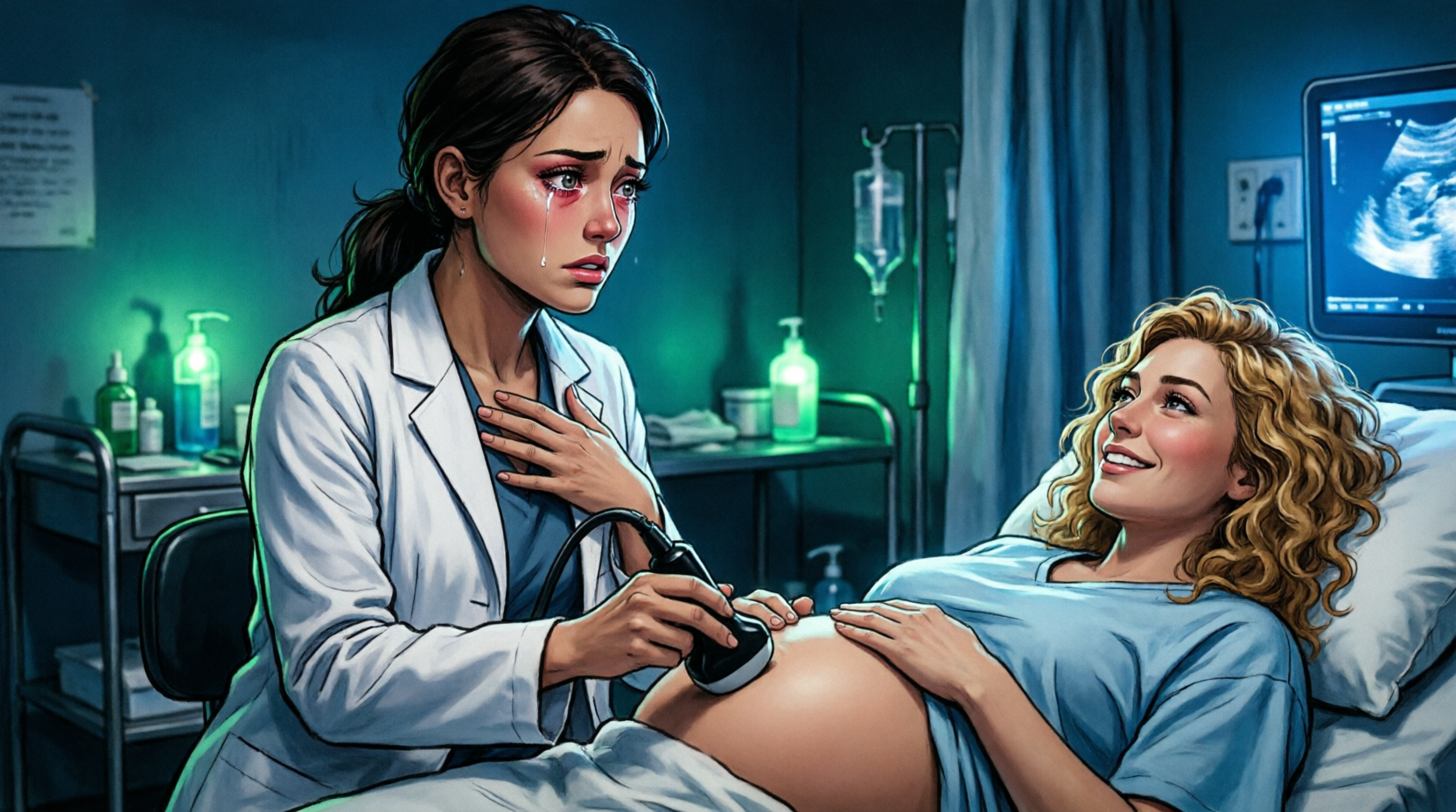
The same woman I once saw from my car, outside a café in Roma, hugging my husband with a tenderness no one gives to a simple friend.
The same one he accompanied to her “difficult appointments.”
The same one who had been stealing pieces of my husband for months while I pretended not to see them so I would not break.
I put on my coat.
I took a deep breath.
I went in.
Sofía was sitting on the examination table, checking her cell phone, wearing a beige dress and that calm face of someone who does not know she is standing in front of her lover’s wife.
“Good afternoon,” I said.
She smiled.
“Good afternoon, doctor.”
She did not even recognize me.
Of course.
Andrés would never have shown her my photo.
To him, I was already the old piece of furniture in the house.
The useful wife.
The one who paid the bills.
The one who did not ask questions if he came home smelling of another woman’s perfume.
“We are going to do the second-trimester ultrasound,” I explained, with the firmest voice I could manage.
She lay back.
I lifted her blouse a little.
I applied gel.
I positioned the probe.
And there the baby appeared.
Small.
Alive.
Moving with strength.
The heartbeat filled the office.
Sofía covered her mouth, emotional.
“Is everything okay?”
“Everything is okay,” I answered.
And I hated myself a little for saying it with tenderness.
Because the baby was not to blame.
The fault belonged to the adults.
To her.
To him.
To me, maybe, for having allowed lies to sit at dinner with me for so many months.
Sofía began to cry softly.
“It is the only good thing that has happened to me,” she murmured.
I did not answer.
I measured.
I noted.
I checked.
I printed the images.
My hands did not tremble once.
That was what frightened me most about myself.
I handed her the results.
“Everything is going well. We will see each other next month.”
She left happy, hugging the photos as if she were carrying a miracle.
I closed the office door and sat there in silence.
I did not scream.
I did not cry.
I only looked at my gloves on the table and thought:
With these same hands, I just cared for the child of the woman who is destroying my life.
That afternoon, I came home late.
Andrés was in the living room, barefoot, looking at his cell phone.
“How was your day, love?” he asked without looking at me.
I stood in the entryway.
“Interesting.”
“A lot of work?”
“Yes. Today I treated an idiot’s girlfriend.”
He let out a distracted laugh.
He did not even lift his head.
That was when I understood that he was not only cheating on me.
He despised me.
That night, while he was showering, my cell phone vibrated.
Unknown number.
I opened the message.
It was a photo.
Sofía and Andrés sitting in a café.
He had one hand on her belly.
She was holding the ultrasound images I had just taken.
Below it was written:
“Sharing the joy with my best friend.”
I froze.
Not because of the photo.
Because of the cruelty.
The next day, another one arrived.
Andrés buying baby clothes.
Then another.
The two of them at the movies.
Another one.
Him kissing her forehead in a restaurant in Polanco.
Each image was a slap.
And every night he came home with the same phrase:
“I am dead tired.”
My birthday arrived on a Tuesday.
I waited for flowers.
A call.
A message.
Nothing.
I had breakfast alone.
Worked alone.
Came home alone.
I bought a small individual cake at a bakery on the corner, put a candle on it, and blew it out in front of the reflection of a woman I no longer recognized.
“I wish to have dignity,” I whispered.
Andrés arrived almost at midnight.
Smelling of sweet perfume.
“I got held up at the hospital,” he lied.
I turned off the kitchen light.
“Today was my birthday.”
He froze.
“Lucía, I…”
“Your little friend sends photos.”
His face changed.
Finally.
“What photos?”
“All of them.”
He denied it.
He swore.
He got angry.
He said I was paranoid.
That Sofía was vulnerable.
That I, as a doctor, should understand.
That was when I stopped listening.
Because when a man betrays you and still wants to give you lessons in compassion, there is no marriage left to save.
Days later, I hired a lawyer.
I requested a transfer to another hospital.
I rented a tiny apartment in Querétaro.
And one morning, while Andrés was “working,” I packed my clothes, my books, my diplomas, and the little peace I still had left.
When he came back, the house was half empty.
“What does this mean?”
“Divorce,” I said. “New city. New life.”
He tried to take me by the arm.
I pulled away.
“Do not touch me again.”
Two weeks later, I was already far away.
I slept on a mattress without a base.
I ate instant soup.
I cried in the shower so the neighbors would not hear.
But I breathed.
That was enough.
Until the nausea started.
First, I thought it was stress.
Then exhaustion.
Then accumulated rage.
But one morning, while I was brushing my teeth, I felt such a strong dizziness that I had to sit down on the bathroom floor.
I bought a test at a Farmacia Guadalajara.
I left it on the sink.
I waited.
Two lines.
Positive.
I felt the world fold in on itself.
It could not be.
Not now.
Not after him.
I went to the hospital as a patient for the first time in years.
I asked for an ultrasound.
I lay on the stretcher, staring at the white ceiling, with my frozen hands resting on my belly.
The doctor moved the transducer in silence.
She frowned.
Then she looked at the screen again.
“Lucía… when was your last period?”
I swallowed.
“About… I don’t know. With everything from the divorce, I lost track.”
She did not smile.
She turned the monitor toward me.
There it was.
A heartbeat.
Strong.
Clear.
But that was not what left me breathless.
It was the estimated date.
The doctor pointed at the screen and said:
—Lucía… this pregnancy is sixteen weeks old.
Sixteen.
I felt like the white ceiling was coming down on me.
It wasn’t from a broken goodbye. It wasn’t from a night of rage. It was from before. From when Andrés still slept beside me. From when I still believed him.
I stared at the heartbeat.
Strong.
Stubborn.
Alive.
“Are you sure?” I asked, even though I knew how to read an ultrasound better than anyone.
The doctor looked at me carefully.
—By biometrics, yes. There’s room, but not that much.
I left the doctor’s office with weak legs and a printed image in my hand. Outside, Querétaro smelled of rain and sweet bread. People were walking toward the Zenea Garden, under the trees, as if the world hadn’t just shattered inside me again.
I sat down on a bench.
A band was playing near the kiosk. A boy was running with a balloon. A woman was selling small, thick pastries wrapped in paper.
All I could think was:
I’m pregnant by the man who broke me.
That night Andrés called seventeen times.
I didn’t answer.
The next morning a message arrived.
“Lucía, the insurance company notified me about your tests. Are you pregnant?”
I stared at the screen.
I wanted to lie.
I wanted to tell him that he had no right.
I wanted to disappear.
But I wrote:
“Yes. And it doesn’t change anything between us.”
He responded instantly.
“I’m going to Querétaro.”
I felt afraid.
Not from him physically.
I’m afraid of hearing his voice again and that some weak part of me might want to believe him.
I sent him my lawyer’s address, not mine.
“Anything, with her.”
For three days I lived as if my body was no longer my own.
I vomited in the hospital bathroom. I treated patients with a smile. I listened to other people’s heartbeats while my own raced every time someone said “dad.”
Until one afternoon Sofia arrived.
No to my question.
To the emergency room.
She came in pale, with her hand on her stomach and blood on her dress.
I saw her from the hallway and the world stopped.
She saw me too.
Her eyes recognized something before her memory did.
“Doctor…” he whispered.
The nurse approached.
—Second trimester bleeding. Lower back pain.
I took a deep breath.
She wasn’t the mistress.
It wasn’t my humiliation.
She was a patient.
“Get her on the ultrasound,” I said.
Sofia started to cry.
—I didn’t know you were her.
I didn’t answer.
I lifted the transducer. I searched. I measured. I waited.
The heartbeat appeared.
Strong.
She let out a sob that pierced me.
“Okay,” I said.
Sofia covered her face.
-Thank you.
That thank you hurt me more than an insult.
When she calmed down, I told her to rest and get some tests done. I was about to leave, but she grabbed my wrist.
—Andrés lied to me.
I stayed still.
—She told me that you had been separated for years. That you were only living together for legal reasons. That you didn’t want children.
I laughed without joy.
—How creative.
Sofia took out her cell phone with trembling hands.
—And I’m not the only one.
He showed me a photo.
Andrés with a young woman, leaving a bar in La Condesa. His hand on her waist. The same smile. The same act.
I felt something strange.
No jealousy.
Disgust.
Suddenly, Sofia was no longer my perfect enemy. She was just another woman standing in the same fire.
“When was that?” I asked.
—Four days ago.
I leaned against the wall.
Four days.
While he was calling me about our baby.
While he was writing to me that he wanted to fix everything.
Sofia lowered her gaze.
—I sent him the photos.
I looked at her.
-That?
—The ones from the café, the ones from the movie theater, the ones from Polanco. I wanted you to know. I thought it was only fair. I thought that if he wouldn’t leave you, you should kick him out.
The rage rose hot inside me.
—And did you think it was fun to send them on my birthday?
She turned white.
—I didn’t know.
The lie wasn’t in his voice.
It was in everything Andrés had built around us.
I left without saying anything else.
That night I walked through downtown Querétaro until my feet ached. I passed under the arches of the illuminated aqueduct, enormous and sturdy, as if they had been supporting what others drop for centuries. I didn’t know how to support anything.
Not even my marriage.
Not even my hatred.
Not even that baby growing inside me.
Two weeks later, Andrés appeared at the hospital.
He waited for me outside, near the parking lot, wearing a wrinkled shirt and sporting three days’ worth of stubble.
—Lucía.
I kept walking.
—You can’t come here.
—I need to see you.
—You need a lawyer.
It intervened.
—Let me speak.
I finally looked at it.
He looked tired. Not destroyed. Tired. Like men who cause ruins and then complain about the dust.
“I’m pregnant,” I said. “Not helpless.”
Her eyes filled with tears.
—He’s our son.
—My pregnancy doesn’t give you back any rights over me.
-I love you.
The phrase came out old. Hollow. Like expired medicine.
—You love being believed —I replied—. Not people.
He lowered his gaze.
—Sofia left me.
—Congratulations. Now you just need the others.
He raised his face.
That’s when I knew that he knew that I knew.
—I made mistakes.
I took a step closer.
—No. Forgetting a date is a mistake. You built a parallel life. And then another. And perhaps yet another.
He cried.
Before, that would have thrown me off.
Now I just feel sleepy.
“I want to be in the ultrasound,” she said.
I touched my belly.
—You’ll be where a judge says. Not where your guilt wants to sit.
I left.
I trembled when I got to the bathroom.
I vomited.
Then I washed my face and went back to work.
Because life doesn’t wait for a woman to stop breaking down.
The divorce progressed slowly.
Like everything legal in Mexico when there are properties, accounts, insurance, and a man who suddenly discovers that “his family” matters to him when he is losing control.
My lawyer, Clara, was a woman with a dry voice and red glasses.
“Don’t negotiate from a place of guilt,” I kept telling myself. “You’re pregnant, not emotionally indebted.”
I nodded.
But at night, alone, she doubted.
Because my son would have a father.
Because I didn’t want to become the bitter woman in the story.
Because I still remembered Andrés bringing me atole when I was on thirty-hour shifts. I remembered his hand on the back of my neck. I remembered when we were two exhausted residents, eating tacos outside the hospital and promising we’d never hurt each other.
Memory is cruel.
It doesn’t just show the monster.
It also shows the man who existed before he became one.
Five months into her pregnancy, Sofia came looking for me again.
She was waiting for me outside a coffee shop near the Guerrero Garden. She had a bigger belly and a thinner face.
“I didn’t come to apologize again,” he said. “I came to give you this.”
He handed me an envelope.
Inside were screenshots of conversations with Andrés. Audio recordings. Transfers. Promises.
And something more.
A message where he told her:
“Lucía mustn’t find out about the pregnancy until I sign the divorce papers without alimony. She’s unstable. I can use that to my advantage.”
I felt cold.
—Why are you giving me this?
Sofia touched her belly.
—Because my son will also have that father. And I need to remember what he’s capable of.
I hated her a little less.
I didn’t want her.
That would have been a lie.
But I saw her.
I saw her as a woman. As a mother. As someone who had also woken up inside a trap.
“Are you alone?” I asked.
-Yeah.
The silence was heavy.
Outside, an ice cream cart passed by. A child ordered lemon. Life kept injecting sweetness where it shouldn’t be.
—Me too —I said.
We didn’t hug.
We weren’t friends.
But that afternoon we stopped being enemies.
The pregnancy progressed.
My daughter—because it turned out to be a girl—started moving strongly. The first time I felt her, I was eating an enchilada from Querétaro at a small restaurant near the hospital. The kick was so clear that I dropped my fork.
I started crying in front of the plate.
The waitress got scared.
—Did the food make you feel unwell, doctor?
I laughed while crying.
—No. Life hit me hard.
I decided to name her Valentina.
Not out of great bravery.
For the little one.
The one about getting up.
The one about not answering messages.
The one about changing the lock.
The one about sleeping alone and still leaving a lamp lit for the future.
Andrés persisted for months.
Flowers.
Mail.
Long messages.
Old photos.
He once sent mariachis to my apartment.
The neighbors came out to watch.
I opened the window and shouted:
—They went to the wrong emotional address!
The trumpet player laughed.
Me too.
For the first time in a long time.
At thirty-four weeks, I had a threatened premature birth.
I was hospitalized for one night.
Sofia was in the same hospital, on a different floor.
What a cruel joke of fate.
Me with my daughter.
She with her son.
The two of them were under cold lights, monitored by machines that recorded the heartbeats of babies who were innocent of everything.
That morning, Sofia appeared at my door wearing a hospital gown.
—Can I come in?
—You should be resting.
-You too.
He entered.
He sat down with difficulty.
We’re not talking about Andrés.
We’re talking about names.
Their baby would be named Mateo.
—As a gift—he said.
—A gift from whom?
She smiled sadly.
—I don’t know. But I don’t want him to carry his father’s story alone.
I looked at my monitor.
-Me too.
Later he confessed to me that he was afraid.
If I can’t do it alone.
That his son asked.
That Andrés would one day arrive with expensive gifts and a clean smile, erasing everything.
“He won’t delete it if you don’t allow it,” I told him.
She looked at me.
-And you?
—I’m more afraid of forgiving him out of exhaustion than of raising them without him.
That phrase stayed between us.
Because it was true.
Many women don’t return because they love.
They’re coming back because they’re exhausted.
I didn’t want to come back exhausted.
I wanted to leave while awake.
Valentina was born on a rainy morning.
It wasn’t dramatic.
There was no movie.
There was pain, sweat, a nurse telling me to breathe, and me replying that I’d been telling other women that for ten years and now I understood why some of them hated me in silence.
Then she cried.
My daughter cried furiously.
They placed it on my chest, warm, red, perfect.
And the world, for the first time in months, stopped hurting completely.
“Hi, Valentina,” I whispered. “Sorry about the mess. You’ve arrived at a house under construction.”
She opened her mouth, searching for milk.
As if to say: I don’t care, just feed me.
Andrés arrived at the hospital.
Clara had already left instructions.
He didn’t go in.
I saw him through the hallway window, holding a huge bouquet. He looked like a repentant man. Perhaps he was. But repentance isn’t always enough to get you back in.
I allowed him to meet her three days later, with my lawyer present and a clear schedule.
When he picked her up, she cried.
—She’s beautiful.
I didn’t answer.
—Lucía, I…
“Look at her,” I interrupted. “Don’t use this moment to ask me for absolution.”
He fell silent.
Valentina was asleep.
So small.
So unaware of the harm that had surrounded her before she was born.
“I’m going to be a good father,” he said.
I looked at him.
—That is proven with years, not with tears.
We signed the divorce papers two months later.
In Mexico City, in a gray office where you could hear traffic from Insurgentes and a secretary ate cookies behind a desk.
Andrés signed first.
Me later.
My hand did not tremble.
On my way out, I passed through Roma.
I stopped in front of that coffee shop where I’d first seen him hugging Sofia. There were young people with laptops, dogs in sweaters, the smell of expensive coffee and freshly baked bread.
The scene no longer devastated me.
It just seemed distant to me.
As if it had happened to another Lucia.
One who confused enduring with loving.
Months later, Sofia gave birth.
He sent me a picture of Mateo.
“It’s okay,” he wrote.
I looked at my sleeping daughter and replied:
“Excellent.”
There was no heart.
There was no exaggerated friendship.
Only peace.
That was enough.
Andrés keeps to his visits.
Sometimes he arrives on time.
Sometimes not.
When he fails, I no longer make excuses for him.
Valentina will grow up knowing that her father exists, but also that her mother did not kneel before a lie to give her a cardboard family.
One Sunday, I took my daughter to Zenea Garden.
I carried her in front of the kiosk while an elderly couple danced danzón under the trees. I bought a soursop ice cream that melted in my hand because Valentina decided to cry just as I was about to try it.
I laughed.
I cried a little.
Then I hugged her tighter.
I thought about Sofia.
I thought about Andrés.
I thought about that ultrasound, about my hands holding the transducer without trembling while another woman’s baby beat in front of me.
For a long time I believed that was the day my life fell apart.
No.
That was the day I stopped denying that I was already broken.
And that, although it hurt, was the beginning of saving me.
Because my marriage didn’t end when I saw Sofia pregnant.
Every night Andrés arrived smelling of another life.
It ended every time I pretended not to know.
It ended when he believed that my silence was permission.
Now my house is small.
There are diapers in the room.
Baby bottles in the sink.
Dark circles under my eyes.
Sometimes I eat cereal for dinner.
Sometimes I cry from exhaustion.
But nobody lies to me in my bed.
Nobody calls me paranoid.
Nobody shows me pictures that make me laugh.
Valentina sleeps next to a warm lamp.
I watch her breathe and I understand something that no ultrasound ever taught me:
A heartbeat doesn’t always signify a perfect family.
Sometimes it heralds a second chance.
Not with the man who broke you.
With yourself.