The envelope felt impossibly heavy in my hand. It was just paper. Yellowed, sealed, slightly bent at the corners. But the moment Samuel Price handed it to me, the entire room seemed to shrink around it. Daniel stared at my father’s handwriting. For Emily—when the Parkers finally show you who they are.
His face went pale. “Emily,” he whispered, “what does that mean?” I could barely hear him. Outside, Victoria Parker’s voice still carried through the glass doors, sharp with rage as she argued with someone near the courtyard. Reporters swarmed like birds around a fallen statue. Inside, the newly dedicated center stood bright and clean and peaceful, but the air between us was anything but.
Colonel Whitmore looked at the envelope, then at me. “You don’t have to open it here.” But I did. Some part of me knew that if I waited, fear would grow teeth. So I slid my thumb beneath the flap and broke the seal.
Inside was a handwritten letter. My father’s handwriting was exactly as I remembered it—strong, slanted, impatient, like he had written it while leaning against a kitchen counter with coffee going cold beside him. My hands trembled as I unfolded the page.
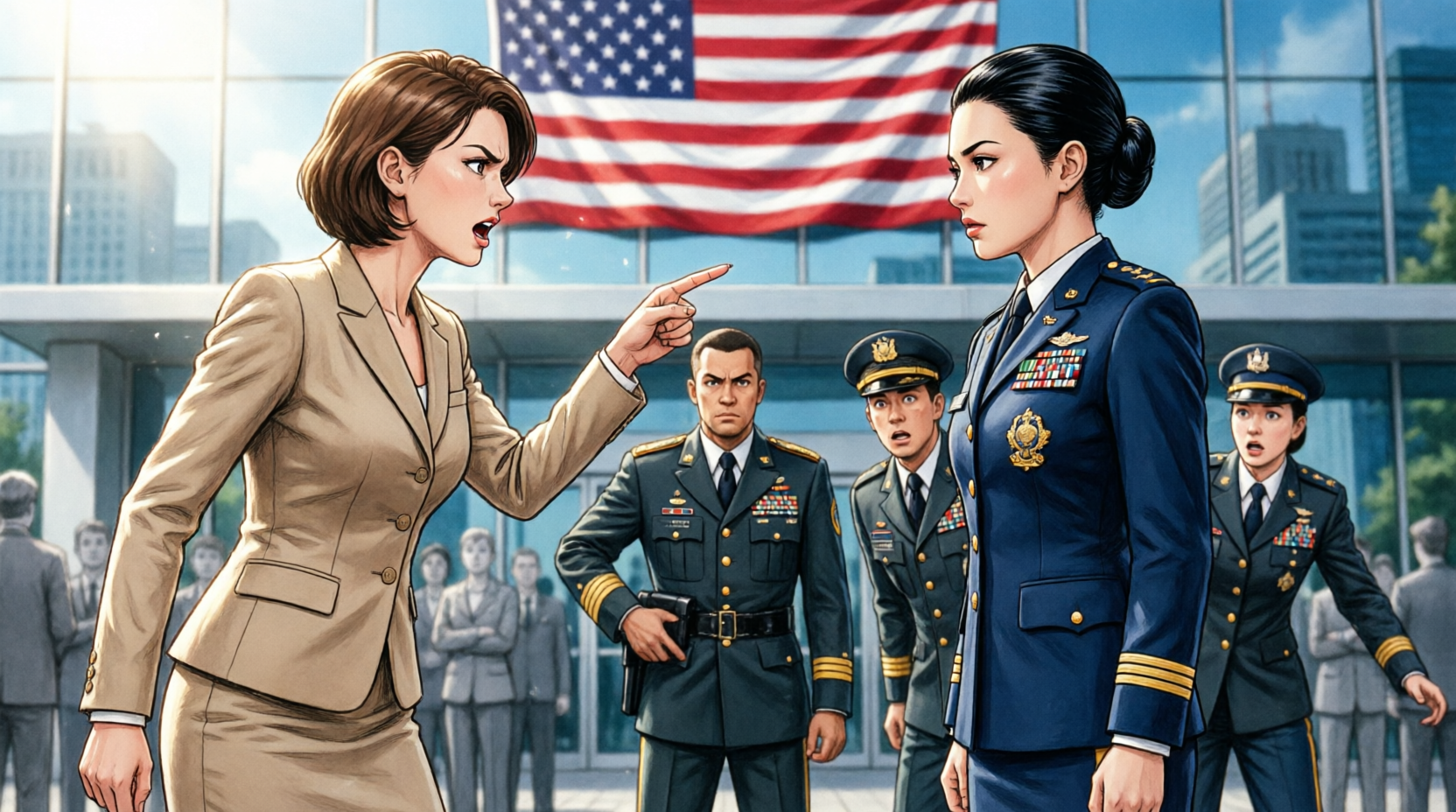
My Em,
If you are reading this, then the Parker family has done what I feared they might do.
A sound escaped me before I could stop it.
Daniel flinched.
I kept reading.
I wanted to tell you everything while I was alive, but some truths are dangerous when spoken too soon. I made mistakes, sweetheart. Not the kind men confess easily. I trusted people who smiled with one hand and stole with the other. I believed loyalty meant silence. I was wrong.
My throat tightened.
The Parkers were never the owners of the Savannah estate, the memorial funds, or the land near Fort Stewart. They were trustees. Caretakers. Their name was allowed to stand because your grandmother believed legacy should serve families, not glorify bloodlines.
Victoria’s footsteps sounded outside.
She had stopped arguing.
I knew she was listening.
If the trust has been triggered, it means one thing: they broke faith. That means the sealed archive must be opened. Inside it is the truth about Margaret Hale, Henry Parker, and the child history buried.
The child.
My breath caught.
“What child?” I whispered.
Samuel’s expression tightened.
“That’s what we need to find out.”
Daniel shook his head slowly. “Henry Parker was my grandfather.”
Colonel Whitmore’s gaze sharpened.
“And Margaret Hale was Emily’s grandmother.”
A cold, impossible suspicion moved through the room.
No one said it aloud.
Not yet.
The letter continued.
Do not let Victoria control the story. She learned pieces of the truth years ago and spent her life building walls around it. If she is cornered, she will not come quietly. She will burn reputation, records, and relationships to protect the Parker name.
I looked up.
Through the glass, Victoria stood completely still.
She was staring at me.
For once, there was no smile.
No mask.
Only fear.
Real fear.
Samuel has instructions. Colonel Whitmore knows more than he has ever admitted. Trust them both, but trust your own eyes most. There is a key hidden where I taught you not to be afraid of the dark.
I stopped breathing.
Daniel frowned. “What does that mean?”
I knew exactly what it meant.
My father’s house had a storm cellar.
When I was little, I had been terrified of it. The darkness, the smell of earth, the heavy wooden door. During thunderstorms, my father would carry me down there wrapped in a blanket and tell me stories until the fear passed.
He used to say, “Darkness is only scary until you know what’s in it.”
That was where the key was.
I folded the letter carefully, but my hands were shaking so badly I nearly tore it.
Samuel spoke gently.
“Emily, we should leave before Victoria regains control of the narrative.”
Daniel stepped forward. “I’m coming with you.”
The words struck me harder than they should have.
I looked at him.
For years, I had waited for Daniel to choose me when it mattered. Now he wanted to choose me after the entire world had forced his hand.
“I don’t know if that’s a good idea,” I said.
Pain crossed his face.
“I deserve that.”
“No,” I said quietly. “You earned it.”
He looked down.
Colonel Whitmore cleared his throat.
“We’ll use the service exit. The press is outside the front.”
But before anyone could move, the main doors swung open.
Victoria entered like a storm in pearls.
Her hair was still perfect. Her lipstick had not smudged. But her eyes were wild.
“This ends now,” she said.
No one answered.
She pointed at the letter in my hand.
“That does not belong to you.”
A strange calm settled over me.
“My father wrote my name on it.”
“Your father was a bitter man who couldn’t accept his place.”
Colonel Whitmore’s voice dropped.
“Careful, Victoria.”
She turned on him.
“And you. Always lurking around the edges. Always pretending this was about honoring soldiers.”
“It is,” he said. “That is why it matters.”
Victoria laughed once.
A brittle, broken sound.
“You think opening old wounds will help anyone?”
Samuel stepped in. “If those wounds include fraud, misappropriation, and concealed trust violations, yes.”
Her face hardened.
“You have no idea what you’re touching.”
“Then explain it,” I said.
She looked at me as if I had insulted her by existing.
“You want the truth, Emily? Fine. Your grandmother was a servant’s daughter who became useful to powerful men. The Parkers gave her protection, position, and respectability. Without us, your family would have been nothing.”
The room went still.
Daniel looked sick.
I felt the words land, but not in the way she intended. They did not make me smaller. They made something ancient and furious rise in my chest.
“My grandmother owned the land,” I said.
Victoria’s mouth tightened.
“She was allowed to hold it.”
Samuel’s eyes narrowed.
“That is not what the deeds say.”
“The deeds don’t tell the whole story.”
“No,” Colonel Whitmore said. “But the archive might.”
For a second, Victoria’s expression cracked completely.
There it was again.
Fear.
Then she smiled.
And that frightened me more.
“You won’t find it.”
Samuel went rigid.
“What did you do?”
Victoria leaned closer to me.
“Your father spent years chasing ghosts. He died before he could open that archive. Perhaps you should learn from him.”
Daniel stepped between us.
“Mother, stop talking.”
She stared at him.
“Move.”
“No.”
One word.
Small.
Late.
But real.
Victoria’s face twisted.
“You would choose her over your own blood?”
Daniel’s voice shook. “I’m starting to wonder whose blood you’ve been protecting.”
The sentence sliced through the room.
Victoria recoiled.
Then her eyes filled with something I had never seen in her before.
Not sorrow.
Not regret.
Hatred.
“You stupid boy,” she whispered.
A phone rang.
Not Samuel’s this time.
Victoria’s.
She glanced at the screen and went completely still.
Then she turned and walked out without another word.
Colonel Whitmore moved to the window.
I followed his gaze.
Victoria crossed the courtyard quickly, her phone pressed to her ear. Tyler rushed after her. A black SUV pulled near the curb.
Samuel cursed under his breath.
“She’s running.”
“No,” Colonel Whitmore said grimly. “She’s going to the estate.”
My father’s letter burned in my hand.
The key was in the storm cellar.
The archive was somewhere under military protection.
And Victoria Parker, who had spent decades guarding a lie, had just made the one mistake desperate people always make.
She showed us where the secret lived.
PART 4: The House That Was Never Hers
By the time we reached Savannah, the sky had turned the color of bruised steel.
Daniel drove.
I sat in the passenger seat with my father’s letter pressed against my lap, while Colonel Whitmore and Samuel followed behind us. None of us spoke much.
There are silences that feel empty.
This one felt crowded.
It was full of every dinner where Victoria had corrected my manners. Every holiday photo where she had placed me at the edge. Every time Daniel squeezed my knee under the table instead of defending me aloud.
He kept glancing at me.
Finally, I said, “Watch the road.”
He obeyed.
After a minute, he spoke.
“I’m sorry.”
I stared through the windshield.
Rain began to tap against the glass.
“I know.”
“No,” he said, voice rough. “You don’t. Not all of it.”
I turned slightly.
Daniel’s hands tightened on the steering wheel.
“When we got married, my mother told me you’d eventually leave once you realized military life wasn’t romantic. She said you liked the uniform more than the man.”
I almost laughed from the pain of it.
“And you believed her?”
“I told myself I didn’t.”
“That’s not an answer.”
His jaw flexed.
“Yes. Some part of me did.”
The honesty hurt more than a lie would have.
He continued, barely above a whisper.
“She made everything feel like a test. If I defended you, I was disrespecting her. If I questioned her, I was betraying the family. I thought staying quiet kept peace.”
I looked at him fully now.
“No, Daniel. It kept her comfortable.”
His eyes shone.
“I know.”
The Savannah estate appeared through the rain like a ghost.
Tall white columns. Iron gates. Ancient oaks bending over the driveway. I had been there dozens of times, but I had never felt welcome. Victoria called it Parker House, always with a reverence that made people lower their voices.
But now, as the gates opened, I saw it differently.
It was not Parker House.
Not really.
It was Hale land wrapped in Parker pride.
Victoria’s SUV was parked crookedly near the side entrance.
The front door stood open.
Samuel stepped out of his car and immediately called someone. Colonel Whitmore moved with controlled urgency toward the porch.
Daniel reached for my arm.
“Stay behind me.”
I looked at his hand.
He dropped it.
“Sorry,” he said.
We entered together.
Inside, the mansion smelled of lemon polish, old wood, and rain blowing through an open window. The grand staircase curved upward beneath portraits of Parker men in uniforms. Their painted eyes seemed to follow us accusingly.
Samuel joined us in the foyer.
“I called local authorities. They’re on the way. Until then, don’t touch anything unless necessary.”
A crash sounded from upstairs.
Daniel took off first.
We followed.
At the end of the second-floor hallway, Victoria stood inside a study I had never been allowed to enter.
Papers covered the floor.
Drawers hung open.
A small fire burned in the marble fireplace, orange flames licking at documents.
Tyler stood beside her holding a metal box.
“Mother,” Daniel shouted.
Victoria turned.
Rain streaked the windows behind her. In the dim light, she looked older than I had ever seen her.
“Get out,” she said.
Samuel stepped forward.
“Put the box down.”
Tyler clutched it tighter.
Colonel Whitmore’s voice was quiet.
“Victoria, destroying trust documents will only make this worse.”
She laughed.
“You think this is about documents?”
I moved past Daniel.
The heat from the fireplace touched my face.
On the desk lay an old photograph.
A young woman stood beside the very house we were in. Dark hair pinned back. Chin lifted. Eyes steady.
I knew those eyes.
My father had them.
“My grandmother,” I whispered.
Victoria followed my gaze.
“She had no right to this house.”
“Then why did you spend your life pretending she never existed?”
That landed.
Her hand twitched.
Tyler looked between us, panicked.
“Mom, we need to go.”
“No,” she snapped. “Not yet.”
Daniel stared at the burning papers.
“What did you do?”
Victoria’s face softened suddenly, but only for him.
“Everything I did, I did for this family.”
“No,” he said. “You did it for control.”
She slapped him.
The sound cracked through the study.
Daniel did not move.
For one terrible second, he looked like a little boy who had been struck before.
My anger cooled into something sharper.
I stepped between them.
“Don’t touch him again.”
Victoria stared at me in disbelief.
Even Daniel looked startled.
But my voice did not shake.
“You don’t get to hurt people and call it family.”
Tyler moved toward the door with the box.
Colonel Whitmore blocked him.
“Set it down.”
Tyler’s eyes darted.
Then he did something foolish.
He ran.
Daniel caught him in the hallway. They hit the wall hard, knocking a framed portrait sideways. The metal box clattered to the floor and burst open.
Inside were bundles of letters, old ledgers, a tarnished military medal, and a small velvet pouch.
Samuel dropped to one knee.
“Don’t move anything.”
But I had already seen the name on the top letter.
Margaret Hale Parker.
Parker.
Not Hale.
Not by birth.
By marriage.
My heart stumbled.
I looked at Daniel.
He had seen it too.
Victoria made a strangled sound.
“No.”
Samuel carefully lifted the letter with gloved hands from his pocket kit. “This predates the trust summary.”
Colonel Whitmore turned to Victoria.
“Tell them.”
She sank into the desk chair as if her bones had finally failed.
For once, she did not look powerful.
She looked trapped.
“My grandfather Henry married Margaret Hale in secret,” she said bitterly. “Before he married Eleanor Parker.”
Daniel went white.
“That’s impossible.”
“It was annulled,” Victoria snapped. “Buried. Corrected.”
“Corrected?” I repeated.
Victoria’s eyes flashed.
“Do you understand what military society was then? What families like ours had to protect? Margaret was not suitable. She had land, yes. Money, eventually. But no name.”
Samuel examined another document.
“There was a child.”
The room stopped breathing.
Victoria closed her eyes.
“Yes.”
I gripped the edge of the desk.
“My father?”
“No,” she said.
The answer shocked me.
She opened her eyes and looked at Daniel.
“Your father.”
The rain battered the windows.
Daniel staggered backward.
“What?”
Victoria’s voice became flat, almost dead.
“Henry Parker and Margaret Hale had a son. Robert. My husband. Your father.”
My mind could not fit the pieces together.
Daniel’s father, Robert Parker, had died before I met Daniel. Victoria had always spoken of him as the perfect Parker heir.
But if Robert was Margaret Hale’s son…
Then Daniel was descended from Margaret too.
Daniel whispered, “Emily and I…”
Samuel quickly shook his head.
“Not close enough to affect your marriage. Different branches through legal and generational distance need proper review, but this is not what you fear.”
But Daniel barely heard him.
He stared at Victoria.
“You knew I was a Hale?”
Victoria exploded.
“You were a Parker. I made sure of it.”
There it was.
The whole rotten heart of it.
Victoria had not hated me only because I was poor in her eyes, or quiet, or not polished enough.
She hated me because my name threatened the lie she had built her life around.
I was the family history she had tried to erase.
The velvet pouch slipped from the box.
A key fell out.
Old. Brass. Heavy.
Attached to it was a tag.
Archive Room B — Fort Stewart Historical Repository.
Colonel Whitmore picked it up slowly.
His face changed.
“I know where this goes.”
Victoria stood suddenly.
“No one opens that room.”
But the sirens were already approaching outside.
Blue lights flashed across the rain-wet walls.
Samuel closed the metal box.
“I think,” he said, “that decision no longer belongs to you.”
Victoria looked at me then.
Not Daniel.
Not Samuel.
Me.
And for one heartbeat, I saw the truth beneath all her cruelty.
She had spent decades terrified that Margaret Hale’s blood would rise again and take back everything.
She just never imagined it would arrive wearing her son’s wedding ring.
PART 5: The Archive Beneath the Base
The archive was underground.
That should not have surprised me, yet it did.
Fort Stewart looked different at night. The ceremony banners had been removed. The courtyard was empty. The new center stood under floodlights, quiet and pale, as if the building itself were waiting.
Colonel Whitmore led us through a restricted entrance behind an old administrative building. Military police checked IDs, logged the key, and escorted us down two flights of concrete stairs.
Daniel walked beside me.
Not too close.
Not reaching.
Just present.
It was the first respectful thing he had done all day.
At the bottom of the stairs, a steel door waited.
ARCHIVE ROOM B.
The brass key turned with a reluctant groan.
Cold air breathed out.
Inside were shelves of sealed boxes, file cabinets, canvas-wrapped objects, and framed photographs turned toward the wall. Dust floated in the beam of overhead lights.
Colonel Whitmore stood at the threshold.
“I was told this room contained historical materials related to local military families,” he said. “Access required trustee permission.”
“Victoria’s permission,” I said.
He nodded.
“She denied every request.”
Samuel opened the inventory list from the metal box.
“There should be a primary archive chest marked M.H.P.”
Margaret Hale Parker.
We found it against the far wall beneath a faded canvas tarp.
The chest was cedar, reinforced with iron bands. Its lock had already been broken long ago, but the lid remained sealed with wax.
Samuel photographed everything before touching it.
Then he cut the seal.
The smell rose first.
Old paper.
Lavender.
Time.
Inside were letters bundled with ribbon, legal papers, photographs, a Bible, and a small leather journal.
On the first page, written in elegant script, were the words:
They may take my name from the door, but they will not take my truth from the earth.
Margaret.
My grandmother.
For a while, no one spoke.
Samuel reviewed the legal documents first. His expression shifted from concentration to astonishment.
“This marriage was never annulled.”
Victoria, who had been brought under escort after refusing to remain at the estate, stood near the door with two officers beside her.
Her face hardened.
“You’re wrong.”
Samuel did not look up.
“No. Henry Parker’s second marriage was legally questionable. Margaret never signed annulment papers. She signed a land stewardship agreement under duress.”
Daniel rubbed both hands over his face.
“My entire family history is a lie.”
Victoria’s voice cracked.
“It was protected.”
“From what?” he demanded. “The truth?”
She said nothing.
I opened the leather journal.
The first entries described ordinary things. Weather. Food. A baby’s fever. Henry’s visits. The way officers’ wives looked through her at functions. Then the tone changed.
Henry says I must be patient. He says his family will never accept me unless I learn silence. But silence grows heavy in the mouth.
I turned the page.
Eleanor wore my pearls tonight. He told me not to make a scene. I realized then that men do not fear women’s tears. They fear women’s records. So I will record everything.
A shiver went through me.
Margaret had not been weak.
She had been waiting.
Page after page revealed the architecture of the lie. Henry Parker had married Margaret for access to land near the base, then concealed the marriage when a wealthier alliance became useful. When Margaret gave birth to Robert, the child was taken into the Parker household “for protection,” while Margaret was pushed into isolation and forced to sign stewardship papers.
But she had hidden copies.
She had kept ledgers.
She had documented every transfer.
Then we found the photograph.
Margaret stood in front of the Savannah house holding a baby.
Beside her stood Henry Parker.
Behind them, half-hidden in shadow, was a young soldier I recognized instantly from the framed photograph at the center.
My father.
Only younger than I had ever seen him.
I frowned.
“That can’t be right.”
Colonel Whitmore came closer.
“That is Thomas Hale.”
“But my father would have been too young.”
Samuel checked the date on the back.
“1979.”
Daniel looked at me.
“Your father knew Margaret?”
I turned the photograph over.
On the back, in my father’s handwriting, was one sentence:
She told me to protect the child if the house ever turned cruel.
The child.
Robert Parker.
Daniel’s father.
My father had known the truth.
Maybe not all of it at first, but enough.
Colonel Whitmore removed another folder from the chest. His hands stilled when he saw the label.
Robert Parker — Medical and Personal Correspondence.
Daniel inhaled sharply.
Samuel opened it.
Inside were letters from Robert to Thomas Hale.
Daniel moved closer.
“My father wrote to yours?”
I handed him the first letter.
His hands shook as he read.
Tom,
Mother is getting worse. Victoria wants the Parker name clean before the boys are old enough to ask questions. She says Margaret’s blood makes us vulnerable. I told her blood is not shame. She said shame is anything people can use against you.
Daniel sat down on a storage crate.
His face collapsed.
“He knew.”
I kept reading over his shoulder.
If something happens to me, watch Daniel. Tyler is already learning from her. Daniel still has softness in him. Don’t let her beat it out.
Daniel covered his mouth.
For the first time that day, he truly broke.
Not with dramatic sobs.
With silent, devastating grief.
The kind that makes a grown man fold inward.
I knelt beside him, unsure whether to touch him.
Then I placed my hand on his shoulder.
He leaned into it like someone starving for mercy.
“I thought he left us nothing,” Daniel whispered. “Mother said he cared more about duty than family.”
Colonel Whitmore’s voice was low.
“Robert Parker came to me before he died. He suspected the trust had been abused. He wanted an investigation, but he passed before he could sign the petition.”
“How did he die?” I asked.
Daniel looked up.
“Car accident.”
Victoria’s head snapped toward us.
Colonel Whitmore did not move.
“It was ruled an accident.”
The room changed.
Even the officers by the door looked alert.
Daniel stared at his mother.
“What does that mean?”
Victoria’s lips thinned.
“It means grief makes men suspicious.”
Samuel lifted another document.
“This is a private investigator’s report.”
Victoria lunged forward, but an officer stopped her.
“Don’t,” he warned.
Samuel read silently.
Then his face went grave.
“Robert believed someone had tampered with his brake lines.”
Daniel stood so quickly the crate scraped the floor.
“No.”
Victoria shouted, “Enough!”
Her voice echoed against the concrete walls.
Everyone froze.
She looked at Daniel, and for one second, the old command returned.
“You will not do this to your father’s memory.”
Daniel’s voice was barely human.
“What did you do?”
Victoria’s eyes filled with tears.
But I no longer trusted tears from her.
“I saved this family,” she whispered.
Daniel stepped back as if she had become poisonous.
Colonel Whitmore took the report from Samuel.
“This goes to federal investigators.”
Victoria laughed weakly.
“You have no proof.”
Then the final item in the chest shifted.
A cassette tape.
Small.
Black.
Labeled in Robert Parker’s handwriting.
For Daniel, when truth becomes safer than silence.
Daniel stared at it.
The archive had no cassette player.
But Colonel Whitmore did.
“Historical office,” he said. “Upstairs.”
No one spoke on the way.
When the tape clicked into the machine, static filled the room.
Then a man’s voice emerged.
Warm.
Tired.
Alive.
“Daniel, my boy…”
Daniel stopped breathing.
The voice trembled.
“If you are hearing this, then I failed to tell you in person. I’m sorry. Your mother has built a beautiful cage and called it legacy. Do not mistake obedience for honor. Do not mistake fear for love.”
Daniel covered his eyes.
The tape crackled.
“There is one more truth. Emily Hale’s father is the only man I trust. If his daughter ever comes into your life, protect her. Not because she is fragile. Because she is proof that the truth survived.”
My heart pounded.
Then Robert Parker said the sentence that changed everything.
“And Daniel… the woman you know as your mother is not the woman who gave birth to you.”
The tape hissed.
Victoria screamed.
PART 6: The Mother Who Wasn’t
The scream seemed to tear through the walls.
Victoria fought the officers holding her back, not with strength but with desperation, like a person trying to stop a train after it had already left the station.
“Turn it off!” she shouted. “Turn it off!”
No one moved.
Daniel stood frozen, staring at the cassette player as if his father’s voice had reached from the grave and placed a hand around his heart.
The tape continued.
“Your birth mother’s name was Anna Whitmore.”
Colonel Whitmore staggered.
For the first time since I had known him, his composure broke.
His hand shot to the back of a chair.
Anna Whitmore.
I turned to him.
His face had gone ashen.
“My sister,” he whispered.
Daniel slowly looked at him.
The room tilted around us.
Robert’s recorded voice went on, softer now.
“Anna was kind. Brave. Too brave for the Parker house. She worked with Margaret Hale to uncover what Henry had done. She believed the trust should be restored, the funds audited, and the children told the truth. She was pregnant with you when she came to me.”
Victoria sobbed once.
“No.”
But the tape did not care.
“Victoria could not have children. She wanted a Parker heir. She wanted control of the estate. When Anna died, Victoria took you in and told the world you were hers. I let her. God forgive me, I let her. I told myself you needed a mother. I told myself scandal would destroy you. But the truth is uglier. I was afraid.”
Daniel sat down hard.
Colonel Whitmore’s eyes filled with tears.
“My sister died in childbirth,” he said. “That’s what we were told.”
Robert’s voice answered the question no one had asked aloud.
“Anna did not die in childbirth. She died three weeks later, after signing a statement about the trust. The official record says infection. I never believed it.”
Victoria slid slowly to the floor.
Her pearls rested against her throat like a chain.
The room was silent except for the tape.
“Daniel, if there is any mercy in this world, know this: you were loved before you were claimed. Anna loved you. Margaret protected you. Thomas Hale watched over you from a distance because I asked him to. Colonel James Whitmore has the right to know. So do you.”
The tape clicked.
Stopped.
No one breathed.
Then Daniel made a sound I will never forget.
Not a cry.
Not a word.
A broken exhale from a life rearranging itself.
Colonel Whitmore crossed the room slowly.
He stopped in front of Daniel.
For decades, he had been Daniel’s commanding officer, mentor, distant authority.
Now he looked at him like a lost child found in a crowd.
“Daniel,” he said, voice shaking, “I didn’t know.”
Daniel looked up at him.
The resemblance was suddenly unmistakable.
The shape of the brow. The steady gray eyes. The same controlled posture hiding unbearable emotion.
Victoria had hidden him in plain sight.
Daniel whispered, “She raised me.”
Colonel Whitmore nodded, tears slipping freely now.
“Yes.”
“She lied to me.”
“Yes.”
Daniel turned toward Victoria.
“You let me call you Mother.”
Victoria lifted her face.
“I was your mother.”
“No,” he said, voice breaking. “You were my jailer.”
The words destroyed whatever remained of her mask.
She crawled toward him, but the officer stopped her.
“Daniel, please. I loved you.”
He shook his head.
“You loved owning me.”
She began to cry harder.
Maybe some part of her pain was real. Maybe she had held him as a baby and mistaken possession for love. Maybe she had told herself lies for so long that truth now felt like cruelty.
But truth is not cruel.
It is only late.
Samuel gathered the evidence with careful hands, but even he looked shaken.
“This must go to investigators immediately.”
Colonel Whitmore nodded.
“I’ll make the call.”
Victoria suddenly went still.
Then she looked up with a smile so faint it barely existed.
“You think a tape proves murder?”
“No,” Samuel said. “But it proves motive, concealment, trust fraud, identity falsification, and enough probable cause to reopen several matters.”
She looked at me.
“You did this.”
I almost laughed.
“You built this.”
Her eyes hardened.
“You have no idea what comes next.”
Police arrived within the hour.
Victoria was not arrested that night for murder. Life rarely moves as dramatically as stories want it to. But she was detained for questioning, document destruction, and obstruction related to the trust investigation.
Tyler folded almost immediately.
By midnight, he had admitted the committee funds had been misused. He claimed Victoria directed everything. Victoria claimed Tyler misunderstood her. They turned on each other so quickly it was almost sad.
Almost.
Daniel disappeared outside after giving his statement.
I found him near the new center.
The building glowed under the night lights, peaceful despite everything.
He stood before the plaque.
His shoulders were hunched.
I approached slowly.
“I don’t know who I am,” he said.
I stood beside him.
The bronze letters reflected faintly in the dark.
“You’re Daniel.”
He let out a broken laugh.
“That used to mean something.”
“It still does. Just not what you thought.”
He looked at me.
“I failed you today.”
“Yes.”
He nodded.
“I failed you before today too.”
“Yes.”
Rain misted around us.
He swallowed.
“I don’t know how to fix that.”
For once, he did not ask me to comfort him.
That mattered.
“You don’t fix it with one speech,” I said. “You live differently long enough for the truth to become visible.”
He looked back at the plaque.
“Do you still love me?”
The question hurt.
Because the answer was not clean.
“I love the man I thought you were,” I said. “And I saw glimpses of him today. But I don’t know if I can stay married to potential.”
He closed his eyes.
“I understand.”
We stood in silence.
Then he said, “Colonel Whitmore is my uncle.”
“Yes.”
“And your grandmother protected my father.”
“Yes.”
“And your father protected me.”
“Yes.”
He laughed once, painfully.
“Our families were never enemies.”
“No,” I said. “Only the lies were.”
He turned toward me.
“Emily, whatever happens between us, I want to help restore the trust. Not for money. Not for the Parker name. For Anna. For Margaret. For your father.”
I studied him.
There was no performance in his face.
No plea.
No demand.
Just grief and resolve.
“Then start there,” I said.
At dawn, Victoria’s detention made headlines.
But the story the world loved most was not the fraud, the hidden trust, or even the secret birth.
It was the photograph released by the foundation two days later.
Margaret Hale Parker, standing before the Savannah estate with a baby in her arms.
Beside it, the dedication plaque.
The caption read:
The truth was never lost. Only locked away.
For the first time, people stopped calling it Parker House.
They called it what Margaret had written in her journal.
Hale House.
And that should have been the end of the story.
But three weeks later, a woman arrived at my father’s old home with a suitcase, a faded photograph, and a name none of us expected.
She asked for me at the door.
When I opened it, she looked straight into my eyes and said:
“I’m Anna Whitmore’s daughter.”
PART 7: The Sister No One Knew Existed
For a moment, I forgot how to speak.
The woman on my porch was about my age, maybe a little older. She had dark curls pulled into a loose knot, rain on her shoulders, and eyes so much like Daniel’s that my hand tightened around the doorframe.
“I’m sorry,” I said carefully. “Anna Whitmore’s daughter?”
She nodded.
“My name is Claire.”
Behind me, the old house creaked in the wind. My father’s house had always sounded alive during storms, like it was listening.
Claire held out a photograph.
It showed Anna Whitmore, young and smiling, seated beneath an oak tree with a baby girl on her lap.
On the back, written in faded ink:
Claire Anna — keep her hidden until it is safe.
My pulse jumped.
“Who sent you here?”
Claire’s expression changed.
“No one. Your father did.”
I stepped back.
“My father is dead.”
“I know,” she said softly. “But he left instructions with the woman who raised me. She died last month.”
I let her in.
By then, the investigation had turned all our lives inside out. Victoria was under federal scrutiny. Tyler was cooperating. Daniel had moved out of our house voluntarily, not because I demanded it, but because he said I deserved space that did not require me to manage his pain.
He was staying near Fort Stewart, working with Colonel Whitmore and Samuel to transfer assets properly.
We spoke every few days.
Carefully.
Honestly.
Like two people walking barefoot across broken glass.
I called him after Claire arrived.
He came within the hour.
Colonel Whitmore came with him.
The moment Claire saw the colonel, she stopped breathing.
He did too.
“Anna,” he whispered.
Claire shook her head gently.
“No. Claire.”
Colonel Whitmore gripped the back of a chair.
“My God.”
We gathered around my father’s kitchen table—the same table where he had once fed half the county, the same table where secrets now seemed to rise through the wood grain.
Claire told us her story.
Anna had not had one child.
She had given birth to twins.
Daniel and Claire.
Daniel had been taken into the Parker household.
Claire had been smuggled out by Margaret Hale and Thomas Hale, then placed with a nurse who had once served military families near Augusta. Officially, Claire had died at birth.
Victoria had wanted the boy.
The heir.
The Parker name.
A daughter was inconvenient.
Claire grew up knowing she was adopted, but not why. Her adoptive mother kept a locked tin box and one rule: if anything happened to her, Claire was to find Emily Hale Parker.
“Why me?” I asked.
Claire slid another letter across the table.
My father’s handwriting again.
Because Emily will open the door even when the truth is standing in the rain.
I cried then.
Not loudly.
Just enough that Daniel looked away, giving me privacy even while sitting three feet from me.
Colonel Whitmore read Anna’s remaining letter with shaking hands.
It confirmed everything.
Anna feared Victoria. She feared Robert’s weakness. She feared the Parker machine would swallow her children and bury Margaret’s proof.
So Margaret and Thomas had made a terrible choice.
They split the twins.
One hidden in power.
One hidden in obscurity.
Both alive.
Both watched over from a distance.
Daniel stood abruptly and walked outside.
Claire watched him go.
“He hates me,” she said.
“No,” I replied. “He hates that you were alone.”
I found him by the barn.
His fists were pressed against the wooden wall.
“I had a sister,” he said.
“Yes.”
“She was out there my whole life.”
“Yes.”
“And I had everything.”
I thought of Victoria’s cold house, the pressure, the manipulation, the love that came with conditions.
“No,” I said. “You had expensive captivity.”
He turned, tears in his eyes.
“And she had hiding.”
We stood under the gray afternoon sky.
“What do we do with that?” he asked.
I looked back at the house, where Claire sat with Colonel Whitmore, both of them crying over a woman they had lost in different ways.
“We stop letting dead people’s fear decide how the living love each other.”
Daniel looked at me for a long time.
Then he nodded.
The next months were brutal.
The investigation widened. Victoria’s committee was dissolved. Several memorial funds were seized pending review. The Savannah estate was legally transferred into a restored Hale-Whitmore family trust, with one condition written by Margaret herself finally honored:
The house must serve those who served.
Not as a museum of pride.
Not as a monument to men in portraits.
As a refuge.
Claire moved to Georgia temporarily. She and Daniel learned each other slowly. Awkwardly at first. Then hungrily.
They discovered they both hated olives.
Both woke before dawn.
Both rubbed their left thumb against their palm when nervous.
Colonel Whitmore changed too.
The stern commander softened around Claire in ways that startled everyone. He brought her Anna’s childhood Bible. He showed Daniel photographs. He began every story with, “Your mother once…”
Victoria hated all of it.
From house arrest pending trial, she sent letters.
To Daniel.
To Tyler.
To me.
I burned mine unopened.
Daniel read one and never opened another.
Then came the final hearing regarding the trust.
The courtroom was packed.
Victoria entered wearing navy, pearls, and the expression of a woman still convinced the world owed her sympathy.
Her attorney argued she had preserved tradition.
Samuel argued she had exploited it.
Then Daniel took the stand.
Victoria looked at him with shining eyes.
“My son,” she mouthed.
Daniel saw it.
For a second, I feared he would break.
Then he spoke into the microphone.
“My name is Daniel Robert Whitmore-Hale Parker,” he said. “And Victoria Parker taught me that silence protects abusers. I am done being silent.”
Victoria’s face turned to stone.
Daniel testified for two hours.
Not cruelly.
Not theatrically.
Truthfully.
When he stepped down, Claire took his hand.
The judge ruled that the trust had been violated. Full control reverted to the rightful heirs and appointed board.
Victoria lost Hale House.
She lost the committee.
She lost the name she had used as a weapon.
But the shocking moment came after the ruling.
The judge asked whether the restored trust had determined the future of the Savannah estate.
Samuel stood.
“Yes, Your Honor.”
I expected him to announce a veteran family refuge.
A foundation headquarters.
A recovery home.
He did.
But then he added one more sentence.
“The trust board has voted unanimously to appoint Daniel Parker as executive director.”
Gasps filled the courtroom.
I turned to Daniel.
He looked as shocked as everyone else.
Samuel continued.
“Under supervision. With full transparency. No access to unrestricted funds for the first five years. But Margaret Hale’s writings were clear. The broken branch must not be cut off if it can be grafted back into service.”
Victoria laughed coldly.
“You would give him my house?”
Daniel stood.
“No,” he said. “We are giving it back to the people you kept outside.”
Then he looked at me.
Not pleading.
Not asking.
Just letting me see the man he was choosing to become.
And for the first time in months, my heart did not turn away.
That evening, Daniel came to my father’s porch.
“I didn’t know about the appointment,” he said.
“I know.”
“I won’t take it unless you agree.”
“It wasn’t my decision alone.”
“No,” he said. “But your trust matters most to me.”
The old me would have softened too quickly.
The new me listened.
Then I said, “Take it. But don’t do it to win me back. Do it because it’s right.”
He nodded.
“I will.”
He turned to leave.
“Daniel.”
He stopped.
I swallowed.
“I’m not ready to come home.”
“I know.”
“But maybe one day,” I said.
His eyes filled.
“Maybe is more than I deserve.”
“Yes,” I said. “It is.”
He smiled through the hurt.
Then, for once, he left without asking for more.
I watched his taillights disappear down the long dirt road.
For the first time, I did not feel abandoned.
I felt free.
And somewhere inside that freedom, love—bruised, altered, cautious—took one quiet breath.
PART 8: The House That Finally Opened Its Doors
One year later, Hale House opened at sunrise.
Not with pearls.
Not with a brass band.
Not with Victoria Parker standing at a podium pretending generosity had always belonged to her.
The first people through the doors were a young military widow with two children, a retired sergeant learning how to sleep without nightmares, and a nineteen-year-old private who had not spoken to his parents in six months.
Daniel stood on the porch in rolled-up sleeves, carrying boxes.
Claire directed volunteers with terrifying efficiency.
Colonel Whitmore, officially retired now, sat beneath the oak tree telling a group of children that their grandmother Anna had once climbed that very tree in church shoes and refused to come down until someone apologized to her cat.
I stood at the edge of the driveway, watching the house breathe differently.
The portraits of Parker men were gone from the grand staircase.
In their place were photographs of families.
Messy families.
Laughing families.
Grieving families.
Families that did not look perfect and were not asked to.
Above the entrance hung Margaret Hale Parker’s words:
A legacy is not what you keep. It is what you shelter.
Daniel had changed.
Not magically.
Not perfectly.
But visibly.
He attended counseling. He apologized without defending himself. He learned to sit with discomfort instead of escaping into obedience. He made mistakes and corrected them without requiring applause.
And me?
I learned that forgiveness and return are not the same thing.
For months, I did not wear my wedding ring.
Then one morning, I put it on a chain around my neck.
Not as surrender.
As possibility.
Victoria’s trial began in the fall.
By then, investigators had found enough to charge her and several associates with financial crimes, obstruction, and falsification of records. Robert Parker’s death was reopened, but evidence remained incomplete.
Victoria accepted a plea on the financial charges.
She never confessed to anything else.
At sentencing, she requested to speak.
The courtroom filled again.
She stood thinner than before, her hair silver at the roots, her pearls absent.
For the first time, she looked like a woman instead of an institution.
She turned toward Daniel.
“I raised you,” she said.
Daniel did not look away.
“Yes.”
“I loved you.”
He answered softly.
“Maybe in the only way you understood.”
Her mouth trembled.
It was not forgiveness.
But it was more mercy than she had given him.
Then she looked at me.
For one second, I expected another insult. Another blade wrapped in velvet.
Instead, she said, “Your grandmother won.”
I considered that.
Then I shook my head.
“No. She waited.”
Victoria’s eyes filled with something unreadable.
Regret, maybe.
Or exhaustion.
She was sentenced to prison.
Not for life.
Not dramatically.
Just long enough for the world she controlled to learn how to exist without her.
After the sentencing, Daniel and I walked outside together.
The courthouse steps were bright with afternoon sun.
Reporters called our names, but we kept walking.
At the corner, he stopped.
“I signed the final transfer papers,” he said. “Hale House belongs fully to the trust now. No Parker claim remains.”
“How does that feel?”
He thought about it.
“Like losing a crown made of thorns.”
I smiled.
That was when he reached into his pocket.
My body went still.
“Daniel…”
He shook his head quickly.
“I’m not proposing. We’re already married, technically.”
“Technically,” I said.
He laughed nervously.
Then he opened his hand.
Inside was not a ring.
It was an old brass key.
The archive key.
“I had a copy made,” he said. “Not to lock anything. To remind us nothing stays buried just because someone powerful wants it buried.”
He placed it in my palm.
“I don’t want to go back to what we were.”
“Good,” I said. “What we were didn’t work.”
“I want to build something honest. Even if it’s slower. Even if it takes years. Even if you decide the answer is no.”
The old Emily might have cried.
The new Emily smiled.
“I’ll have dinner with you.”
His breath caught.
“That’s all?”
“That’s not small.”
He nodded, eyes shining.
“No. It’s not.”
Dinner became another dinner.
Then Sunday walks.
Then counseling together.
Then silence that no longer felt dangerous.
By winter, Daniel moved back into our home.
Not because everything was healed.
Because healing had become something we were both doing, not something I was expected to provide.
On the anniversary of the ceremony, we returned to Fort Stewart.
The Parker Family Readiness and Recovery Center was full of life. Children colored at small tables. A young couple met with a counselor. A veteran laughed so loudly in the lobby that the receptionist shushed him, then laughed too.
The plaque still gleamed outside.
Dedicated in Honor of Sergeant Thomas Hale.
Beneath it, a second smaller plaque had been added:
In memory of Margaret Hale Parker, Anna Whitmore, and all truths brave enough to survive silence.
Claire stood beside me, holding coffee.
“Do you ever wonder what would’ve happened if Victoria had just let you sit down?”
I laughed.
“All the time.”
Daniel joined us, slipping his hand into mine.
I let him.
Colonel Whitmore approached with a mischievous expression I had come to distrust.
“What did you do?” I asked.
He held up an envelope.
“Found this in an old field jacket of your father’s.”
I stared at it.
“Another letter?”
“Apparently Thomas Hale believed in delayed explosions.”
Daniel groaned. “Not again.”
But this envelope was different.
It was addressed to all of us.
Inside was a single photograph and a note.
The photograph showed my father, Robert Parker, Anna Whitmore, and Margaret Hale sitting together at a picnic table decades earlier. They were laughing.
Not posing.
Not performing legacy.
Just laughing.
On the back, my father had written:
Someday, when the house is open, tell them this was never a story about blood. It was about who came back for whom.
No one spoke.
Claire wiped her eyes.
Colonel Whitmore looked toward the sky.
Daniel squeezed my hand.
And I finally understood the surprise my father had left us.
The happy ending was not the money.
Not the house.
Not Victoria’s fall.
Not even the truth.
The happy ending was that the people who had been separated by lies found their way back to one another—and chose not to become the cruelty that shaped them.
That evening, Hale House hosted its first family dinner.
There were too many people, too much noise, and not enough chairs. My father would have loved it.
A little boy spilled lemonade on the floor.
A widow fell asleep on the couch while her daughters played cards.
Claire burned the rolls.
Daniel tried to fix a sink and made it worse.
Colonel Whitmore told everyone this was why officers should never touch plumbing.
And me?
I stood in the kitchen doorway, watching the chaos fill every corner of the house Victoria had once guarded like a throne.
Daniel came up behind me.
“Are you happy?” he asked.
I looked at the crowded table.
At Claire laughing.
At Colonel Whitmore holding a baby.
At the open front door where another family was arriving late, carrying a casserole and an apology.
Then I looked at my husband.
Not the silent man from the ceremony.
Not the frightened son of Victoria Parker.
The man still becoming himself.
“Yes,” I said. “I think I am.”
He kissed my forehead.
Outside, the old oaks swayed in the warm Georgia night.
For generations, that house had been used to decide who belonged and who did not.
Now its doors stood wide open.
And above them, Margaret’s words caught the porch light like a blessing.
A legacy is not what you keep. It is what you shelter.
For the first time, the house was not hiding a secret.
It was keeping a promise.
THE END!