After winning an $18.6 million lottery, Olivia decided to test her family’s loyalty first by sending a fake plea for financial help. Her mother, siblings, and husband all responded with dismissal or annoyance, but her quiet cousin Daniel was the only one who showed up without judgment. When she finally revealed the truth about her windfall, she realized the real jackpot wasn’t the money—it was discovering the one person who cared enough to simply ask where she was and come.
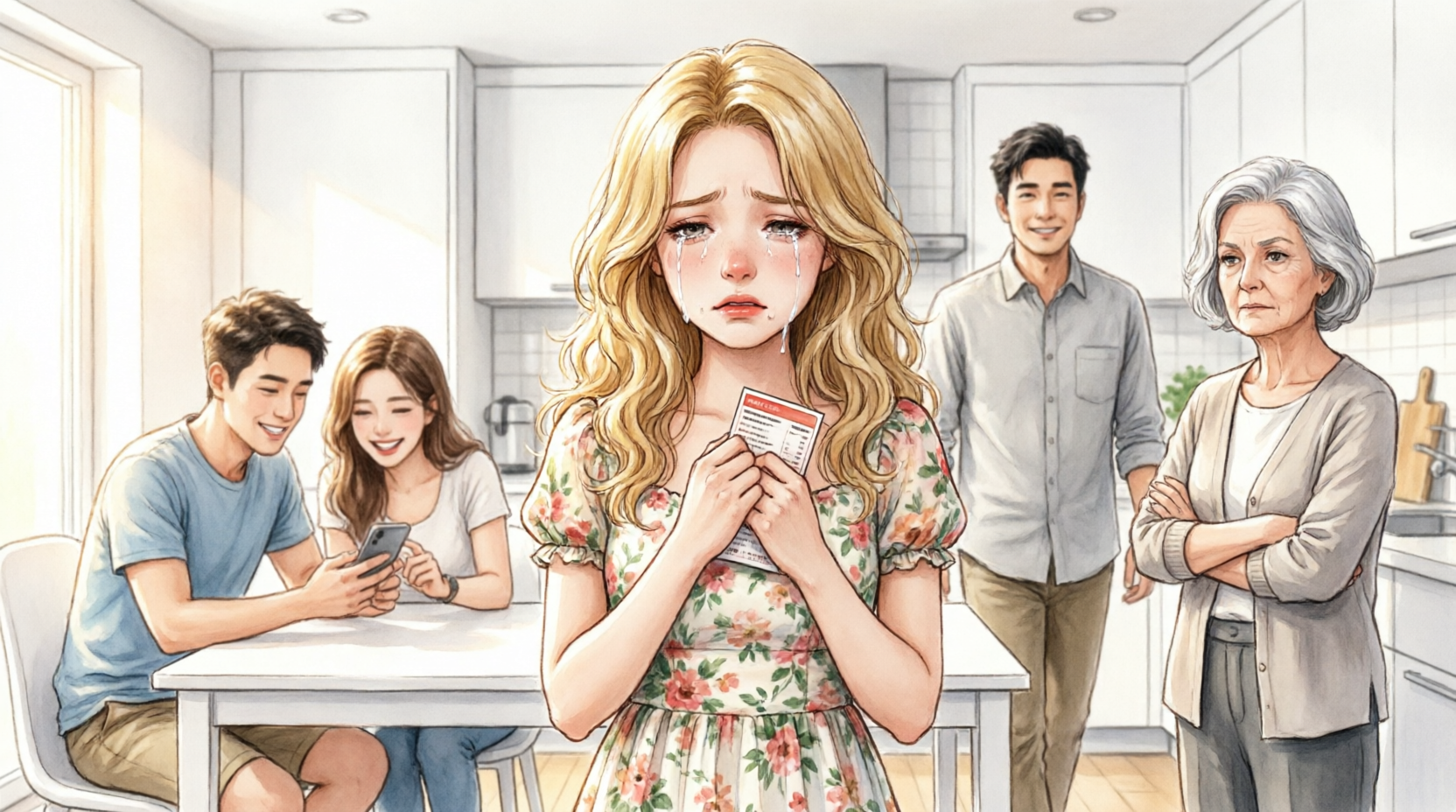
The lottery numbers flashed across the screen late Tuesday night, and my fingers went numb around the ticket.
For a moment I couldn’t breathe. My eyes moved back and forth between the TV and the small slip of paper in my hand, checking the numbers again and again as if they might change.
They didn’t.
$18.6 million.
I walked slowly into the bathroom and locked the door, like the money might somehow escape if anyone else heard.
“Don’t tell anyone yet, Olivia,” I whispered to my reflection.
The woman staring back looked exactly like the one who had spent the last decade fixing everyone else’s problems. Thirty-four years old. Tired eyes. Hair tied into a rushed knot. The dependable daughter. The responsible sister. The practical wife.
In my family, money didn’t just change people.
It revealed them.
So instead of celebrating, I slipped the ticket into my wallet, locked it inside a fireproof box under the sink, and sat on the bathroom floor trying to calm my racing heart.
Then an idea came to me.
If I suddenly became rich, everyone would claim they had always cared.
But what if I found out the truth first?
The next morning I sent a simple message to my family group chat.
Emergency. I’m short on a payment. I need help today.
I stared at my phone while drinking cold coffee.
My mother called within minutes.
“Olivia,” she sighed the moment I answered, “what did you mess up this time?”
My stomach tightened.
“I’m just behind on something,” I said softly. “I really need help.”
Another loud sigh.
“I can’t keep rescuing you,” she snapped. “Figure it out yourself. Don’t drag us into your problems.”
I almost laughed.
For years I had covered her medications, car repairs, and electric bills without complaint.
But I simply said, “Okay, Mom. I understand.”
She hung up immediately.
Next came my older brother, Jason.
His text appeared a few minutes later.
Sell something. Stop being dramatic.
My sister Lena responded with a single emoji.
🤦♀️
That was it.
No one asked if I was okay.
No one asked what happened.
When my husband Mark came home for lunch, I decided to try one more test.
I slid a fake overdue notice across the table.
“I’m short this month,” I told him quietly. “Can you help?”
He glanced at the paper for two seconds.
“You handle the bills,” he said, annoyed. “That’s your thing.”
“I know, but—”
“Ask your family,” he interrupted. “Someone will help.”
Then he grabbed his sandwich and started scrolling through his phone.
He didn’t even ask what the problem was.
By the time he left, my chest felt heavy.
Not because I needed money.
But because I finally understood something painful.
To them, I wasn’t family.
I was the safety net.
I drove to a grocery store that afternoon and sat in the parking lot staring through the windshield, trying to steady my breathing.
That’s when my phone buzzed again.
A new message.
From Daniel, my younger cousin—the quiet one nobody remembered to invite to family dinners.
Where are you? he wrote. Tell me your location. I’m coming.
My throat tightened instantly.
He didn’t ask what I’d done wrong.
He didn’t lecture.
He didn’t offer excuses.
He just showed up.
I sent him the location.
Two minutes later he called.
“Olivia, stay where you are,” he said. “I’ll be there in five minutes.”
For the first time that day, I felt safe.
But before he arrived, I saw Mark’s truck turning into the parking lot.
My stomach dropped.
He parked nearby and walked over, irritated.
“Why are you out here?” he demanded.
“I needed air,” I said calmly.
He crossed his arms. “Who did you ask for help?”
The question wasn’t concerned.
It was controlling.
“Why does it matter?” I replied.
“Because if you’re broke, it affects me too,” he snapped. “We have an image.”
An image.
Not a marriage.
Not a partnership.
An image.
Just then a small sedan pulled into the lot.
Daniel stepped out quickly and walked toward us.
“You okay?” he asked, looking only at me.
Mark frowned. “Who is this?”
“Daniel,” he said calmly. “Her cousin.”
Mark scoffed. “So she ran to you for money?”
Daniel didn’t react.
“She asked family for help,” he said evenly. “I came.”
My heart pounded as I reached into my wallet.
“I didn’t text you for money,” I said to Mark.
I unfolded the lottery ticket just enough to reveal the numbers.
“I texted you for honesty.”
Both men froze.
Mark’s voice cracked first.
“Olivia… is that real?”
I nodded slowly.
“And now,” I said quietly, “I know exactly who showed up.”
Mark immediately softened his voice.
“Baby, why didn’t you tell me? We’re married. This could fix everything.”
Daniel said nothing.
He simply stood beside me.
“You didn’t even ask if I was okay,” I told Mark.
“I came looking for you,” he argued.
“No,” I said. “You came to control the situation.”
His expression hardened.
“That money belongs to both of us.”
I shook my head.
“My kindness was never ‘ours’ when I was struggling,” I said.
Then I looked at Daniel.
“Can you drive me home?”
He nodded without hesitation.
As I stepped toward his car, I sent one final message to the family group chat.
Test complete. I’m fine. I just learned who I can trust.
Then I blocked every number.
Because the real jackpot wasn’t the money.
It was discovering the one person who didn’t ask what I’d done wrong.
He simply asked where I was.
And came.