When I Got Home, I Overheard My Mother-In-Law And Husband Plotting To Drug Me. They Forgot One Thing — I’m An Actress With A Keen Ear For Secrets.
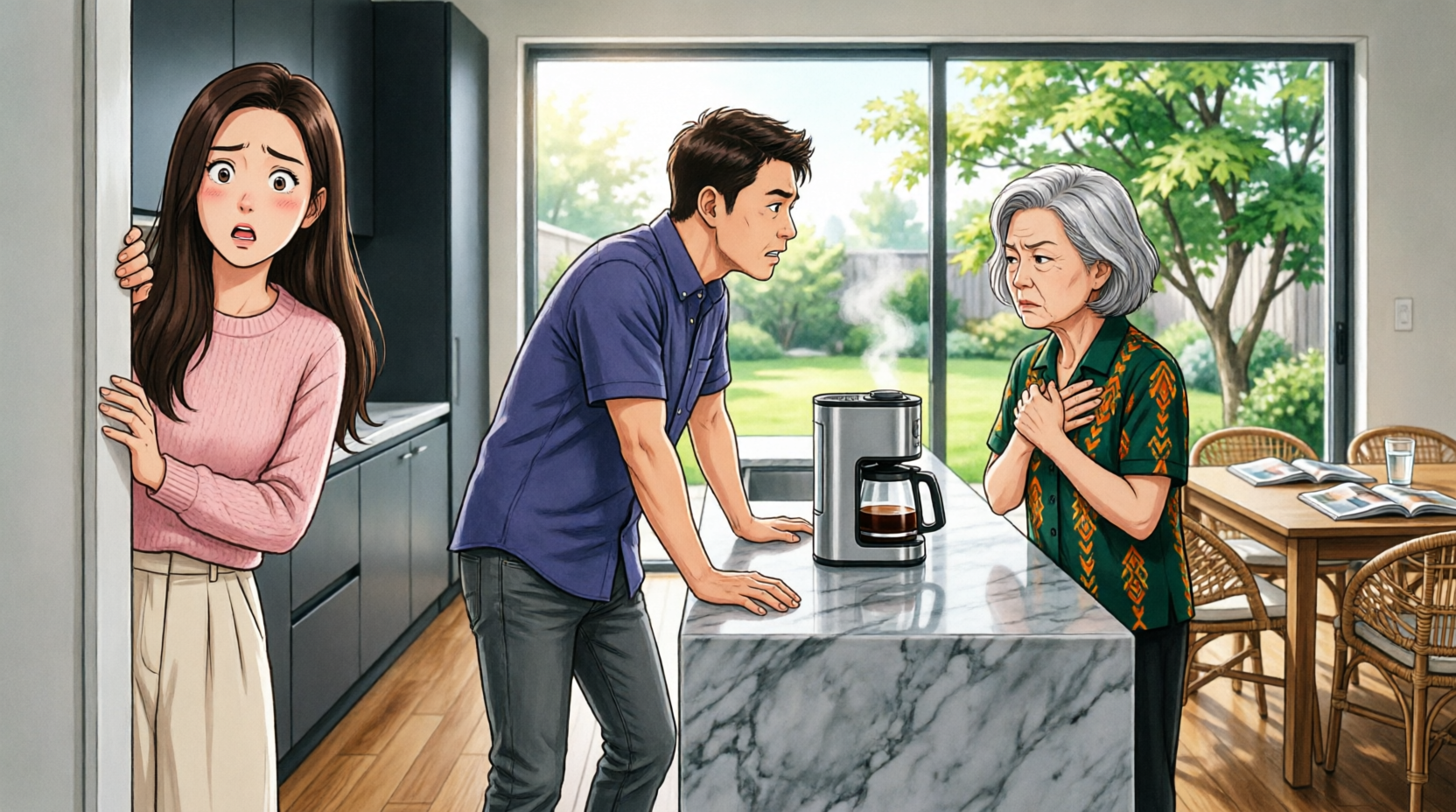
Part 1
If I hadn’t come home early, I might have walked onto that stage the next night with my throat closing up, my voice gone, my career ending in a choking whisper while the people who promised to love me watched from the dark and smiled.
Instead, I came home early—and heard my husband laugh.
It was the kind of laugh that didn’t belong in a marriage. It wasn’t warmth. It wasn’t humor. It was disgust dressed up as entertainment, as if the person he was talking about wasn’t his wife but a stray dog that had wandered into the house again.
I froze in the hallway, keys still in my hand, listening to the kitchen.
My mother-in-law’s voice floated out, strangely bright. Not angry. Not nagging. Happy.
“This might be the end for that useless daughter-in-law,” she said, like she was discussing the weather. “Tonight’s the night.”
Luke’s laugh came again, low and easy. “Tomorrow’s her big day,” he said. “How do you think Mr. Ibushi is going to feel when she can’t even speak?”
My stomach dropped so hard it felt like my bones shifted.
I stood there in the darkness of the hallway and watched the kitchen light flicker across the edge of the doorway. Their silhouettes moved in the glow. My mother-in-law leaned over the stove, her hands busy with something in a pot, like she was making a normal dinner. Like she was caring for family.
Then I saw her pour something into the pot from a small container she’d pulled from her purse.
I didn’t rush in. I didn’t scream. I didn’t announce myself the way a normal person might.
Because acting trained me to do the one thing most people forget in moments of shock: observe.
Hold still. Breathe shallow. Let the moment show you the truth.
My name is Pamela Rhodes. I’m twenty-eight years old, and for most of my life, I belonged to a stage.
Not in the dramatic way people say when they want attention, but in the plain, undeniable way you belong to something that makes sense of you. The stage wasn’t just my job. It was the place my mind got quiet. The place my body knew what to do. The place where I could step into a spotlight and feel more real than I ever felt at dinner parties or family gatherings or in small talk that left me tired.
Before I married Luke, I was a working actress with steady roles in a local theater company—good reviews, loyal audiences, the kind of career that isn’t glamorous but is honest. I was busy. Exhausted in the best way. The kind of exhaustion that comes from rehearsing, performing, and then lying in bed after a show with your muscles humming, knowing you built something out of nothing and made strangers feel it.
Luke entered my life like a fan who didn’t know the difference between loving your work and loving you.
At first, it was flattering. He came to every performance, always in the same general area of the house. He laughed when I wanted him to laugh. He cried when the story got tender. After shows, he’d wait outside with flowers that made the stage door smell like a springtime lie.
We started talking because one of my castmates knew him—college friend, distant connection, harmless enough. Luke took me to dinner, listened to me talk about character work and rehearsal notes like it mattered. He looked at me like the world had finally handed him something he didn’t deserve and he was determined not to drop it.
When he proposed, he cried.
“I love you, Pam,” he said, voice breaking. “I’ll do anything. Please understand. I’ll do anything to make you happy.”
I believed him. That’s what love does sometimes: it edits out the parts that don’t fit the story you want.
The first time I met his mother, Evelyn Harper, she hugged me too long, the way some women do when they’re already measuring you. She smelled like expensive perfume and control.
“You’re very pretty,” she said, smiling. “Luke always did have… taste.”
It sounded like a compliment until you heard the ownership in it.
At first, I thought Evelyn was simply overbearing. The kind of mother-in-law who wants to stay involved because her husband died and she doesn’t know what to do with her days. Luke’s father had passed a few years earlier, and Luke talked about that loss like it was sacred. I tried to have empathy. I tried to be gentle.
Then Evelyn began to make rules.
“Acting isn’t a wife’s job,” she told me one afternoon, sitting at my kitchen table like it was hers. “When you marry, you focus on your home.”
I laughed, because it sounded ridiculous. “Lots of wives work,” I said.
Evelyn’s smile stayed, but her eyes sharpened. “A wife’s main job is to build a family,” she said. “Children. A stable home. That’s what matters.”
Luke sat beside her, silent. His hand on my knee didn’t squeeze. It didn’t reassure. He stared at the table like he wanted the conversation to end without him having to choose.
I should have noticed then.
I should have recognized the way he turned his face away when his mother spoke, like he was letting her speak through him.
Over the next weeks, Evelyn’s visits became daily. Not occasional, not polite. Daily. She came into our apartment with her own key Luke had given her without asking me. She’d open the fridge and critique my grocery choices. She’d taste food without permission and complain it was too seasoned, too bland, too something.
She’d rummage through drawers while talking to me about how I needed to “settle into womanhood.”
And Luke, who once brought me flowers at stage doors, began to change around her like a man stepping into a uniform.
If I had rehearsal, my script would disappear. If I left the house, Luke would call repeatedly until I answered. If I came home late, sometimes my key wouldn’t work because he’d flipped the extra lock and pretended not to hear me knock. The message was clear: your freedom is conditional.
I tried to talk to him. I tried to remind him of who we were before we got married. He’d listen with soft eyes and say, “You know how my mom is,” as if that explained everything.
Then he’d add, quieter, “Just make it easier, Pam. Please.”
As the months passed, the stage grew further away. My theater friends texted and called, checking in. I lied. I said I was busy. I said marriage was an adjustment. I told myself it was temporary.
I told myself once we had a child, things would calm down and I’d return to acting when the baby was older.
But the truth I didn’t admit out loud was this: I didn’t want a child with Luke anymore. Not once I saw the way he folded in his mother’s presence like paper.
Not once I saw how quickly “I’ll do anything to make you happy” became “Be quiet and do what Mom says.”
Still, I kept surviving day by day, because survival becomes a habit.
Until the week of my comeback show—the small role I’d secretly rehearsed for months, the first time I’d stepped back into the life that made me feel like myself.
Until the night I came home early.
And heard them laughing about ending my career.
In that hallway, with the kitchen light spilling onto the floor, I realized something with a calm so cold it almost felt like peace.
They had forgotten the most important thing about me.
This was what I did.
I played roles. I read people. I waited for the moment the truth showed itself and then I used it.
If they wanted to set a trap, fine.
I would take the bait.
And then I would close the curtain on them for good.
Part 2
The next morning, I moved through the apartment like a ghost.
Luke kissed my cheek before leaving for work, a quick press of lips like obligation. “Big day tomorrow,” he said, as if he was proud. As if he hadn’t been laughing with his mother about ripping it away from me.
I forced myself to smile. Acting wasn’t only for the stage. It was for survival.
“Yeah,” I said lightly. “I’m excited.”
He left. The door clicked shut. Silence rushed in.
I stood in the kitchen and stared at the stove where Evelyn had been the night before, stirring my future like it was soup.
Then I did something I hadn’t done in months.
I opened my laptop and searched my own name.
Not because I wanted vanity. Because I wanted a reminder: I existed outside this apartment. Outside Evelyn’s rules. Outside Luke’s thin kindness.
Old reviews popped up. A photo from a play two years ago, my face caught in stage light, eyes fierce, alive. Comments from audience members: She made me cry. She was incredible. I felt it in my chest.
I put my hand over the screen like I could touch that version of myself through glass.
Then my phone buzzed. A message from my friend Tasha, the stage manager who had quietly offered me a small role without telling Luke or Evelyn.
You okay? Final run-through tonight. Call me if you need anything.
I stared at it for a long time.
I wanted to tell her everything. I wanted to call her and cry and let my voice be messy and human.
But I wasn’t safe yet. Not fully.
So I typed: See you tonight. I’m good.
It was a lie, but it was also a promise to myself: I will get there.
Before I left for rehearsal, Evelyn arrived, as she always did, letting herself in like she owned the place.
Her eyes scanned me, sharp and quick, like she was checking whether I’d been properly broken.
“You’re up early,” she said. “Good. A wife shouldn’t sleep her day away.”
I didn’t respond. I set a pot of water on the stove, hands steady.
Evelyn opened the fridge and made a sound of disapproval. “You’re wasting money on berries again,” she said. “You used to have money, didn’t you?”
That line—used to—always carried a threat. She’d learned early that I’d earned well before marriage. Not riches, but enough to build savings. Enough to breathe.
After she found out, she began asking. Then demanding.
“You have money but you don’t spend it,” she’d say. “Money is only worth something when you use it.”
At first, I refused. Then she’d yell, and Luke would step in, not to defend me, but to smooth her anger.
“Just give her something,” he’d whisper to me later. “It keeps the peace.”
Peace. Like my bank account was the cost of silence.
Over the first year of marriage, I watched my savings shrink in chunks. Evelyn always had a reason: a new appliance, a “necessary” home repair, a donation to her church friends, a sudden expense she claimed would embarrass her if she couldn’t cover it.
I hated myself every time I handed over money. Not because I needed it for luxury. Because it was mine. Because earning it had been my pride.
And because giving it away felt like feeding a fire that would never stop asking.
Luke changed, too. The fan who once looked at me with admiration began to look at me with irritation.
“You’re a useless wife,” he’d said one night after I forgot to fold laundry the way his mother preferred. “All you do is stay home. Be quiet. Don’t talk back. Just do the housework.”
I’d stared at him, stunned, waiting for a laugh, a sign it was a joke.
It wasn’t.
His mother’s words had taken up residence in his mouth.
I started to wonder if Luke had ever loved me—or if he had only loved the version of me he watched from a seat in the audience. The woman on stage who could be everything he wanted without asking anything back.
Then I found the messages.
It happened by accident. His phone buzzed on the counter while he showered. The screen lit with a name I didn’t recognize. A string of hearts. A photo preview I didn’t look at for long because my stomach twisted.
I told myself not to snoop. Then I remembered how often my privacy had been invaded by Evelyn, how often my scripts were hidden, how often my life was treated like shared property.
I picked up Luke’s phone and opened the thread.
The words hit like cold water.
She’s dumb. She’ll never notice.
He replied with a laughing emoji.
Then: I can’t stand her anymore. But Mom wants me to wait.
Wait for what?
More messages. Plans. Complaints. A coworker, younger, flirty, confident in her cruelty. Luke called her babe. He told her I was pathetic. He told her he missed the old days.
I sat on the kitchen floor with his phone in my hands and felt something inside me finally stop trying.
No children. No shared mortgage. No tangled family ties beyond his mother’s daily claws.
If I was going to leave, now was the time.
But the show.
The first role I’d taken since quitting. The rehearsals I’d been attending in secret, telling Luke I had a part-time job, lying because the truth would have been stolen from me. It wasn’t a big role—just a supporting part in a volunteer performance—but it was mine.
I wanted it to be a success. I wanted to stand under lights again and feel like my body belonged to me.
So I made a plan: finish the show, then file for divorce. Clean, quiet, controlled.
Then Evelyn found the flyers.
The day she held up my script like evidence, her face tight with rage, I felt dizzy.
“You said you quit,” she snapped. “Explain this.”
“You went through my bag,” I said, voice shaking. “You can’t do that.”
“Shut up,” she hissed. “It doesn’t matter now. You lied to us.”
I could have cowered. I could have apologized, the way I always did to keep things from escalating.
Instead, something in me snapped into place.
“So what?” I shouted. “What’s wrong with acting? It’s my life. It’s how I breathe.”
Evelyn’s eyes widened, then narrowed. “You’re pathetic,” she said. “Clinging to the stage like an amateur.”
My vision went red with anger. “I met your son because of the stage,” I said. “I built a career. I earned my own money. And you’ve taken everything from me and called it family.”
Evelyn stared, silent, as if she’d never seen me speak like a person.
“The show is the day after tomorrow,” I continued, voice trembling but strong. “And no matter what you say, I’m going on stage.”
Then I said the thing that felt like jumping off a cliff.
“Maybe the reason I haven’t had children is because I’m drowning in stress living with you.”
Evelyn’s face contorted. For a moment, I thought she’d hit me.
Instead, she turned sharply and left, not saying a word.
That night, I slept better than I had in months, because I’d finally said the truth out loud.
The next day, rehearsal felt electric. I moved with a confidence I’d forgotten. My lines landed. My body remembered how to live in a character without losing myself.
I left rehearsal early because it was the night before the show and I wanted to rest.
That was when I came home and heard Evelyn’s bright voice in the kitchen.
That was when I saw her pour something into the pot.
That was when Luke laughed.
And that was when my private plan—finish the show, then leave—caught fire and became something sharper.
If they wanted to sabotage me, they weren’t just trying to ruin my performance.
They were trying to control my body.
My voice.
My breath.
And I was done living in a house where my safety depended on obedience.
I stepped back into the hallway darkness, pulled out my phone, and started recording.
Not because I wanted drama.
Because in my world, proof mattered.
And if they were going to write a villain story about me, I was going to make sure the truth had a script too.
Part 3
I held my phone close to my chest, thumb hovering over the screen, and listened.
The kitchen light painted thin stripes across the hallway floor. Luke stood with his back to me, leaning against the counter like he had all the time in the world. Evelyn moved around the stove with practiced confidence, stirring, tasting, adjusting.
“Tonight’s the night,” she said again, almost singing it. “Tomorrow she’ll learn not to talk back.”
Luke made a sound of agreement that turned my stomach. “She’s been acting like she has options,” he said. “Like she’s still somebody.”
Evelyn laughed, delighted. “She’s a housewife. She should stay in her lane.”
I felt my heartbeat in my throat.
Then Evelyn said the sentence that turned my fear into ice.
“If she can’t speak, she can’t go on stage.”
Luke snorted. “Mr. Ibushi will drop her so fast.”
Evelyn’s voice lowered. “And once she misses the show, she’ll be too embarrassed to crawl back to that little theater group. She’ll finally accept what she is.”
Luke’s laugh was quieter, nastier. “A useless wife.”
My grip tightened around my phone so hard it hurt.
A noise—small, accidental—came from the kitchen. Evelyn set something down. Metal clinked against the counter.
I held my breath, frozen, waiting for them to notice me.
They didn’t.
Luke said, “How much did you put in?”
Evelyn’s tone was dismissive. “Enough,” she said. “Not enough to kill her. Just enough to shut her up.”
My stomach flipped.
I backed away silently, stepping heel-to-toe like I was on stage doing a scene where one wrong sound means the character dies. I retreated to the bathroom, shut the door, and locked it even though locking doors in this apartment was mostly symbolic.
Then I leaned over the sink and stared at myself.
My face looked normal. My eyes didn’t.
They looked awake in a way I hadn’t been since before I married Luke.
I pressed a hand to my mouth, not because I was afraid to scream but because I needed to keep myself quiet enough to think.
Okay, Pam.
What do you have?
You have a recording.
You have knowledge of your own allergy.
You have a show tomorrow.
And you have two people in the kitchen who think you’re predictable.
I opened the recording and played back a few seconds, just enough to confirm it was clear. Evelyn’s voice. Luke’s voice. Their words.
Then I stopped it and saved the file in three places: my phone, a cloud drive, and a message draft I didn’t send yet, addressed to Tasha.
The old me would have panicked and confronted them immediately.
But I wasn’t the old me anymore. I was the woman who understood timing.
If I rushed out there and accused them, Luke would deny it. Evelyn would cry. They’d call me dramatic. They’d twist it into a story where I was the unstable actress and they were the worried family trying to help.
They were good at that. They’d been practicing on me for years.
So I did what they never expected.
I walked out of the bathroom, steady, and stepped into the kitchen like nothing was wrong.
Luke glanced up. His expression shifted instantly into something soft and casual. “Hey,” he said. “You’re home early.”
Evelyn turned with a smile that looked almost kind. “Pamela,” she said brightly. “Good timing.”
My skin crawled, but my face stayed calm. “Hi,” I said. “Rehearsal wrapped early.”
Evelyn clucked her tongue in that performative way she did when she wanted to seem nurturing. “Good,” she said. “You need rest for tomorrow.”
Tomorrow. The word had teeth.
Luke stepped closer and kissed my forehead, a gesture so fake it made me want to scrub my skin raw. “Mom made soup,” he said. “You should eat.”
Evelyn nodded. “I made it just the way you like,” she said.
I looked at the pot on the stove and felt a rush of disgust.
The smell was normal. The surface looked normal. That was the point. Sabotage didn’t come with warning labels.
“Thanks,” I said lightly. “I’m going to change first.”
I went to the bedroom, closed the door, and exhaled the breath I’d been holding.
My hands shook as I grabbed my bag. I needed to leave. Not forever yet. Just long enough to get help.
I typed a message to Tasha with fingers that didn’t feel like mine:
I heard Luke and Evelyn planning to put something in my food tonight. Allergy. I recorded it. I’m coming to the hall. Need advice.
She responded almost immediately.
Come now. Don’t eat anything. Bring the recording.
I didn’t tell Luke where I was going. I didn’t need his permission anymore. I walked out with my bag, forcing myself to move at a normal pace so they wouldn’t suspect. Evelyn called after me, “Don’t be out late, Pamela.”
I didn’t answer.
The night air outside felt like a slap, cold and clean compared to the suffocating apartment.
At the rehearsal hall, the troupe was already there, setting props, running lines, checking costume pieces. The smell hit me as soon as I walked in: sawdust, fabric, makeup, and the faint metallic scent of stage lights warming up. It was home.
Tasha took one look at my face and pulled me into an empty corner by the costume racks. “Tell me,” she said.
So I did.
I told her about the overheard conversation. The pot. The way Evelyn smiled. Luke’s laughter. The words about ending my career. The line about not killing me, just shutting me up.
As I spoke, other people drifted closer—friends who knew my marriage had been hard but didn’t know how dark it had gotten. Their expressions shifted from concern to anger to something like disbelief.
“That’s insane,” said Marcus, one of the older actors who had played my stage father more than once. His voice was tight with rage. “That’s not a prank. That’s assault.”
Tasha held out her hand. “Let me hear the recording,” she said.
I played it.
Evelyn’s bright voice. Luke’s laugh. The cruelty clear as if they were standing in the room with us.
Silence fell when it ended.
Then Jenna, our wardrobe lead, exhaled sharply and said, “We’re not letting you go back there alone.”
“I have to,” I said. “If I run, they’ll say I’m unstable. If I confront them without proof, they’ll deny. I need this to end clean.”
Marcus nodded slowly. “Okay,” he said. “Then we do it like theater.”
Tasha’s eyes narrowed. “We set the scene,” she said.
They huddled around me, talking fast, building a plan with the precision of a production meeting. Not revenge for revenge’s sake, but a controlled exposure. A moment where Luke and Evelyn would show their true faces without being able to rewrite the story afterward.
“We need witnesses,” Jenna said. “Neutral, reliable, present.”
“We need you safe,” Marcus added. “No actual risk.”
Tasha looked at me. “Pam,” she said carefully, “you know your allergy. You don’t ingest anything. You don’t prove it with your body.”
I nodded, throat tight. “I know.”
The plan took shape: I would go home, act normal, accept the soup, and perform—not the show, but a scene. I would make them confess out loud while others watched. The troupe would be nearby, ready to step in. If it escalated, we’d call the police.
A trap for the people who thought they were trapping me.
I sat in the rehearsal hall, surrounded by my chosen family, and felt something I hadn’t felt in a long time.
Support.
Not the fake support Luke offered when it was easy. Real support. The kind that showed up when it was dangerous.
When I left the hall to go back home, Tasha squeezed my hand. “You’re not alone,” she said.
I nodded. “I’m not,” I whispered.
And as I walked back into the apartment building, I felt my fear settle into something steadier.
Determination.
If Luke and Evelyn wanted to ruin my voice, they were about to learn what happens when you try to silence an actress.
You don’t get quiet.
You get a spotlight.
Part 4
I opened the apartment door louder than usual.
“I’m home,” I called, forcing cheer into my voice.
From the kitchen, Evelyn responded instantly, too fast, too eager. “Pamela! Welcome back!”
Luke appeared in the hallway, wearing a smile that didn’t reach his eyes. “There you are,” he said. “We were waiting.”
Waiting.
Like predators.
Evelyn swept toward me with a sweetness so exaggerated it could’ve been a parody. “I’m sorry about yesterday,” she said, hands clasped. “I didn’t realize I was too harsh. I’m very sorry, dear. Can you forgive me?”
I stared at her and wondered if she believed her own performance. If she’d spent her whole life acting the role of the perfect mother and now couldn’t stop.
I kept my face neutral. “Thank you,” I said. “I appreciate that.”
Evelyn’s eyes flicked to Luke, triumphant. Then she took my elbow and guided me toward the dining table.
“I made you a meal,” she said. “You need to eat well before tomorrow. Come on, eat up.”
The bowl of soup sat waiting, steam curling up like a promise.
My throat tightened reflexively. My skin prickled with the memory of reactions I’d had in the past—the itchy burn, the swelling, the panic that comes when your body turns on you.
I sat.
Luke and Evelyn sat across from me, watching with bright, hungry focus.
I noticed everything: Luke’s leg bouncing under the table, not from concern but from anticipation. Evelyn’s hands folded too neatly, her mouth held in a satisfied line.
I smiled politely. “It looks delicious,” I said.
Evelyn beamed. “It is,” she said.
I lifted the spoon, careful, steady. My heart pounded so loudly I wondered if they could hear it.
I brought the spoon near my lips, then lowered it again as if it was hot. I blew gently, buying time, letting the silence stretch.
Luke leaned forward slightly. “Eat,” he said softly.
There was control in that word.
I nodded. “Of course.”
I leaned in, enough to make them think I’d taken a sip, then set the spoon down.
Then I began the scene.
My hand went to my throat. Not dramatically at first—just a small, uncertain touch, like a person noticing something wrong. I swallowed hard. My eyes widened slightly. I made my breathing shallow.
Luke’s smile faltered.
Evelyn’s brows lifted.
I let my chair scrape back. I pressed my palm to my neck, fingers trembling. I made a small choking sound, ugly and real enough to make Luke’s face go pale.
“Pam?” Luke’s voice cracked. “Are you okay?”
I didn’t answer. I let my eyes water. I let my body sag as if my muscles were failing. I stood too fast, stumbled, and dropped to my knees beside the table like I couldn’t hold myself up.
It wasn’t theatrical. Not big. It was the kind of frightening realism that makes people forget to breathe.
Luke rushed around the table. “Oh my God,” he said, panic flaring. “Pam—here, water—”
He shoved a glass toward my mouth with shaking hands.
Evelyn stood, her face flushed. “No—no—this wasn’t supposed to—” she stammered.
Luke snapped at her. “Mom, not now! Call an ambulance!”
Evelyn’s eyes darted toward the door like she could see neighbors through it. “No,” she hissed. “Think! What will people say? If the police—if anyone finds out—”
Luke’s voice rose. “She can’t breathe!”
Evelyn grabbed his arm, squeezing hard. “I only wanted her to miss the show,” she whispered, voice sharp with fear. “I didn’t mean—there was only a little—just enough—”
Luke’s head whipped toward her. “You said it would be fine!”
Evelyn’s mouth moved, frantic. “She talked back to me. She needed to learn. Tomorrow was her big day, and I thought—”
Luke’s face twisted, the mask slipping. “If she’d just listened like a normal wife, we wouldn’t have to do this!”
There it was.
Out loud.
Confession wrapped in panic.
I let their words hang in the air for one more beat.
Then I stopped.
I lifted my head slowly. I wiped my mouth with the back of my hand, as if resetting my face. I stood up, steady and calm, and looked down at them.
Luke froze, glass still in his hand.
Evelyn’s eyes widened so far the whites showed.
I smoothed my hair back, like a woman stepping out of character between takes.
“I’m fine,” I said evenly.
Luke blinked, disoriented. “What?”
I tilted my head slightly. “It was acting,” I said. “You know. My job.”
Evelyn’s face went red, rage flooding in to replace fear. “Pamela,” she spat. “How dare you!”
“How dare I?” I echoed, voice still calm.
Luke stared at me like I’d turned into someone else. “Pam… what are you—”
I reached into my bag and pulled out my phone, screen lit, recording saved.
“I have proof,” I said. “Of what you planned. Of what you said.”
Luke’s eyes flicked to the phone, then away, already searching for an exit. “You’re twisting—”
“No,” I cut in. “You’re just not used to being seen.”
Evelyn opened her mouth to scream, but before she could, the front door opened.
Footsteps entered the apartment.
Tasha stepped in first, face calm and hard. Behind her came Marcus, Jenna, and two more troupe members, all quiet, all present, like witnesses walking onto a stage at the exact right cue.
Luke’s face drained of color. “What is this?” he whispered.
Evelyn’s voice shrieked. “Who are these people?”
“My friends,” I said simply. “My witnesses.”
Tasha held up her phone. “We heard everything,” she said. “And we’re recording too.”
Evelyn’s expression contorted into forced sweetness so fast it was almost impressive. “Oh, goodness,” she said, laughing nervously. “This is a misunderstanding. We’re family. It was just… just a joke.”
I looked at her. “Family doesn’t plot to harm someone,” I said.
Luke swallowed hard. “Pam, please,” he said, voice cracking. “You don’t need to do this.”
I stared at him. “You already did,” I replied.
Then I pulled out an envelope from my bag and set it on the table with one clean motion.
Divorce papers.
Luke’s mouth fell open. Evelyn’s hand flew to her chest like she was the victim.
“You can’t,” Evelyn whispered.
“I can,” I said. “And I am.”
Luke’s voice went sharp with fear. “Pam, think about what you’re doing—”
I tapped my phone. “Would you rather we take this recording to the police,” I said, “or would you rather sign these papers and disappear from my life quietly?”
Evelyn lunged toward the phone. Marcus stepped between them without hesitation, voice low. “Don’t,” he warned.
Luke backed up as if the walls were closing in. He looked at Evelyn, then at me, and for the first time I saw the truth under his cruelty.
He wasn’t brave. He wasn’t powerful.
He was just a man who’d been handed control by a mother who mistook dominance for love.
Evelyn tried again, voice syrupy. “Pamela,” she said, “forgive us. We’ll do better. We’ll—”
I laughed once, cold. “Your acting is terrible,” I said. “Don’t insult my profession.”
The room fell silent except for Luke’s uneven breathing.
Tasha’s eyes held mine. “What do you want to do?” she asked softly.
I looked at Luke and Evelyn, then at the bowl of soup still steaming on the table.
I didn’t touch it. I didn’t need to.
“I want my life back,” I said.
And for the first time in years, I meant it without apology.
Tomorrow, I was going on stage.
Tonight, I was walking out of their story.
And they were going to learn what it felt like to be powerless in the face of someone who finally knew their lines.
Part 5
Leaving wasn’t dramatic.
That’s what surprised me most.
I’d imagined that if I ever walked out, it would come with shouting, slammed doors, sobbing, maybe a neighbor peeking through curtains like it was entertainment. I’d imagined I would feel broken in half.
Instead, I felt clear.
Tasha drove me to her apartment that night. Jenna came too, carrying an overnight bag she’d stuffed with spare clothes from the costume shop because she refused to let me go back into that apartment alone for anything.
As we rode, my phone kept vibrating with calls I didn’t answer. Luke. Evelyn. Luke again. Evelyn again.
I stared out the window and watched streetlights pass like a slow metronome.
At Tasha’s place, we sat around her small kitchen table, the same way we sat after rehearsals sometimes, eating cheap takeout and talking about scene work. The difference was that tonight, the stakes weren’t applause.
They were my safety.
Marcus called a lawyer he knew, a woman who had once done pro bono work for an actor who’d been harassed by a director. She listened to my story without interrupting, her voice calm and sharp.
“Do you have the recording saved?” she asked.
“Yes,” I said.
“Witnesses?” she asked.
“Yes.”
“Medical history of the allergy?” she asked.
“Yes,” I said again, and my throat tightened because suddenly everything felt too real.
“Good,” she said. “You did the right thing not ingesting anything. Tomorrow morning, you file for a protective order if you feel threatened, and you file for divorce immediately. If he’s been unfaithful, we include that. If she’s been extorting money, we include that too. Document everything.”
Her words felt like a structure. A stage set being built around me so I wouldn’t fall through open space.
That night, I slept on Tasha’s couch and barely slept at all. Every time I closed my eyes, I saw the bowl of soup steaming on my table like a weapon disguised as comfort.
I woke up before dawn, heart racing, then sat up and listened to the silence.
No Evelyn moving around the kitchen. No Luke’s footsteps. No keys in the door that weren’t mine.
The absence felt like oxygen.
At seven a.m., my phone buzzed with a text from Luke.
Please come home. We can talk. Mom didn’t mean it. I didn’t mean it. You’re overreacting.
Overreacting. The favorite word of people who get caught.
I didn’t reply.
At nine a.m., my lawyer met me outside the courthouse. She introduced herself with a firm handshake and the kind of look that said she didn’t care if Luke was charming.
“I’m Dana,” she said. “Let’s get you free.”
Filing papers wasn’t cinematic. It was forms and signatures and waiting behind people arguing about parking tickets. But each stamp, each line, each official step felt like a door closing behind me.
Dana filed the divorce petition. She also filed for an emergency protective order against Evelyn, based on the recorded planning and the immediate threat of sabotage.
“It may not be granted today,” Dana warned, “but we’re building a record.”
Record. That word mattered. A record was proof you weren’t crazy. Proof you weren’t exaggerating. Proof your story wasn’t just emotion.
When it was done, I stepped outside into bright morning sun and felt my hands shake.
Tasha touched my shoulder. “You okay?” she asked.
I nodded, then surprised myself by saying, “I think I’m terrified.”
“Good,” Jenna said, blunt. “Terrified means you care. It doesn’t mean you stop.”
By afternoon, I was at the theater.
The show was that night.
My role was small, but it mattered to me the way a first breath matters after being underwater. In the dressing room, I stared at my reflection in the mirror surrounded by lightbulbs. The makeup artist dabbed concealer under my eyes.
“You didn’t sleep,” she murmured.
I smiled faintly. “Not much.”
She didn’t ask questions. Theater people understood that life happened offstage and sometimes you brought it in like baggage you didn’t choose.
In the wings, I heard the murmur of the audience, the pre-show energy. The smell of dust and fabric and warm stage lights wrapped around me like a familiar blanket.
For a moment, panic rose. What if Evelyn showed up? What if Luke did? What if they tried something else?
Then Marcus stepped into my line of sight, steady as a wall. “We’ve got security watching,” he said quietly. “And we have your back entrance covered. If she appears, we call police. You focus on your work.”
My work.
The words grounded me.
I took a deep breath and nodded.
When the house lights dimmed, I felt something in my chest unlock. The curtain rose, and suddenly the world narrowed to stage space and story.
When I stepped into my first scene, my voice came out strong.
No swelling. No choking. No stolen breath.
I spoke my lines and felt the audience lean in. A laugh landed where it should. A beat of silence held where it mattered. My body remembered how to live inside truth that wasn’t mine and somehow made mine anyway.
After the show, applause rolled over the stage like warm rain.
I bowed with the cast, heart pounding, eyes stinging.
Backstage, my phone buzzed again. This time, it was a voicemail from Evelyn.
You ungrateful little— You think you can humiliate me? Luke is my son. You’re nothing without us—
I deleted it.
Dana had told me to keep evidence, but I had already saved the important things. I didn’t need to keep poison in my pocket.
When I walked out the stage door, the night air was cool and smelled like rain. A few audience members waited to compliment the show. One woman clasped my hands and said, “You were wonderful.”
I smiled and said thank you, and meant it. Not because my role was big, but because I existed again.
Then my lawyer texted.
Luke’s attorney reached out. He wants to settle quickly. He’s scared of the recording.
I stared at the message for a moment and felt a strange calm.
Luke, who once treated me like I was powerless, was afraid.
Not of me yelling. Not of me crying.
Of the truth.
That night, Tasha hugged me hard in the parking lot. “You did it,” she whispered.
I looked back at the theater building, lights glowing inside like a promise.
“No,” I said softly. “I started.”
Because leaving a marriage isn’t one moment. It’s a series of steps that teach your body it’s allowed to walk.
And as much as the show mattered, the bigger performance was coming next.
In court.
In life.
In a world where Luke and Evelyn would finally have to face consequences that couldn’t be smoothed over with family smiles.
I went home to Tasha’s couch and slept like someone who had earned rest.
For the first time in three years, I didn’t dream of being trapped in my own kitchen.
I dreamed of stage lights.
And a future where nobody could poison my voice again.
Part 6
Luke tried to charm his way out of the mess the same way he’d charmed his way into my life.
He called. He texted. He emailed. When I didn’t respond, he shifted tactics and sent long messages about love and misunderstanding, about stress and how his mother “got carried away.”
He never said the word plot.
He never said allergy.
He never said I’m sorry for trying to harm you.
Instead, he wrote, We didn’t mean it like that.
As if intent mattered more than danger.
Dana instructed me to stop engaging entirely. “Communication goes through me,” she said. “He wants to pull you back into the old dynamic. Don’t give him the stage.”
Evelyn, on the other hand, wasn’t subtle. She showed up at the theater two nights after the show, waiting near the back entrance like a shadow with perfume.
Security spotted her immediately because Marcus had warned them. The manager called me in the dressing room.
“She’s outside,” he said, voice steady. “Do you want to speak to her?”
I didn’t hesitate. “No,” I said.
The word felt powerful.
Not because it was loud, but because it was final.
The police arrived and told Evelyn to leave. She left with dramatic outrage, claiming she was being persecuted, claiming she was family, claiming I was cruel.
But the officer’s face stayed neutral. Family didn’t have special permission to intimidate.
Dana used the incident to strengthen the protective order request. When we went back to court, I brought the recording, the witness statements, and the police report from the theater.
The judge granted a temporary restraining order against Evelyn.
Ninety days at first. Enough to breathe. Enough to build.
Luke, meanwhile, was unraveling in quieter ways.
When Dana’s office subpoenaed relevant financial records for the divorce, Luke’s own lies started to turn on him. The money Evelyn had demanded from me wasn’t just missing. It had patterns—regular transfers, sudden withdrawals. Dana framed it as coercion and financial abuse.
Luke’s affair became part of the legal conversation too. His coworker didn’t leave him out of loyalty. She left him out of convenience.
The moment Luke’s life looked unstable—court, divorce, scandal—she vanished, taking her own reputation with her. She stopped replying to his messages. She blocked him on social media.
Luke didn’t lose her because he loved her.
He lost her because he wasn’t useful anymore.
I didn’t take joy in it, not the way people imagine revenge. It wasn’t a celebration. It was a quiet sense that the world had finally stopped rewarding cruelty.
At work, gossip started leaking. Someone in Luke’s office had heard whispers about the divorce. Someone else had seen Evelyn screaming in front of our building. The story grew legs. Stories always do.
Luke asked for a private meeting through Dana, claiming he wanted to “talk like adults.”
Dana allowed one meeting in her office with her present. I agreed because I wanted to see his face when he realized I wasn’t afraid anymore.
Luke walked in wearing a familiar sweater, the one he used to wear to my shows when he was still pretending to admire me. He sat across from me, hands clasped too tightly.
“Pam,” he began, voice soft. “I never wanted to hurt you.”
I stared at him. “Then why did you let your mother do it?” I asked.
Luke flinched. “She didn’t—”
“She put something in my food,” I said, cutting him off. “You laughed about it. You called me useless. You said I deserved to be taught.”
Luke’s eyes darted to Dana, then back to me. “I was angry,” he whispered. “You were leaving me. You were… hiding things.”
“Hiding my work,” I said. “Because you and your mother took it from me.”
Luke swallowed. “You made me feel small,” he said, and the audacity of it almost made me laugh.
I leaned forward slightly. “No,” I said. “You felt small because you weren’t the center of my world anymore.”
Silence.
Dana spoke, brisk and cold. “We’re here to discuss settlement,” she said. “Not Luke’s feelings.”
Luke’s gaze sharpened. “Pam, if we do this in court—”
“If we do this in court,” I interrupted, “your employer hears the recording. Your friends hear it. Everyone hears what you planned.”
Luke’s jaw tightened. “You’re threatening me.”
“I’m stating consequences,” I replied.
Luke sat back, defeated. “What do you want?”
I didn’t hesitate. “A clean divorce,” I said. “Fair division. Reimbursement for the money your mother took. Compensation for what you put me through. And no contact from Evelyn. Ever.”
Luke’s face twitched. “That’s impossible.”
Dana slid the recording transcript across the table. “It’s very possible,” she said. “And if Mr. Harper wants to argue, we can go another route.”
Luke stared at the transcript and looked like someone watching their own life collapse in slow motion.
He signed.
Not because he suddenly understood morality. Because he understood risk.
When the divorce finalized, it was almost anticlimactic. A judge read terms, asked if we understood, and stamped my freedom with official ink.
I walked out of the courthouse into sunlight and felt my lungs expand like they’d been waiting years to do that.
Evelyn didn’t disappear quietly.
She tried to appeal the restraining order. She claimed I was unstable. She accused me of lying. She tried to show up at rehearsals anyway, and the police warned her again.
The second violation cost her more than she expected. Another report. Another court date. Another tightening of boundaries.
Eventually, she learned what I had learned: consequences don’t care how loud you are.
As for me, I went back to work.
The small role turned into a larger one. My director, Mr. Ibushi, offered me a bigger part in the next production after watching my comeback show.
“You were hungry,” he told me. “Not desperate. Hungry. It’s different.”
I nodded, throat tight. “I am,” I said.
And every time I stepped onto stage, I felt the same thing.
Not just relief.
Ownership.
My voice belonged to me.
My breath belonged to me.
No one could stir poison into my life and expect me to swallow it quietly again.
Because the truth is, the stage didn’t just give me a career.
It gave me a skill that saved me.
I knew how to watch. How to wait. How to set a scene. How to make the people who thought they were in control reveal themselves.
Luke and Evelyn tried to write me out of the story.
Instead, they handed me the final act.
And I delivered it—under lights, with witnesses, and with a curtain that closed on them for good.
Part 7
The months after the divorce felt strange in a way I hadn’t expected.
I thought freedom would be pure joy. I thought I would wake up every morning and feel light.
Instead, I woke up and felt quiet.
Not emptiness. Not sadness.
Just quiet—like my nervous system didn’t know what to do without Evelyn’s daily intrusions or Luke’s cold comments. My body had lived on alert for so long that calm felt suspicious.
Therapy helped. Dana recommended a counselor who specialized in coercive control and emotional abuse. I almost refused, because I didn’t want to believe my life fit that category. I didn’t want to label myself as someone who had been abused. It sounded dramatic, and I’d spent years being punished for “drama.”
But the counselor didn’t push labels. She asked questions.
When I told her about scripts being hidden, she didn’t shrug.
When I told her about being locked out for being late, she didn’t laugh.
When I told her about money being demanded and taken, she didn’t call it a family squabble.
She called it what it was: control.
“You were living in a small cage,” she said gently. “And you were taught to blame yourself for the bars.”
That sentence sat in my chest for weeks.
Meanwhile, Luke tried to salvage his reputation.
He told coworkers I was unstable. He told friends I’d become “obsessed” with the theater and neglected him. He framed himself as the tragic husband abandoned by an ungrateful wife who chose spotlight over family.
It might have worked if I had stayed silent.
But I wasn’t silent anymore.
I didn’t go online. I didn’t start posting rants. I didn’t blast him publicly.
I simply let the legal record exist.
A restraining order doesn’t need a social media post. It speaks for itself.
Luke’s job, already shaky because of his affair, became worse when management caught wind of the drama. He wasn’t fired for gossip. He was pushed out quietly after he started missing deadlines, showing up tense and distracted, snapping at people in ways that made them uneasy.
His lover didn’t come back. Evelyn didn’t rescue him. Luke had spent years outsourcing responsibility for his choices to other people.
Now there was no one left to carry it.
Evelyn, for her part, grew more desperate.
She violated the restraining order again by sending letters to the theater’s address—handwritten pages calling me unfit, selfish, a liar, warning the troupe that I was dangerous and would ruin them the way I ruined her son.
Tasha brought the letters to me with gloved hands like they were contaminated.
“You want to read them?” she asked.
I stared at the envelope with Evelyn’s sharp handwriting and shook my head. “No,” I said. “Give them to Dana.”
That choice felt like a victory all on its own.
I didn’t need to consume Evelyn’s poison to prove it existed.
Dana filed the letters as evidence, and the restraining order was extended and tightened. A judge warned Evelyn that continued harassment would lead to criminal charges.
She didn’t believe it at first.
Then she discovered that judges don’t care if you’re someone’s mother.
The third violation ended with her being escorted out of court, furious and humiliated, and placed under stricter conditions. The neighborhood spectacle she feared became her own doing.
I didn’t attend that hearing. Dana told me I didn’t need to. “Let the system do what it’s supposed to do,” she said.
So I did.
While Luke and Evelyn imploded in the background, I rebuilt.
I got a new apartment closer to the theater—small, bright, and mine. I bought a plant that I didn’t have to defend. I hung framed playbills on the wall like trophies, not because I wanted to brag, but because I wanted to remember who I was.
The first time I cooked dinner in that apartment, I stood in front of the stove and laughed—quietly, incredulous—because no one was watching. No one was waiting to critique seasoning or call it wasteful. No one was planning anything.
It was just me and a pot and the ordinary miracle of safety.
My career moved forward too.
Mr. Ibushi cast me in a lead role in a new production, the kind of role that asked you to carry a story on your shoulders. The rehearsal schedule was brutal. I loved it.
On opening night, I stood backstage with my hands shaking, not from fear of sabotage this time, but from the normal terror of performance—the good terror, the kind that means you care.
Marcus squeezed my shoulder. “You’re ready,” he said.
Tasha looked at me with a grin. “And if anyone tries to mess with you, they’ll have to go through all of us.”
I smiled, eyes stinging. “I know,” I whispered.
When the curtain rose, the stage lights hit my face, and I felt my whole body come alive.
My voice filled the theater, clear and strong.
In the audience, I didn’t look for Luke. I didn’t look for Evelyn.
I didn’t give them that seat in my mind anymore.
After the show, a young woman waited at the stage door. She looked nervous, clutching her program like it was a shield.
“Pamela?” she asked softly when I stepped outside.
“Yes,” I said, surprised.
She swallowed. “I just… I needed to tell you,” she said. “I saw the way you stood up there. And I… I’m in a situation at home where I don’t feel safe. Watching you tonight made me feel like maybe I could leave.”
My throat tightened.
I didn’t know her. She didn’t know me. But the stage had always been a mirror, and sometimes people see themselves in it and realize they deserve more.
I nodded slowly. “You can,” I said. “And you don’t have to do it alone.”
She burst into tears, and I held her gently, the way I wished someone had held me when I was still trying to pretend my marriage was normal.
That moment changed something in me.
My story wasn’t just a private battle. It was proof.
Not that I was special.
That leaving was possible.
Luke and Evelyn had tried to end my career by controlling my body.
Instead, they accidentally reminded me why the stage mattered in the first place.
It wasn’t just applause.
It was truth.
And truth, when spoken out loud, has a way of setting people free—starting with the person brave enough to speak it first.
Part 8
A year after my divorce, I ran into Luke by accident.
Not at the theater. Not in court. Not through a lawyer.
At a grocery store on a rainy Tuesday evening, when I was buying tomatoes and trying to decide if I wanted to be the kind of person who made soup from scratch.
I heard my name the way you feel a draft—sudden, unwanted.
“Pam.”
I turned slowly, and there he was near the frozen aisle, looking smaller than I remembered. Not physically—Luke was still tall—but in presence. His shoulders curved forward like he was bracing for impact. His eyes were tired. His hair looked unwashed.
For a moment, my body tensed, old instincts surging. Then I felt the ground under my feet and remembered where I was.
Public. Bright. Safe.
“Luke,” I said, neutral.
He nodded awkwardly, hands in his pockets. “You look… good,” he said.
I glanced at my cart. Tomatoes. Bread. A bottle of sparkling water.
This was what good looked like now: ordinary.
“I’m fine,” I said.
He swallowed. “I heard you got a big role,” he said.
I raised my eyebrows. “From who?”
Luke’s mouth twitched. “People talk,” he said. “You know. Around town.”
I didn’t respond. I let silence do what it did best—make people reveal themselves.
Luke exhaled. “Mom’s… not well,” he said suddenly.
There it was. The hook. The guilt he hoped would pull me back into the old cycle.
I stared at him. “That’s not my responsibility,” I said calmly.
Luke flinched as if I’d slapped him. “I know,” he said quickly. “I’m not— I’m not asking you to—”
“Then why are you telling me?” I asked.
He looked down. His voice went quieter. “Because she blames you,” he admitted. “And because I… I used to blame you too.”
I felt something cold pass through me, not anger, just confirmation.
“And now?” I asked.
Luke’s eyes lifted, glassy. “Now I blame myself,” he whispered.
The words might have meant something a year ago. In that moment, they felt like a man finally noticing the fire after the house had burned down.
“I didn’t come here to start something,” Luke said, voice shaking. “I just… I don’t know how to live with what I did.”
I watched him for a long moment.
Part of me wanted to demand he say the truth out loud. Say you laughed. Say you helped. Say you chose her over my safety.
But I wasn’t his therapist. I wasn’t his redemption arc.
“I live with what you did,” I said quietly. “And I’m not going to carry your guilt too.”
Luke’s face crumpled. He nodded, swallowing hard. “You’re right,” he whispered.
I could have walked away then.
But something in me—the part that had stopped being afraid—wanted one last clarity.
“Why did you marry me?” I asked.
Luke blinked, startled. “What?”
“Why,” I repeated, steady, “did you marry me if you wanted to shut me up? If you wanted me small?”
Luke opened his mouth, then closed it. His eyes darted like a trapped animal.
Finally, he said, “Because I wanted to own something beautiful.”
The sentence landed like a stone.
Not love.
Ownership.
I nodded slowly, feeling strange relief. “That’s what I needed to hear,” I said.
Luke’s eyes filled with tears. “Pam—”
I held up a hand. “Don’t,” I said gently. “I’m not your audience anymore.”
Then I turned and walked away, pushing my cart toward checkout, heart steady.
That night, I cooked soup from scratch.
Not because I was trying to prove anything. Because I wanted to taste my own choices.
As it simmered, I thought about how many people assume survival stories end with punishment for the villains and a perfect happily-ever-after for the victim.
Real life doesn’t do perfect.
But it does do better.
Evelyn stayed away because the law made her. Luke stayed away because shame finally made him. Neither of them transformed into good people. They just lost access to me.
And that was enough.
My career continued to grow. I auditioned for regional productions, landed roles I never would’ve reached if I’d stayed trapped. Mr. Ibushi wrote me a letter of recommendation that made me cry in my kitchen, stirring soup.
Tasha and I started teaching a weekend workshop for young performers—especially women—about voice and boundaries. Not just stage voice, but life voice. The kind that says no and means it.
Sometimes, after class, a student would linger and confess something small but heavy: a boyfriend who didn’t want her to act, a parent who demanded she choose “a real career,” a family member who mocked her dreams.
I would listen, and I would say what I needed someone to say to me years ago:
“Your voice is yours. Anyone who tries to take it doesn’t love you. They love control.”
My life wasn’t free of fear. Trauma leaves fingerprints.
But it was mine.
On the anniversary of my divorce, I stood alone in my apartment, looked around at my playbills, my plants, my open windows, and felt something settle.
Not victory.
Peace.
The kind that doesn’t need to be loud.
The kind that doesn’t depend on anyone else behaving.
The kind you build by walking away and never returning.
When the next show opened, I stepped onto stage in a red dress under warm lights and spoke my first line with a voice that didn’t shake.
And somewhere in the darkness, I imagined Evelyn listening.
Not because I wanted her attention.
Because I wanted the world to know what she failed to understand.
You can’t poison a woman’s voice and expect her to disappear.
Sometimes you just teach her how to speak louder.
Part 9
Two years later, I wrote a play.
Not because I wanted to turn my marriage into content. Not because I needed revenge.
Because stories are how I make sense of things.
And because the more women I met—students, audience members, strangers in grocery store aisles—the more I realized how many of us had lived in small cages and called it love.
The play wasn’t about me, at least not directly. It was about a woman who loses her voice in the middle of a performance, not from sabotage, but from years of swallowing words. It was about how silence becomes a habit. How control hides inside “concern.” How family can become a trap when loyalty is demanded instead of earned.
The ending wasn’t dramatic. No villain speech. No triumphant explosion.
Just a woman stepping into light and deciding her life belonged to her.
Mr. Ibushi read my draft and said, “This is good,” in the blunt way he gave compliments. Then he looked up and added, softer, “It will help people.”
Opening night arrived in early fall. The air outside the theater smelled like wet leaves and coffee. I stood backstage, listening to the audience settle, and felt the old nerves—the good ones.
Tasha hugged me, fierce. “You ready?” she asked.
“No,” I said honestly.
She grinned. “Perfect.”
The show began.
As the actors moved through my words, I watched from the wings, heart pounding, because writing is a different kind of vulnerability than acting. When you act, you wear someone else’s skin. When you write, you hand people your bones.
The audience laughed in the places that needed release. They went quiet in the places that needed truth. In the second act, when the main character finally says no without apologizing, a woman in the third row began to cry silently, shoulders shaking.
I didn’t look away.
After the curtain call, people waited outside—friends, cast families, theater supporters. A young man approached me with an awkward, careful expression.
“My sister brought me,” he said. “She… she’s leaving her husband. Watching this tonight… I think I finally understand what she’s been trying to tell me.”
I nodded, throat tight. “That matters,” I said.
He swallowed. “I’m sorry it took me so long,” he whispered.
I wanted to tell him that delayed understanding is still understanding. That sometimes it takes a story to break through denial.
Instead, I just said, “Go be there for her.”
He nodded and left, wiping his eyes.
That night, when the theater emptied, I stayed behind alone for a few minutes. I walked onto the stage after everyone else had gone, stood center, and looked out at the empty seats.
Empty rooms used to scare me. They felt like failure.
Now they felt like possibility.
I whispered a single line into the darkness—my line, my voice—and listened to it echo.
Then I smiled.
On my way out, my phone buzzed. An unknown number.
For a second, my body tensed, old instincts rising.
I answered anyway, because fear no longer got to decide my actions.
A woman’s voice came through, cautious. “Pamela? This is Officer Ruiz. I’m calling about a restraining order renewal notice. We have paperwork ready if you’d like to extend.”
I exhaled slowly. “Yes,” I said. “I’d like to extend.”
It wasn’t dramatic. It wasn’t glamorous.
It was protection. It was the system doing what it was meant to do.
When I hung up, I stepped outside into cool air and watched my breath appear and vanish.
My life was filled with things that would have been impossible in my old apartment: friends who didn’t demand I shrink, work that fed me instead of starving me, mornings where my heart didn’t jump at the sound of keys.
I didn’t know if I would ever marry again. I wasn’t afraid of love, but I wasn’t hungry for it the way I used to be. I was learning to love my own life first, to make sure any future partnership would be an addition, not a replacement.
Sometimes people asked if I regretted the marriage.
I thought about that often.
Regret is a complicated thing. If I regretted it, I’d be regretting the lessons that taught me how to leave. If I didn’t regret it, I’d be pretending the harm was worth it.
So I usually said the truth.
“I regret that I stayed so long,” I would say. “And I’m proud that I left.”
One rainy evening, months after the play opened, I found a letter slipped under my apartment door.
No return address.
My body tensed automatically, but I forced myself to breathe before opening it.
Inside was one sheet of paper, handwriting shaky and uneven.
Pam,
This is Luke.
I don’t expect you to forgive me. I don’t expect you to reply. I’m writing because I need to say the truth without hiding behind Mom or excuses.
I was cruel to you. I helped her hurt you. I let my fear of losing control become a reason to try to control you.
I’m ashamed.
I’m getting help now. I don’t know what that will fix, but I know it’s too late for us.
I’m sorry for what I did to your voice.
I hope you keep using it.
Luke
I stared at the letter for a long time.
It wasn’t perfect. It didn’t erase anything. But it was the first time Luke had spoken without trying to rewrite reality.
I folded the paper and set it in a drawer.
Not as a treasure.
As a marker: the past had finally stopped chasing me.
The next day, I went to rehearsal for a new production—bigger house, bigger expectations, a director from out of state. As I warmed up my voice in the empty theater, the sound filled the space, strong and clear.
I thought of that kitchen pot.
The darkness of the hallway.
The laughter.
Then I thought of this: the stage, my chosen family, the law, the quiet apartment where my breath belonged to me.
I stepped into light.
And when the director called places, I answered with the voice they tried to steal.
“Here,” I said.
Not just present for rehearsal.
Present for my life.
The curtain was up, the story was mine, and this time, no one else held the script.
THE END!
Disclaimer: Our stories are inspired by real-life events but are carefully rewritten for entertainment. Any resemblance to actual people or situations is purely coincidental.