“Don’t open your mouth. If Mariana asks, tell her you didn’t know anything. You promised me this would stay between us.” Diego reached for the phone before I could grab it. But I had already read it. I read the whole thing. And I also read the second line—the one that popped up while he was clutching the phone against his chest as if he could hide all his filth right there. “If she gets tested, she’s going to know you put her at risk.” The kitchen went silent. Even the refrigerator seemed to have stopped humming. Diego looked at me with wide, watery, cowardly eyes. He no longer had that glow of a satisfied man. Suddenly, he looked sick with something worse than whatever Camila had: the fear that his lie had finally run out.—“Mariana,” he said. —“Listen to me.” —“No.” My voice came out calm. Too calm. —“Now you’re going to listen to me.” He ran a hand through his hair. —“It’s not what you think.”
I let out a laugh I didn’t recognize. —“Of course. Fifteen days in Miami with your ‘sister,’ using my last name, sleeping in a king-sized bed, drinking champagne, and receiving urgent medical results. I’m sure it was all just a spiritual retreat.” Diego closed his eyes.—“Camila was scared.”—“And you comforted her with your body?” He didn’t answer. That was his confession. I took the yellow folder and pulled out the main sheet. I didn’t say the diagnosis out loud at first. It felt unfair to give the name of a disease more weight than the betrayal. The disease wasn’t the villain. The lie was the villain. But Diego did know. And that was what was breaking me.—“The clinic recommended notifying intimate and close contacts,” I said. —“When were you planning on notifying me?”
He lowered his head.—“I was going to.” —“When? After sleeping with me? After kissing our daughter? After faking another family dinner?” —“I wasn’t going to touch you!” —“But you came back to this house without saying a word.” Diego slammed the table with his palm.—“Because I didn’t know how to tell you!” I just stared at him. This man, who knew how to fake flights, hotels, schedules, and contracts, suddenly didn’t know how to tell the truth. —“You learned perfectly how to deceive me,” I whispered. —“But you couldn’t find the words to protect me.” His face crumbled. —“I got tested.” —“And me?” Silence. —“And Sophie?” Hearing our daughter’s name, Diego put his hands to his face. —“Don’t bring the kid into this.” —“You brought her into this when you brought your secret into this house.”

He tried to step closer.
I stepped back.
That small step was louder than a scream. He understood immediately. He stopped as if I had built a wall between us.
—“Mariana, please. Don’t make this a bigger deal than it is.”
At that, I did laugh.
With rage.
With disgust.
With a sadness so deep my teeth ached.
—“A bigger deal? Diego, you slept with another woman for fifteen days and came back with hidden medical results. I’m not the one making this big. You brought it home in your suitcase.”
the phone vibrated again.
Camila again.
Diego looked at it.
I did too.
—“Answer it,” I told him.
—“No.”
—“Put it on speaker.”
—“Mariana…”
—“Now.”
He held my gaze for a few seconds. Maybe he thought about refusing. Maybe he still believed he could call the shots in that kitchen, in that house, over me.
But his hand was shaking.
He answered.
—“What happened?” he said.
Camila’s voice came through, sounding frantic.
—“Is she with you?”
Diego didn’t respond.
—“Diego, tell me she didn’t see anything.”
I stepped toward the phone.
—“I saw everything, Camila.”
There was a delicious silence.
Brief.
Exact.
Then she let out a sigh, as if she were the offended party.
—“Mariana, you don’t know what you’re talking about.”
—“I know how to read.”
—“That result could be a mistake.”
—“Then why did you ask him not to tell me?”
Camila went silent.
Diego closed his eyes.
I continued:
—“Was it also a mistake to use my last name at the hotel?”
Camila’s breathing hitched.
—“That was Diego’s idea.”
I looked at him.
His eyes snapped open.
—“Don’t start.”
Camila laughed bitterly.
—“Now you’re going to shut me up? After promising me you were going to leave her?”
The sentence fell in the kitchen like a plate shattering.
Not because I hadn’t imagined it.
But because hearing it from her mouth finally killed the last thing still breathing inside me.
Diego turned pale.
—“Camila, shut up.”
—“No,” I said. —“Let her. Today, everyone is going to speak clearly.”
Camila took a deep breath.
—“He told me your marriage was dead. That he only stayed with you for Sophie. That you were cold. That you didn’t even look at him anymore.”
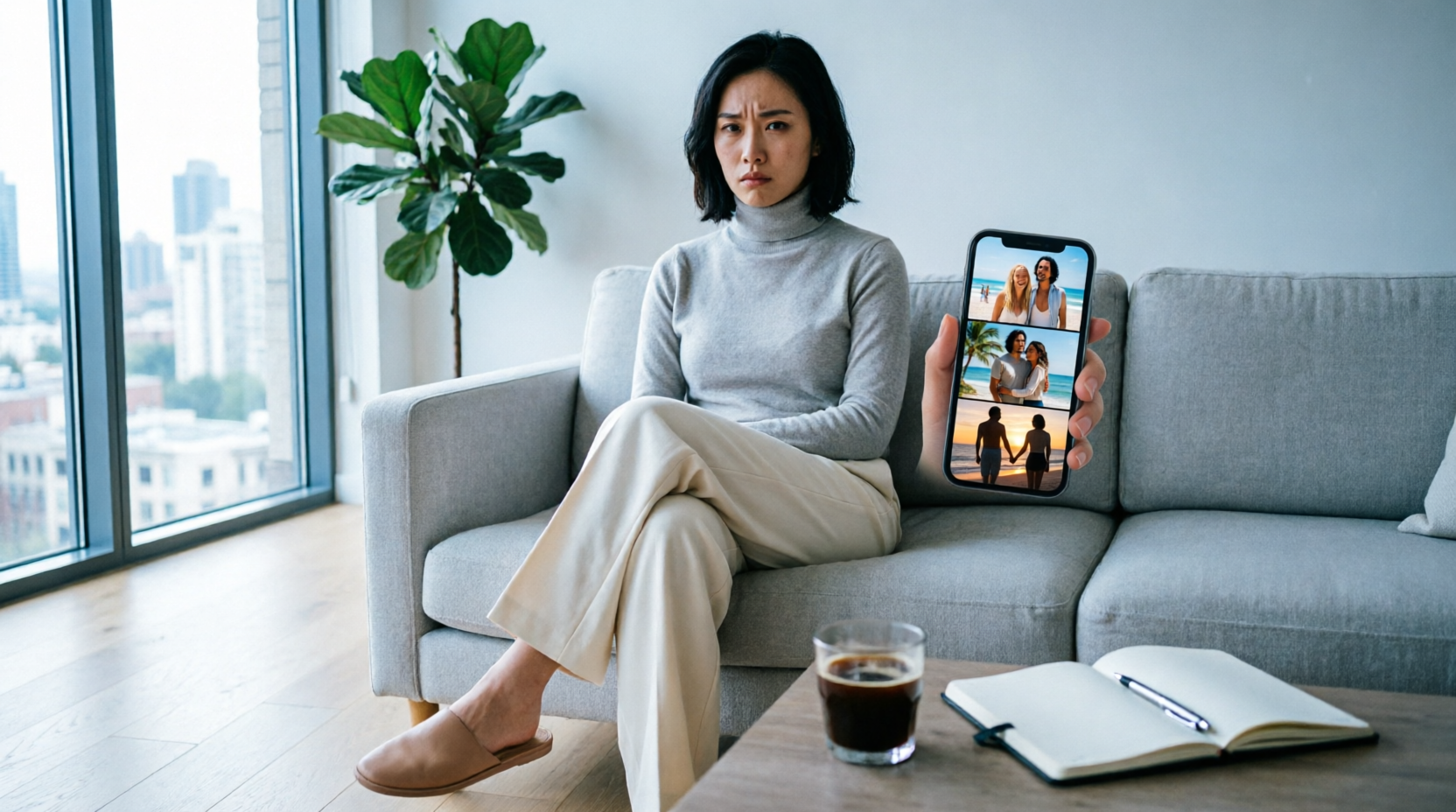
I leaned on the table to keep from falling.
How curious.
Cheaters always need to turn their wives into statues to justify someone else warming their bed.
—“And you believed him?” I asked.
—“I loved him.”
—“No. You wanted my life. You even used my last name.”
—“It wasn’t like that.”
—“It was exactly like that. You came to my wedding, my house, my table. You called me ‘friend’ while you were memorizing my husband’s schedule.”
Camila started to cry.
But I had already spent too much compassion on women who cried to avoid giving an answer.
—“Mariana,” she said, —“I’m sick.”
My voice dropped.
—“And that doesn’t make you a bad person. What makes you a bad person is knowing it and still sleeping with someone without warning. What makes him miserable is finding out and coming back to my house in silence.”
Diego slumped into a chair.
Camila didn’t reply.
—“I’m hanging up,” I said. —“And if you ever look for my husband in this house again, remember something: he’s no longer my husband to defend. He’s my legal problem to solve.”
I cut the call.
Diego looked at me as if I had just buried him alive.
—“What are you going to do?”
—“What I should have done since the first charge in Miami.”
I went upstairs.
He followed me.
—“Mariana, don’t make decisions while you’re angry.”
I stopped halfway up the stairs.
—“I’m not angry, Diego. I’m awake.”
I walked into our bedroom.
The bed was made.
The pillows were straight.
Our wedding portrait was still on the nightstand. There we were, both of us, smiling in front of a church full of white flowers, while Camila appeared in the background, blurry, clapping with the face of a saint.
I took the portrait and turned it face down.
Then I pulled out a suitcase.
Diego stayed in the doorway.
—“You can’t just leave with Sophie like this.”
—“Watch me.”
I opened drawers.
The girl’s clothes.
Documents.
Immunization records.
Passports.
Birth certificates.
My folder with bank statements.
Every item I put in the suitcase was a piece of me leaving the deception behind.
—“Mariana, this is my house too.”
—“Then enjoy it. With its walls, its furniture, and your shame.”
—“And my daughter?”
I turned around.
—“Your daughter is at school. I’m going to pick her up. I’m taking her to my sister’s. And you aren’t coming near her until a lawyer says how, when, and under what conditions.”
—“I’m her father!”
—“And I am her mother. The one who didn’t go on vacation with a sick mistress and come back hiding the results.”
He went silent.
I kept packing.
Then he saw me take a plastic bag and put in his toothbrush, his razor, and his cash-bought medications.
—“Why do you want those?”
—“To hand over to the doctor and the lawyer.”
—“You’re exaggerating.”
I stared at him so hard he looked away.
—“Don’t ever use that word with me again.”
At noon, I picked up Sophie.
She was eight years old with two messy braids because Diego had done her hair the last day before he left. She came running out with her unicorn backpack and hugged my waist.
—“Is Daddy home yet?”
I felt my heart bleed.
—“Yes, sweetie. But tonight we’re sleeping at Aunt Laura’s.”
—“Why?”
I stroked her head.
—“Because Mommy needs to get some things in order.”
Children know when you’re lying with love.
Sophie didn’t ask anything else.
She just held my hand tighter.
My sister Laura lived in the Lincoln Park neighborhood, in a small apartment with plants in the window and the smell of noodle soup. When I opened the door, it only took one look at my face for her to understand.
She didn’t ask anything in front of the child.
She just hugged me.
That hug finally broke me.
I cried on her shoulder like I hadn’t cried in fifteen days. I cried for the woman I used to be, for the friend who betrayed me, for the bed used as a lie, for my daughter, and for the fear of results that weren’t mine yet but had already stolen my peace.
Laura held me.
—“Doctor first,” she said. —“Lawyer second. Then you cry as much as you want.”
And that’s how it went.
That same afternoon, I went to a clinic.
The doctor spoke to me with a calmness that saved me from imagining monsters. She explained transmission routes, tests, timing, care, vaccines, and follow-ups. She told me something I didn’t forget:
—“Don’t carry someone else’s shame. You came here to protect yourself. That is the right thing to do.”
They ran the tests.
They also checked Sophie’s records.
My daughter’s vaccinations were up to date.
I breathed for the first time in hours.
But the peace wasn’t joy.
It was just a floor beneath my feet.
The next day I called a lawyer.
He wasn’t the kind of lawyer Diego used for contracts and smiles. She was a woman with a firm voice named Teresa Fuentes, recommended by my sister. I arrived with folders, screenshots, bank statements, reservations, messages, printed results, prescriptions, and the hotel wristband Diego had left in the bathroom.
Teresa reviewed everything without interrupting me.
When I finished, she looked up.
—“Do you want to scare him, or do you want to separate?”
The question pierced me.
Before that night, I would have said I wanted him to suffer.
That I wanted to see him on his knees.
That I wanted Camila to cry like I did.
But in that office, with my evidence on the table and my hands still shaking, I understood something: revenge also keeps you married to the pain.
—“I want to come out clean,” I said. —“I want to protect my daughter. And I want him to stop lying to me.”
Teresa nodded.
—“Then we’re going to do this right.”
That afternoon, Diego was served.
Legal separation.
Temporary restraining orders.
Custody.
Support.
The use of family resources on the trip.
And, above all, documentation that I had sought medical attention due to potential undisclosed exposure.
We didn’t write insults.
We didn’t have to.
The truth, put on paper, was brutal enough.
Diego started calling.
Once.
Ten times.
Thirty.
Then he sent messages.
“I love you.”
“I made a mistake.”
“Don’t destroy the family.”
“Think about Sophie.”
That last one made me reply.
“I am thinking about her. That’s why I’m not coming back.”
Then I blocked his number.
Not forever.
Just so I could breathe.
Camila showed up three days later outside Laura’s building.
I don’t know how she found out where I was.
Maybe Diego.
Maybe one of those friends who feeds on gossip and then says, “I just wanted to help.”
I saw her from the window.
She was wearing dark glasses, a scarf in her hair, and an expensive bag on her arm. She looked less like a sick woman and more like an actress tired of her own role.
I went down alone.
Laura wanted to go with me.
—“No,” I told her. —“I’m the one closing this door.”
Camila took off her glasses when she saw me.
Her eyes were swollen.
—“I need to talk to you.”
—“Talk.”
—“Diego isn’t answering me.”
—“What a tragedy.”
She pressed her lips together.
—“I didn’t come to fight.”
—“Then you came too late.”
She looked toward the street.
—“I didn’t want it to happen like this.”
—“How did you want it to happen? That I’d never find out? That he’d set you up in a house? That my daughter would call you ‘aunt’ while you laughed at me?”
Camila started to cry.
—“He told me he was going to leave you.”
—“And you believed him because it was convenient for you.”
The sentence hit her. She looked down.
—“I’m scared.”
For a second, I saw a real woman beneath the mistress. A woman who was scared, sick, and alone. And although a part of me wanted to tear her apart, another part remembered what the doctor told me.
Don’t carry someone else’s shame.
Don’t spread it where it doesn’t belong either.
—“Find treatment,” I said. —“Find your family. Find someone you haven’t betrayed.”
Camila lifted her face.
—“Do you hate me?”
I thought about our wedding.
Her hugs.
My dresses on her body.
Her laughter in the background while Diego sent me fake voice notes from “Chicago.”
—“No,” I replied. —“To hate you would be to keep giving you a place in my life.”
I turned around.
She called my name.
I didn’t look back.
A week later, my results came in.
Negative.
I sat in the car outside the clinic with the paper on my lap and cried silently. I didn’t cry out of happiness. I cried because my body had come out clean from a war my heart didn’t choose.
I called Laura.
Then I hugged Sophie longer than usual when she got out of school.
—“Mom, you’re squeezing me.”
I let her go, laughing and crying.
—“Sorry, sweetie.”
—“Are you okay now?”
I looked at her face. Her braids. Her lunchbox. Her world that was still small.
—“I’m going to be.”
Diego didn’t have the same emotional luck.
I don’t know what his final tests said. It was no longer my right to know, nor my obligation to carry it. What I did know was that Camila stopped looking for him once she realized there would be no house, no easy money, and no borrowed last name. Her love ended where the legal process began.
Very convenient.
Diego arrived at the first hearing without his tan.
Thin.
Haggard.
With a wrinkled shirt.
When he saw me, he tried to smile.
I gave him nothing back.
Teresa touched my arm.
—“Sign here.”
I signed.
Diego asked to speak with me alone.
I didn’t agree.
He asked to see Sophie.
He was granted supervised visits at first, because a father doesn’t lose rights for being unfaithful, but he must demonstrate responsibility when his decisions put a child’s stability at risk.
That sentence, spoken by the lawyer, left him smaller than any insult could.
As we left, he caught up to me in the hallway.
—“Mariana, please. I love you.”
I stopped. I looked at him.
I no longer saw the man who walked in tanned with an expensive suitcase.
I saw a stranger who had mistaken my patience for permission.
—“No, Diego. You loved coming back and finding me where you left me.”
His eyes filled with tears.
—“I’m going to change.”
—“I hope so.”
—“Does that mean there’s still hope?”
I took a deep breath.
—“Yes. But not for us. For you.”
I walked toward the elevator.
He didn’t follow me.
Months later, Sophie asked me if her daddy and I were going to get back together.
We were making French toast on a Sunday in Laura’s apartment, though by then I had already found a small place for the two of us. Sophie had flour on her nose and a seriousness that didn’t fit her eight years.
I turned off the stove.
I knelt in front of her.
—“No, sweetie. We aren’t getting back together.”
Her eyes filled with water.
—“Is it my fault?”
I hugged her immediately.
—“Never. Adults break things because of adult decisions. You didn’t break anything.”
—“Did Daddy do something bad?”
I thought about how much to say. How much to hold back.
—“Daddy lied. And when someone lies in a way that hurts and puts others at risk, they have to take responsibility.”
Sophie looked down.
—“And are you sad?”
—“Sometimes.”
—“And angry?”
—“That too.”
—“And do you love me?”
I hugged her tighter.
—“That never changes.”
That night, when Sophie fell asleep, I opened a box I had brought from the house. Inside were my small things: a notebook, earrings, photos, old letters, and the marriage certificate.
I looked at it for a long time.
I didn’t rip it up.
I didn’t burn it.
I didn’t need to put on a show to prove that something was over.
I just put it in a new folder, next to the divorce papers.
At the bottom of the box, I found my ring.
I had taken it off the day Diego came home from Miami.
For weeks, I carried it like a stone.
That night I put it on the table.
Sophie was sleeping.
The city sounded far away.
My coffee was hot for the first time in a long while.
I took the ring and put it in an envelope.
Not for Diego.
For me.
I wrote on the outside:
“This wasn’t a failure. It was an exit.”
A year later, we signed the divorce.
Diego arrived on time, serious, with a folder under his arm. He had complied with therapy, visits, and support. Sophie saw him some weekends and came back calm, which was the only thing that mattered to me.
Camila disappeared from our lives.
Someone said she had gone to Mérida with an aunt.
Someone said she was in treatment.
Someone said Diego still called her.
I didn’t ask.
There are doors you don’t close just so the other person suffers.
You close them so you don’t have to keep smelling the smoke.
When we left the courthouse, Diego called my name.
—“Mariana.”
I turned.
—“Thank you for not destroying me.”
I looked at him without resentment. Also without love.
—“I didn’t destroy you, Diego. I just stopped covering for you.”
He looked down.
—“I’m sorry.”
This time it didn’t sound like a strategy.
It just sounded late.
—“Take care of Sophie,” I told him. —“It’s the only thing we can still do right together.”
I walked away.
Outside, there was sun.
One of those Chicago suns that fall over the cars, the fruit stands, the parks, and the women who walk out of a courthouse with their backs straighter than when they walked in.
I wasn’t wearing a ring.
I wasn’t carrying fear.
I wasn’t carrying the shame of a disease that wasn’t mine or the guilt of a betrayal I didn’t commit.
I had my keys.
My papers.
My name.
And a quiet certainty:
Diego came back from the beach believing I was going to cry.
And yes, I cried.
But not in front of him.
Not to ask him to stay.
I cried just enough to wash his lie out of my life.
Then I closed the door.
And this time, the one who didn’t come back was me.