The night my sister-in-law emptied our joint savings account, I was standing in the hospital admissions office at thirty-one weeks pregnant, holding a clipboard that suddenly felt too heavy to lift. The form on top asked for a $4,200 deposit. It was just a line on a page. A number in neat printed type. An administrative detail, the kind of thing you prepare for months in advance and then hand over with a polite smile because this is what responsible adults do when they are expecting a baby. You save. You plan. You make the spreadsheet. You discuss contingencies over takeout containers at the kitchen table and tell each other, We’re ready. We’re doing this right.
I had done all of that. I had cut back my hours at the dental office because Marcus and I had agreed it made sense for me to slow down during the third trimester. I had switched to part-time work and spent those extra hours washing tiny cotton sleepers, folding soft blankets, labeling nursery drawers, and reading childbirth books I pretended were calming even when they made my heart race. We had talked through every expense. Hospital deposit, diapers, reduced income for the first few months, emergency buffer if anything went wrong. We had a plan, and more importantly, we had money for the plan.
Or at least I thought we did. The woman behind the desk had kind eyes and a voice trained into that careful hospital gentleness that suggests she sees people unravel every day and does not judge them for it. She ran my debit card once, then frowned slightly at her screen. Not a rude frown. Not suspicion. Just confusion. “I’m sorry,” she said. “Would you mind if I try that again?” I smiled automatically, because women in administrative settings are taught from birth to make discomfort easier for everyone around them. “Of course.” She ran it again. This time I saw the change in her expression before she spoke. It was the kind of expression people wear when they need to tell you something that ought to be simple but won’t be.
“It’s coming back as insufficient funds,” she said softly.
For a second, I honestly thought she must have mixed up cards. People talk about shock like it’s dramatic, but sometimes it is not dramatic at all. Sometimes it’s just the quiet, suspended sensation of your brain refusing to connect the dots because the picture on the other side would be too absurd to accept quickly.
“That can’t be right,” I said. “Can you try once more?”
She did.
Same result.
Then, because she was kind, she turned the little monitor toward me so I could see the number that had come back from the bank.
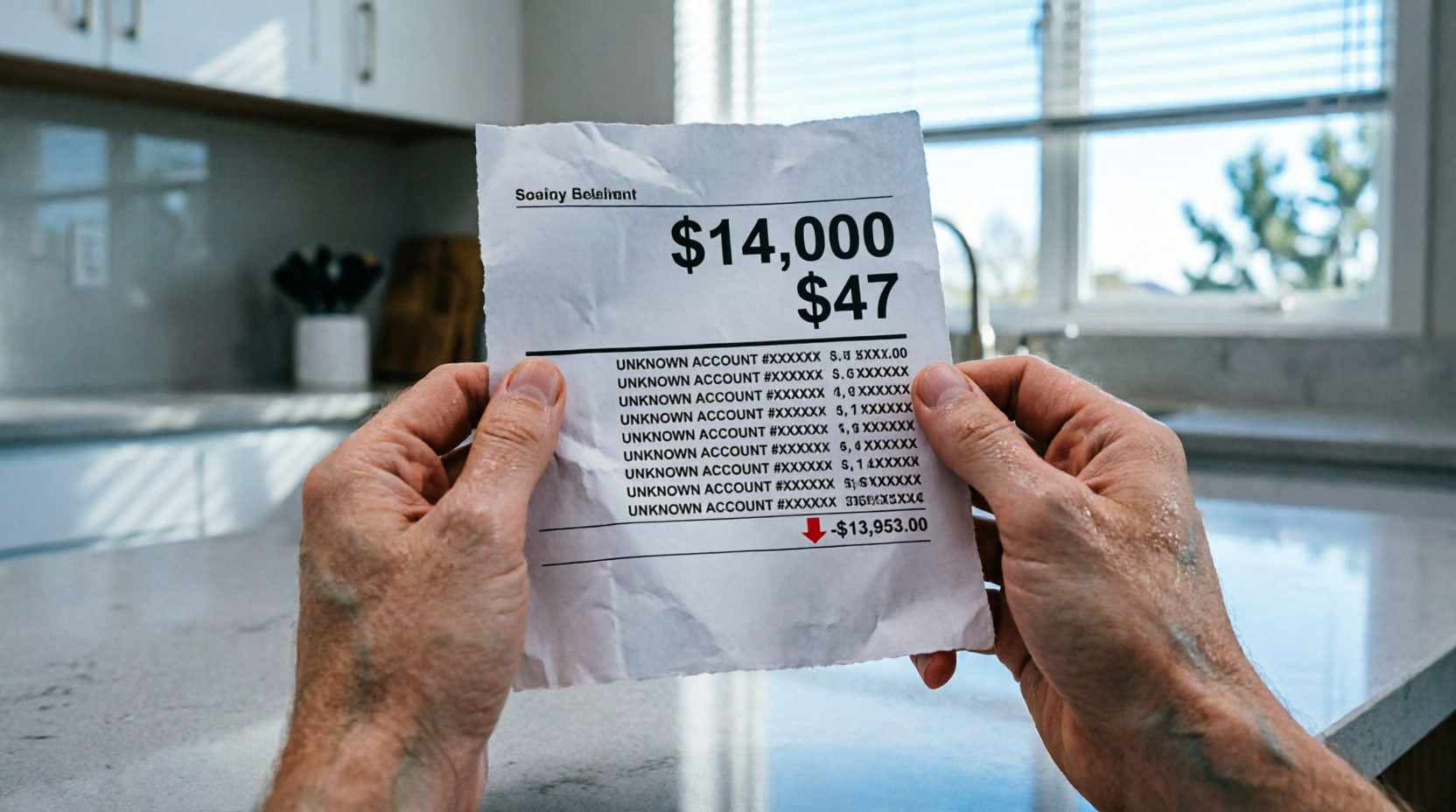
Forty-seven dollars.
There had been more than fourteen thousand in that account eleven days earlier.
I know that because I had checked the balance while paying the water bill. I remembered standing in my kitchen, seven months pregnant, making a mental note that we were in good shape. I had actually felt relieved. Safe, even. The number looked like proof that whatever chaos babies might bring, we had at least built ourselves a cushion.
Now the number on the screen said $47.13.
My hands went numb.
The room did not spin exactly, but it shifted in some sideways way that made me feel as if gravity had changed while no one was looking. There were voices around me, printers clicking, someone laughing down the hall, the low murmur of another admissions conversation nearby, but all of it sounded distant and wrong.
The baby moved inside me then, a hard, rolling shift against my ribs.
That brought me back just enough to breathe.
The woman behind the desk asked, “Do you need a moment?”
I said, “I need to call my husband.”
What I did not say was that some deep, exhausted part of me had already begun screaming.
My name doesn’t matter very much. It could be any woman’s name, any woman who has spent years being told that boundaries are cruelty and silence is grace. What matters is that I was twenty-nine years old, seven months pregnant with my first child, and standing in a hospital trying not to panic while the ground under my life slid in a direction I had spent months pretending I could not see.
If you want to understand how it happened, you have to understand Marcus’s family.
From the outside, they looked close. That warm, admirable kind of close people envy. Sunday dinners. Group texts. Shared holidays. A mother who still kept everyone’s favorite desserts memorized and siblings who dropped by without calling because they were “just so comfortable with each other.”
That was the outside view.
Inside it felt different.
Inside it felt like walls.
Marcus’s mother sat at the center of everything like a queen who never needed a crown because everyone around her had already agreed to behave as if she wore one. She was not loud. Not in the obvious way. She did not throw plates or scream in public or make spectacular scenes. She did not have to. Her power came from certainty. She knew what should happen, who should do it, how things ought to be arranged, and if you wanted peace, you learned very quickly that agreeing with her was easier than testing the edges of that certainty.
Marcus’s sister, Dana, orbited her like a second moon.
Dana was two years older than Marcus, unmarried, often “between jobs,” currently living in the in-law suite attached to our house under the sort of temporary arrangement that people say out loud with bright, reasonable voices even while everyone involved feels the truth of it hardening into permanence. She was the family enforcer in soft sweaters and glossy lip balm. Whatever their mother hinted, Dana implemented. Whatever Dana wanted, their mother framed as practical, loving, necessary. They moved as a unit. One opinion with two mouths.
And Marcus, the man I loved, the man I had chosen and built a life with, stood somewhere in the middle of that gravitational field and called it loyalty.
I called it something else.
But for a long time, I kept that to myself.
When I got pregnant, I was happy in the kind of uncomplicated way that feels almost holy while it lasts. So was Marcus. The day we left the doctor’s office with the ultrasound photos, he cried in the car. Not delicate movie tears. Real, startled tears that made him pull over because he couldn’t see the road. I remember laughing and crying at the same time and holding his hand while he kept saying, “We’re really doing this. We’re really having a baby.”
That day, I believed the story my marriage had been telling me.
We had been together four years before getting married. We were not perfect, but I thought we were solid. We talked things through. We loved each other. We had bought a house we could grow into. We had argued about paint colors and retirement contributions and whether it was worth it to buy organic strawberries, which seemed to me like the kind of ordinary friction healthy couples have when they are planning a future instead of surviving a disaster.
I thought the baby would add joy.
I did not yet understand how pregnancy would also make everyone around me reveal exactly who they were.
Marcus’s mother reacted with what looked like happiness.
She hugged me. She said all the right things. She pressed my hands between hers and told me how thrilled she was, how long she had prayed for this, how beautiful motherhood would look on me. She brought over flowers the next day and a stack of parenting books I had not asked for. If that had been all, maybe things would have been fine.
But within two weeks she had opinions about the nursery colors, the pediatrician, the stroller brand, whether we should cloth diaper, whether I would breastfeed, how soon I should stop working, whether it was wise for me to keep driving long distances in my second trimester, whether my own mother would “know what to do” when the baby came.
Then she brought up the key.
It was one of those conversations that sounds harmless when written down. We were having Sunday dinner at her house. Pot roast, green beans, her polished dining table set with cloth napkins because she believed paper products were a sign of moral decline. Dana was there, of course, and midway through dessert Marcus’s mother said in the same casual tone people use to discuss weather, “You know, with the baby coming and you working fewer hours, it might make sense for Dana and me to have a key to the house. Just so we can help out more easily.”
I remember setting down my fork very carefully.
“We’ll think about it,” I said.
Marcus said nothing then.
The following weekend, while I was at prenatal yoga, he gave them one anyway.
I found out when I came home and walked into my kitchen to find Dana standing on a step stool reorganizing my cabinets.
She turned when she heard me and smiled—big, bright, cheerful, as if what I was seeing was not a violation but a gift. My glasses were no longer where I kept them. The baking dishes had been moved. My spice rack was half emptied.
“Don’t worry,” she said breezily. “I’m putting everything somewhere more logical.”
I stood there in the doorway with my yoga mat under my arm and sweat drying cold on my back and thought about a hundred things at once.
I thought, This is my house.
I thought, Marcus did this without asking me.
I thought, If I say exactly what I’m feeling right now, I’m going to become the unreasonable one before dinner.
And because I was still the version of myself who had spent years choosing peace over clarity, I put my mat down, poured a glass of water, and asked where she had moved the glasses.
That was October.
By November, Dana had opinions about everything. The crib we chose was “too modern.” The rocking chair I ordered was “pretty but not practical.” The wallpaper samples for the nursery were “a little cold.” She had a way of saying these things as if she were not criticizing, merely educating. Her favorite phrase was, “I’m just trying to help.” It became the soundtrack of my pregnancy.
I’m just trying to help.
By December, she had developed a habit of arriving unannounced on Tuesday and Thursday mornings. She would use her key, walk in calling “Hellooo?” like she was entering a friendly space and not my home, and then drift through the kitchen, the laundry room, the nursery, offering comments on everything from my vitamin brands to whether I should still be eating deli meat.
Marcus thought I was being sensitive.
His exact words were, “She’s just excited about the baby. It’s coming from a good place.”
A good place.
I started keeping notes on my phone.
I did not do it because I knew I would need evidence someday. I did it because writing things down was the only way I could convince myself I was not imagining the pattern. It became a private ritual. Dana moved the freezer meals I’d prepared and relabeled them in her own handwriting—note. His mother suggested I should let Dana stay overnight with the baby “so I could recover properly”—note. Marcus told me it wasn’t worth making a fight out of the nursery curtains because “Mom is only trying to make things nicer”—note.
By January, there were forty-three notes.
January was also when Marcus’s company cut his hours.
He survived the layoffs, technically, but his schedule changed and his income dropped enough that we sat down one night at the kitchen table with laptops and bank apps and all the solemn energy of adults trying very hard to remain calm. Dana was in the living room while we talked. I noticed that. I remember glancing toward the hallway and hearing the television too low to fully cover our voices. I remember thinking, It doesn’t matter. We’re just reviewing numbers.
That was my mistake.
We had about fourteen thousand dollars in our joint savings. It wasn’t wealth, but it was enough to steady me. It represented planning. Responsibility. The hospital deposit, a few months of leaner income, emergency coverage if I needed extra unpaid leave or if the baby came early or if something—anything—went wrong.
We looked at the number together.
Marcus squeezed my hand and said, “We’re okay.”
I believed him.
February 3rd, I had a routine prenatal appointment in the morning. The baby’s heartbeat was strong. My blood pressure was good. My OB reminded me, again, to finish pre-registering at the hospital because “babies don’t care about paperwork schedules.”
After the appointment, I drove straight to Mercy General.
The admissions office smelled faintly of copier ink and lemon cleaner. There were mothers with partners, one older man filling out forms for what looked like surgery, a television in the corner playing a home renovation show with the volume off. I took my clipboard, answered the questions, handed over my insurance card and debit card, and expected to be back in my car twenty minutes later feeling efficient.
Instead I watched the woman at the desk say “insufficient funds” three times in the gentlest voice imaginable.
I sat in the hallway afterward and opened my banking app.
Fourteen transfers over eleven days.
Amounts ranging from $400 to $2,300.
All initiated by the same authorized user.
Dana.
My sister-in-law’s name was attached to every one.
I want to say I became decisive right then. That I stood up, squared my shoulders, and moved through the next steps like the heroine in a legal drama who knows exactly how to protect herself.
That is not what happened.
What happened is that I sat in one of those hard waiting room chairs bolted to the floor and stared at my phone while my body did its best to disappear around the edges. My breathing went shallow. My palms turned cold. And beneath all of it, the baby moved again, a steady reminder that my body was no longer entirely my own and therefore panic had to be managed, not indulged.
Stay calm, I told myself.
Stay calm, stay calm, stay calm.
I called Marcus.
No answer.
I called again.
No answer.
A third time.
A fourth.
Nothing.
Then I called my mother.
She picked up on the second ring.
“Hi, sweetheart.”
I do not remember deciding what voice to use. It came out flattened, stripped of everything except the core request.
“Mom, I need you to come to Mercy General right now.”
She did not ask why.
She did not tell me to breathe or suggest I was overreacting or ask if it could wait until after lunch.
She just said, “I’m getting my keys.”
That alone almost made me cry.
While I waited, I went back to the admissions desk and told the woman there, as steadily as I could, that there had been a serious issue with my account and I would be resolving it before completing pre-registration. She gave me a direct number to call when I was ready. Her hand brushed mine briefly when she passed over the card. That tiny gesture of ordinary kindness almost undid me.
My mother arrived in nineteen minutes.
I know because I watched the clock the whole time.
She came striding through the automatic doors in a navy coat, face set, no-nonsense hair tucked behind one ear. My mother is not theatrical. She is not the sort of woman who gasps or performs outrage. When she sat beside me and I handed her my phone, she read the transaction history in total silence.
Then she said, “Where is she right now?”
I said, “Probably at my house.”
My mother nodded once.
“Okay,” she said. “We’re going to the bank first.”
The branch manager’s name was David. He was patient, professional, and visibly uncomfortable in the way people become when they know they are looking at something morally wrong but administratively complicated.
He confirmed that Dana had been added as an authorized user on the account.
That phrase mattered.
Authorized user.
It meant she was not an outside thief. The bank would not automatically categorize what she did as straightforward fraud because, technically, she had been granted access. She had used the access. The system did not care that the person who granted access had done so over my objections or without fully understanding what boundaries that person did not possess.
David said the bank’s fraud department would still need to review the transfers. He also strongly recommended law enforcement because the nature of the use mattered, not just the access level.
I asked him to remove Dana from the account immediately.
He did.
I asked him to freeze outgoing transfers while review was pending.
He did that too.
Then my mother drove me home.
Marcus’s car was in the driveway.
So was Dana’s.
When I walked into my house, they were both in the kitchen.
Dana was cooking.
Actually cooking. Moving around my kitchen in leggings and socks as if this were a normal Tuesday and not the day I had stood in a hospital hallway discovering she had gutted our savings account. A pot simmered on the stove. My cutting board was out. The knife block was crooked because she never put things back the way I liked them. Marcus stood by the sink with his phone in his hand, looking up when I came in with the expression of a man about to explain why he missed a call.
“Hey,” he began. “I saw you called a bunch of times, I was in a meeting, what’s going—”
I put my phone on the counter between us.
The transaction history was open.
“Would you like to explain this to me?”
Dana turned.
She looked at the screen.
And in that fraction of a second, I watched her choose.
Not guilt. Not apology. Calculation.
“I was holding it for you,” she said.
I stared at her.
“Holding what?”
“The money,” she said, like I was being obtuse on purpose. “Mom and I talked about it and we decided it made more sense for me to keep it somewhere safe for now. Since you’re not working full hours and all. We didn’t want you spending it on things you didn’t need.”
The room went silent in the most absolute way.
I could hear the simmering pot. The hum of the refrigerator. My own pulse.
“You took fourteen thousand dollars,” I said, “from my account because you decided it wasn’t safe with me.”
“Our account,” Dana corrected. “Marcus is on it too.”
I turned to my husband.
“Did you know about this?”
He said my name.
Just my name.
Not an answer. Not a denial. A soft warning, or maybe a plea, or maybe the sound men make when they realize silence has finally become evidence.
And that non-answer told me everything.
My mother stepped fully into the kitchen then, where she had been standing just behind me.
She looked at Dana. Then at Marcus.
She said, very calmly, “You have until tomorrow morning to return every dollar to that account. After that, we are filing a police report.”
Dana blinked at her like she had wandered into a play halfway through and disliked the new script.
“This is a family matter.”
“Yes,” my mother said. “And my daughter is my family.”
Then she turned to Marcus.
“I hope you understand what’s happening here,” she said quietly. “I really do.”
We left.
I did not scream. I did not throw anything. I did not announce some dramatic ultimatum in my own kitchen, though God knows a small, furious part of me wanted to.
My mother took me to her house.
I slept in my old bedroom, beneath the yellow curtains she never got around to replacing and under the quilt my grandmother made before arthritis took her hands. I lay there with one hand on my stomach and thought about every moment over the last several months when I had ignored what my own body already knew.
Every uninvited Tuesday morning.
Every cabinet Dana moved.
Every “helpful” comment that landed like control wearing lipstick.
Every time I looked at Marcus waiting for him to speak and watched him choose quiet because quiet was easier than conflict.
Then I opened the notes app on my phone.
Forty-three entries.
The next morning, I called a family lawyer named Patricia Moss.
She was recommended by a hygienist at work whose divorce had apparently involved hidden accounts, surveillance footage, and a boat. I remember thinking at the time that anyone who could emerge competent from a case involving a boat was probably the woman I needed.
Patricia answered with the clipped energy of someone already in motion.
I told her everything.
She listened without interrupting, which by then felt like a form of luxury.
At the end she asked, “Do you have written communication from your sister-in-law or husband that explains why the money was removed?”
“I have notes,” I said. “And texts are starting to come in.”
“Forward me everything,” she said.
While we were on the phone, Marcus texted me eleven times.
I read them in order because even then some stupid part of me still hoped the sequence would reveal remorse.
The first three were apologetic.
I’m sorry.
I didn’t know she moved that much.
I thought it was temporary.
The next four shifted tone.
She was struggling.
Mom thought it was safest.
I didn’t think you’d react like this.
You know how protective they are.
And the final four arrived in something closer to accusation.
Where are you?
This is dramatic.
Come home so we can talk like adults.
You’re making this worse.
I forwarded all of them to Patricia.
Her response came thirty seconds later.
Perfect. Thank you.
Two days after that, she discovered what made everything harder and clearer at once.
Dana had not simply “held” the money.
More than $6,400 of it had already been moved into a secondary account in Dana’s name. From there it had been used for a personal loan repayment and two credit card balances.
She had spent it.
I was sitting in my mother’s living room when Patricia emailed the preliminary review. A mug of tea cooled untouched beside me. My mother sat across from me reading something on her tablet until she noticed my face change.
“What?”
I read the email again because the first time still felt impossible.
“She spent it,” I said.
“How much?”
“More than six thousand.”
My mother closed her eyes for one brief moment, like she was placing all her anger into a box before speaking.
“Okay,” she said. “What does Patricia say next?”
Patricia said to file a police report.
We did it that afternoon.
The officer who took our statement was direct about the complexity. Authorized user status created a gray area, yes. But gray did not mean harmless. It did not mean untouchable. It meant intention and documentation would matter. And we had both.
What changed the picture most was a text Dana had sent Marcus—one he had forwarded to me during his earlier burst of apologetic self-preservation and then apparently forgotten. Patricia loved that kind of oversight. In the text, Dana wrote, I’m going to pull the baby money so she can’t waste it.
There it was.
Not management. Not mutual decision-making. Not temporary safeguarding. Intent.
Misappropriation of funds under deceptive pretense, Patricia called it, in the same tone someone might use to discuss weather patterns or filing deadlines.
The police report was filed on Thursday.
By Friday morning, Marcus’s mother had called me four times.
I let every call go to voicemail.
The messages cycled predictably. First confusion. Then hurt. Then indignation. Then full accusation.
In her final voicemail, she said, “You are using that baby as a weapon, and Marcus knows it.”
I saved all four.
Marcus came to my mother’s house on Saturday.
He stood on the front porch looking like a man who had not slept properly in days. Not just tired physically—though he was that too—but tired in the deeper, grayer way people look when reality has finally broken through whatever story they were using to protect themselves.
I opened the door and stepped outside enough to keep the conversation contained by the cold.
I did not invite him in.
He said he had spoken to a lawyer.
I said, “Okay.”
He said Dana had agreed to return the full amount to avoid criminal proceedings.
He said it like he was bringing me relief.
I stared at him.
“She spent sixty-four hundred dollars of it. Where is that money coming from?”
He looked at the porch railing instead of me.
“Mom is covering the difference.”
I gave a short laugh that had no humor in it.
“So your mother approved this plan, and now your mother is paying to clean it up.”
“I know how that sounds,” he said.
I stepped closer.
“Marcus, I was standing in the hospital admissions office at thirty-one weeks pregnant and my card came back with forty-seven dollars in the account. I had to call my mother because you didn’t answer your phone.”
His face tightened.
“I know.”
“No,” I said. “I don’t think you do.”
I heard my own voice then—steady, low, more controlled than I felt.
“I sat in a hallway for six minutes trying not to have a panic attack while our daughter was moving inside me because I didn’t want stress to hurt her. Do you understand that? This was not just about money. It was about standing there in a medical building, carrying your child, and realizing your sister had taken our security and you either knew or didn’t care enough to notice.”
He was quiet for so long I started counting the seconds without meaning to. A car drove by. Somewhere down the street a dog barked. The cold bit through my sweater.
Then he said, “I’m sorry.”
And I believed that he was sorry.
But sorrow is not the same thing as character.
So I said the truest thing I had.
“I need you to decide who you are in this marriage. Not for me. For you. I need you to decide whether you are my partner or your mother’s son first and my husband second. Because I cannot do both. I cannot raise a child in a house where that answer changes depending on who’s in the room.”
He did not answer me that day.
He nodded once, like the words had landed somewhere he could not immediately access, and then he left.
I went inside.
My mother was in the living room watching a home renovation show, and she shifted over on the couch without saying a word. I sat down beside her and we watched strangers fight about kitchen tile for an hour because sometimes survival is just being in the same room as someone who is entirely on your side and asking nothing from you except that you keep breathing.
The money came back the following Tuesday.
All of it.
Fourteen thousand two hundred dollars once the dust settled, including the amount Marcus’s mother had covered to replace what Dana already spent. Patricia confirmed receipt and marked restitution in the file. The police report stayed open. The detective made it clear that with full restitution and no prior record, prosecution was unlikely unless I pushed hard for it.
I kept the report active anyway.
Not because I knew I would pursue it. But because I wanted Dana to understand, maybe for the first time in her life, that access and entitlement are not the same thing.
She moved out of the in-law suite two weeks later.
I do not know everything that passed between Marcus and his family after that. He gave me the broad outline. There were arguments. His mother cried. Dana claimed victimhood. There were accusations that I had turned him against them, that pregnancy had made me paranoid, that this would all be regretted once the baby came and I realized how much help I needed.
I have no doubt all of that happened.
What I know is this: on the afternoon the last of Dana’s boxes were loaded into a borrowed SUV and the suite finally stood empty, Marcus came into the kitchen holding the interior key.
He placed it on the counter between us and said, “It should have been like this from the beginning. I’m sorry it took me this long to make it right.”
I picked up the key.
I did not tell him it was okay.
Because it was not okay.
But I did say, “Thank you.”
That was the start of whatever came next.
If you want a cleaner ending than that, I understand. I used to want one too. Something cinematic. A husband choosing his wife in a single grand gesture. A mother-in-law humbled. A sister-in-law disgraced. A marriage restored in one sweeping scene while violins play somewhere in the background.
Real life is less generous with clean endings.

We are still together.
That is the truth.
And it is also true that being together after something like that is not a reward. It is work. It is counseling appointments and hard conversations and learning how to sit inside the ruins of trust without pretending the structure was never damaged. Some weeks it feels like we are truly building something stronger and more honest than what we had before. Other weeks it feels like we are moving carefully across a floor where the boards still creak in all the places we once fell through.
Marcus did go to counseling. Individual therapy first, because I told him very plainly that if he wanted this marriage to survive, he needed to understand why his default setting had always been to manage his mother’s feelings at my expense. We did couples therapy too, where I learned that anger sounds very different when it is spoken in a softly furnished office with tissue boxes nearby than when it lives inside your body at two in the morning.
There were things he said in those sessions that mattered.
He admitted he had known Dana was taking “some” of the money, though he insisted he did not understand how much. He admitted his mother framed it as temporary protection, that she told him I was stressed and impulsive and might “panic spend” on baby things once labor got closer. He admitted that some part of him knew it was wrong but had been trained for so long to treat his mother’s certainty as wisdom that he confused obedience with stability.
None of that excused it.
But explanation is not the same thing as absolution. Sometimes explanation is simply the map you need if you intend to rebuild anything at all.
Our daughter was born eight weeks later.
She came early in the morning after a night of labor that erased all elegant theories about childbirth and replaced them with sweat and noise and the ancient animal fact of bringing a human being into the world. Marcus was there. My mother was there until visiting hours ended. The hospital deposit was paid. The paperwork completed. The room quiet except for machines and nurses and the fragile new astonishment of her.
When they laid her on my chest, the entire world reduced itself to one impossible truth: she existed.
She had Marcus’s ears.
My mother’s stubbornness.
And absolutely no knowledge of the mess she had entered.
She is eight weeks old now.
She makes small outraged noises in her sleep. She curls one fist beside her face when she dreams. She smells like milk and warmth and some sweetness I still do not have language for. When she stares at me with those wide, serious eyes, I sometimes feel an ache so fierce it borders on fear, because love for your child reveals the full size of what you are willing to protect in a way nothing else can.
Maybe one day she will know some version of what happened before she was born.
Maybe not the full version. Not the hospital hallway and the forty-seven dollars and the simmering pot on my stove while Dana explained that she had decided our money was not safe with me. But enough. Enough to understand that there was a moment, before she arrived, when I stopped negotiating with my own instincts.
That is the part that matters most.
Because when I look back now, the story is not only about the money.
It is about the woman I was before that day and the woman who walked out of the bank after freezing the account and understood she was done making herself smaller to preserve everyone else’s comfort.
Before that day, I was the woman who came home from yoga, found her kitchen being rearranged, and asked politely where the glasses had gone.
Before that day, I was the woman who noticed Dana listening from the living room while Marcus and I discussed savings and still thought, It’s fine.
Before that day, I was the woman who kept notes on her phone instead of boundaries at the door, because notes were private and boundaries caused scenes.
After that hallway, something in me shifted.
Not shattered.
Shifted.
There is a difference.
Shattering is when you lose yourself entirely.
Shifting is when you close a door inside yourself and realize, with some surprise, that you never have to reopen it.
The first time Dana tried to come by after the baby was born, she texted Marcus instead of me.
He showed me the message.
Can I stop in this afternoon and see the baby? I’ll only stay a minute.
I looked at the screen and waited.
Old Marcus would have said, She’s trying. Or, Let’s not make this bigger. Or, It would mean a lot to Mom if we kept the peace.
Instead he typed, Not today. We’ll let you know when we’re ready for visitors.
He sent it before I could tell him to.
That mattered.
Later that night, after the baby was asleep on my chest and the house was finally quiet, he sat beside me on the couch and said, “I know that doesn’t fix anything.”
“No,” I said. “It doesn’t.”
“But I want you to know I’m trying to be different.”
I looked at him then.
At the tiredness under his eyes. At the humility that had replaced, at least for now, the old reflexive defensiveness. At the man who had failed me badly and the man who was now, haltingly, trying to become someone else.
“I know,” I said.
And for that night, that was enough.
People like neat categories. Villains and heroes. People who deserve second chances and people who do not. But the hardest truths in marriage rarely arrange themselves so cleanly. Marcus was not innocent. He was also not his mother. He was a man raised inside a system of guilt and control who chose the comfort of old loyalties until that comfort nearly cost him his family. Then, finally, he looked at what it had done and decided he did not want to keep living that way.
I do not know if that will always be enough.
I only know it is what is true right now.
And what is also true is that the old version of me is gone.
The woman who believed peace was purchased by silence. The woman who thought being accommodating was the same as being loving. The woman who watched her own life get rearranged by people with louder certainties and quietly tried to adapt.
She closed a door in a hospital hallway.
And she did not reopen it.
Sometimes now, when I’m washing bottles in the kitchen or folding tiny onesies at the dining table, I think back to that first day Dana walked in with her key and started moving my cabinets around. I can still see the exact line of her shoulders. The confidence. The assumption. The way she smiled like my home had already agreed to belong to her.
If that happened now, I know exactly what I would say.
Put everything back.
Then leave.
No explanation. No apology. No smoothing it over afterward by asking where she moved the glasses.
That knowledge comforts me more than anger does.
Because anger burns hot and then asks for fuel.
Clarity stays.
The day after Dana moved out, I walked into the empty in-law suite by myself.
It smelled faintly like dust and old perfume. The kitchenette cabinets stood open. A lamp cord trailed across the floor. The bed had already been removed, leaving pale rectangles in the carpet where furniture had protected it from sunlight.
I stood in the middle of that little living room and let the silence settle.
Then I locked the interior door.
I kept the key.
I still keep it.
Not because I expect Dana to wander back in one day demanding access. Not because I think a locked door is some magical shield against people who believe family entitles them to ownership over your life.
I keep it because symbols matter.
There are doors you close because the person on the other side is dangerous.
And there are doors you close because the version of you who once stood there apologizing for taking up space is not welcome back in anymore.
This was the second kind.
Our daughter makes this soft snuffling sound when she is about to wake up.
I hear it now from the bassinet beside the couch where I’ve been writing this in fragments during nap windows and feeding breaks and the strange timelessness of early motherhood. The house is quiet. Marcus is at work. My mother dropped off soup this morning and kissed the baby’s head and left without reorganizing a single thing in my refrigerator. Outside, the weather has finally turned warm enough to open the windows for an hour in the afternoon.
Ordinary things.
After everything, ordinary feels like luxury.
I stand, go to the bassinet, and put a hand gently on my daughter’s chest.
Her eyes flutter open. She looks up at me, serious and new and entirely unconcerned with the history of the room she is lying in.
That is as it should be.
She does not need to carry what I carried.
But if one day she asks me who I was before she was born, before I learned how to say no with my whole life behind it, I think I will tell her this:
There was once a woman who kept asking where the glasses had gone.
Then there was a woman who looked at forty-seven dollars on a hospital screen, felt the floor shift under her, and decided never again.
And if I have done my job right as her mother, the second woman will be the only one she ever really knows…