The air inside O’Malley and Sons Funeral Home felt thick with lilies and forced emotion, the kind of sweetness that hangs over a room when people are pretending more than they are grieving. Around 40 mourners sat in neat rows, dressed in black, whispering softly, bowing their heads at the right moments. I sat in the third row, stiff against the velvet seat, feeling less like a daughter and more like someone already being written out of the story. On my left, my mother, Francine Hudson, wore her grief the same way she wore her pearls: carefully chosen, perfectly arranged, impossible to question from the outside. On my right, my brother Wesley kept adjusting his cufflinks, restless not with sadness, but with anticipation.
At the front of the room, my father’s mahogany casket stood surrounded by flowers. Harrison Hudson had spent 40 years building a life piece by piece. He had bought the house on Brookside Lane when he and my mother were young, painted the nursery himself before Wesley was born, planted the maple tree in the front yard when I came along 5 years later, and repaired every broken hinge, porch rail, pipe, and window until the home seemed less like a structure and more like an extension of his hands. Now, before the funeral flowers had even begun to wilt, that life was already being divided up.
Wesley stepped up to the podium and began his eulogy in a practiced tone. He talked about fishing trips, life lessons, and moments of kindness I barely recognized. Everything sounded polished, almost rehearsed, like grief had been drafted, edited, and memorized. He called our father generous. He called him wise. He called him the foundation of the family. And then, without stepping away from the podium, his voice shifted. His hands gripped the sides of the lectern. His expression tightened into something meant to resemble burden. I knew that look. Wesley had used it since childhood whenever he wanted people to believe he was suffering nobly while someone else cleaned up the mess.
“As many of you know,” he said, “Dad’s passing leaves us with some difficult realities. After discussing it with Mom, we’ve decided the best way forward is to sell the house on Brookside Lane immediately. To take care of… family obligations.”
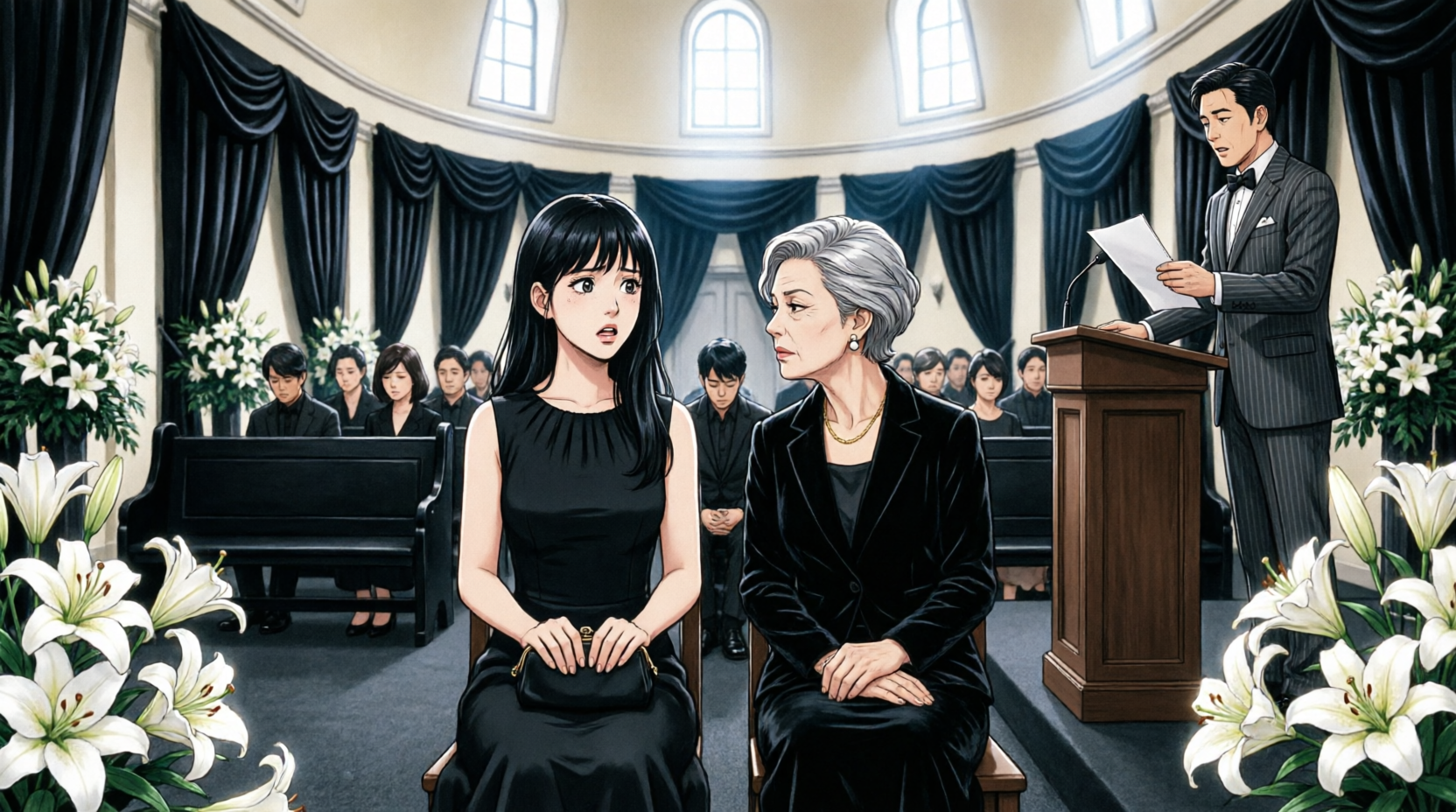
A quiet murmur moved through the room.
I knew exactly what that meant.
His gambling debt.
$340,000 of bad decisions dressed up as tragedy.
For months, my mother had been softening it with vague language. She called it “a financial setback.” She said Wesley had “gotten involved with the wrong people.” She insisted that family had to help family, though somehow that sentence only ever pointed in one direction. Wesley needed help. Wesley needed grace. Wesley needed understanding. Wesley needed another chance.
I needed to be reasonable.
Then my mother stood.
She did not look at the casket. She did not pretend to. Her eyes locked directly on me, steady and cold, like this had been decided long before today.
“Your father would understand,” she said clearly. “Wesley needs support. Jada is independent. She has her own life. You can find somewhere else to live.”
She said it so casually.
Like removing me from my own home was nothing.
The room fell silent. Every eye turned toward me. Some looked sympathetic. Others looked away. No one spoke. No one objected. In this family, love had always been uneven, and Wesley had always come first.
I had learned that early.
By 18, I already understood the rules of my mother’s house. Wesley was the heir. Wesley was the investment. Wesley was the future that needed protecting. I was useful when quiet, acceptable when helpful, and inconvenient whenever I needed anything of my own.
My mother had said it plainly once, not in anger but in practicality, which made it worse.
“Why invest in you? You’re a girl. One day you’ll belong to someone else. Wesley needs opportunities that match his future.”
In her world, sons mattered.
Daughters were temporary.
So I built my own life anyway. I became a CPA. I worked constantly, lived cheaply, took exams while exhausted, learned tax law and estate planning and financial audits because numbers did not lie to me the way people did. I pushed through everything until I could stand on my own.
But standing on my own never meant I had stopped belonging to my father.
For the last 3 years of his life, I had lived at Brookside Lane again, not because I failed, not because I was dependent, and not because I had nowhere else to go. I lived there because my father got sick.
First came the diagnosis. Then the appointments. Then the medications, the insurance forms, the nights he pretended he was not in pain because he did not want to worry me. My mother visited doctors with him when she wanted to be seen doing it. Wesley came by when he needed money.
I was the one who learned how to change his dressings.
I was the one who kept track of his pills.
I was the one who sat beside him at 3 in the morning when the pain medication wore off too early and he stared at the ceiling, trying not to groan.
I was the one who watched him become smaller and still tried to preserve his dignity.
And now, at his funeral, my mother had turned to me in front of 40 people and told me to find somewhere else to live.
Wesley reached for his coat, already wearing that small, satisfied smile, as if everything had gone exactly as planned.
Then, from the back of the room, a chair scraped loudly across the floor.
The sound cut through everything.
Everyone turned.
Thomas Vance, my father’s lawyer of 30 years, stood up slowly.
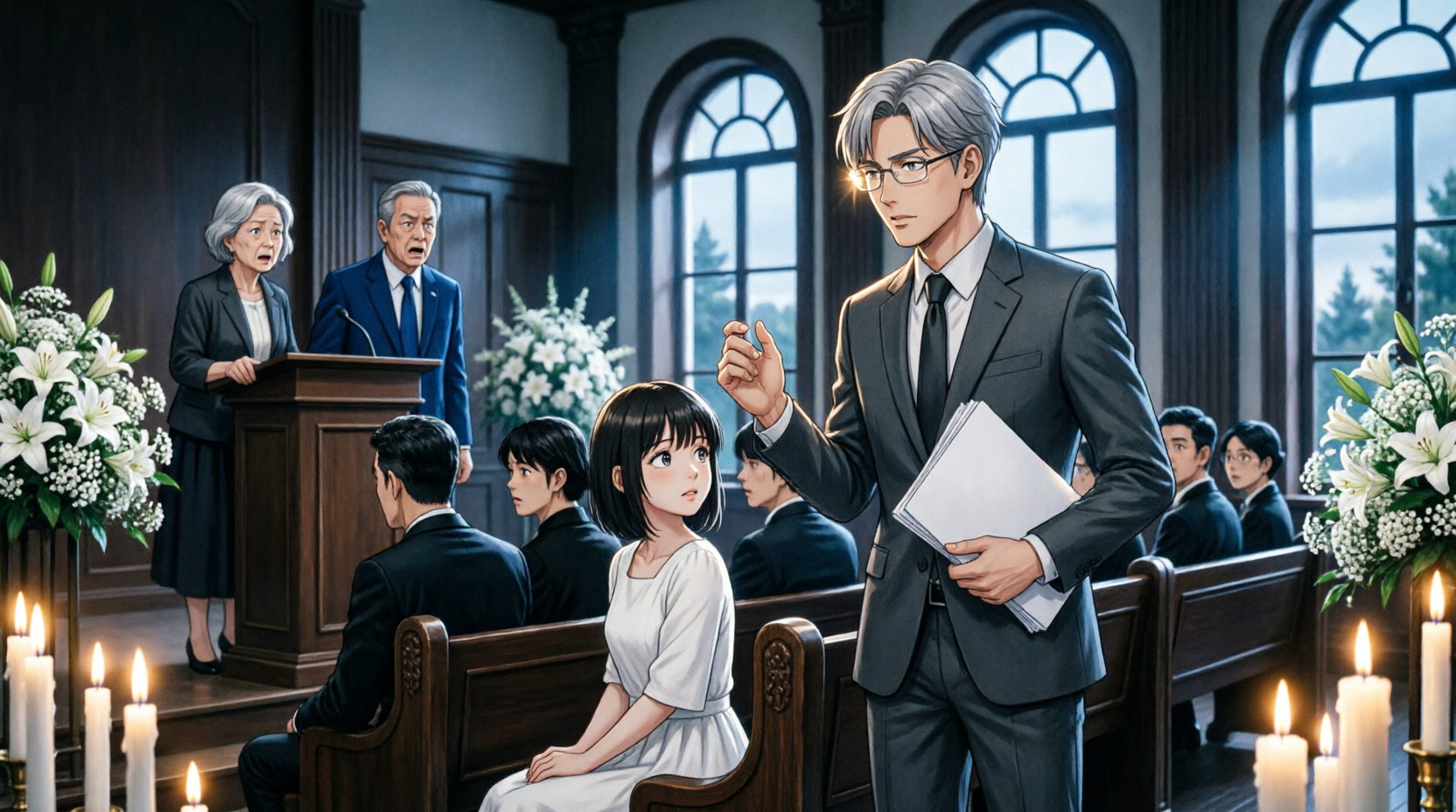
He was not a dramatic man. He was almost painfully neat, with silver hair combed straight back, a charcoal suit, and wire-rimmed glasses that gave him the precise expression of a man who had spent his life reading documents other people underestimated. He had attended every major legal event in my father’s adult life: the purchase of the house, the incorporation of his small contracting business, my grandparents’ estate, the trust accounts, the hospital directives.
He did not look comforting.
He looked certain.
He adjusted his jacket, glanced once toward the casket, then fixed his gaze on my mother and brother.
“I’m afraid,” he said calmly, “you’ve both misunderstood Mr. Hudson’s final instructions.”
The silence that followed was absolute.
Wesley’s smile vanished instantly.
For the first time that day, the room did not belong to him.
My mother’s chin lifted.
“Thomas,” she said, with the brittle politeness she used on people she thought should remember their place. “This is hardly the time.”
“I agree,” Mr. Vance replied. “Which is precisely why I would have preferred Mr. Hudson’s wishes not be misrepresented during his funeral.”
A few people shifted in their seats. Someone coughed once, then went silent.
Wesley stepped away from the podium.
“No one misrepresented anything,” he said. “We’re family. Mom and I already discussed it.”
“Mr. Hudson did not leave the house to be discussed,” Mr. Vance said.
My mother’s expression tightened.
“Excuse me?”
Mr. Vance reached into the leather folder tucked beneath his arm and removed a sealed document. He did not open it. He did not need to.
“Brookside Lane is not part of the general estate,” he said. “It was transferred 14 months ago into the Harrison Hudson Family Residence Trust. Upon Mr. Hudson’s passing, the residence transfers according to the trust instrument.”
Wesley’s face reddened.
“What does that mean?”
“It means,” Mr. Vance said, “you cannot sell it.”
My mother let out a short laugh.
“That is absurd. I am his widow.”
“Yes,” Mr. Vance said. “And Mr. Hudson made provisions for you. But the house is not yours to sell.”
My pulse began to hammer.
I looked at the casket, at the flowers, at the still shape inside the polished wood, and suddenly I remembered my father sitting at the kitchen table late one night, a blanket over his shoulders, pen in hand, asking me to witness a signature.
“Just routine paperwork,” he had said.
I had not read it. He had smiled when I asked if he needed help and told me, “Not this time, sweetheart. This one is already handled.”
Mr. Vance looked across the room and found me.
“The house belongs to Jada.”
For a moment, I did not understand the words.
They entered the room, but they did not reach me all at once. They seemed too large. Too impossible. Too unlike the story I had been trained to believe about my place in this family.
The house belongs to Jada.
My mother turned toward me slowly.
The look in her eyes was not grief.
It was offense.
Wesley took 2 steps forward.
“That can’t be right.”
“It is right,” Mr. Vance said.
“Dad would never do that.”
“Your father very much did do that.”
Wesley’s voice sharpened. “He wouldn’t leave everything to her.”
“He did not leave everything to her,” Mr. Vance said. “He left the house to her. Specifically, deliberately, and with written explanation.”
My mother’s face had gone pale beneath her makeup.
“What explanation?”
Mr. Vance paused. For the first time, his eyes softened slightly, though his voice remained formal.
“That will be discussed privately after the service, as Mr. Hudson requested. However, since you and Wesley have chosen to announce intentions that contradict the estate plan, I am required to clarify the basic facts in front of those now misled.”
Wesley’s hands curled into fists.
“This is private family business.”
“Then you should not have made it public at the podium,” Mr. Vance said.
A low murmur moved through the mourners.
My mother looked around and seemed to realize, perhaps too late, that the room had changed. Pity had shifted. Sympathy had moved away from her carefully arranged grief and toward the daughter she had tried to evict before her husband was even buried.
She sat down slowly.
Wesley did not.
He stared at me as if I had stolen something from him.
I had not spoken a single word.
Still, somehow, in his mind, I had become the thief.

Part 2
The rest of the funeral passed in a strange, suffocating blur.
Reverend Cole resumed with a prayer no one seemed to hear. The organist played a hymn my father had loved. People stood, sat, bowed their heads, and dabbed at their eyes with folded tissues. But the service had already changed shape. It was no longer only a farewell to Harrison Hudson. It had become the scene of something exposed.
My mother kept her face forward, expression carved from ice.
Wesley sat beside her, one leg bouncing violently, jaw clenched hard enough to make the muscles jump in his cheek. He did not look at our father’s casket again.
I did.
I kept looking at it because I did not know where else to place my grief.
A part of me wanted to be angry with Dad. Not because he had left me the house, but because he had left me this moment. Because he had known there would be a fight. Because he had understood my mother and brother well enough to protect me from them, but had not been able to sit beside me while the truth came out.
Then I felt ashamed for thinking it.
He was dead.
He had protected me the only way he still could.
After the burial, we returned to Brookside Lane for the reception.
The house was full of people and food, the way funeral houses always are. Casseroles lined the kitchen counters. Coffee brewed continuously. Neighbors moved quietly from room to room, speaking in soft voices, glancing at framed photographs, touching my arm with sad kindness.
The house felt different.
Not because Mr. Vance had said it belonged to me. Not yet.
It felt different because everyone else knew it too.
My mother noticed.
She stood near the fireplace, accepting condolences with a stiff smile that did not reach her eyes. Wesley disappeared into the den almost immediately, phone pressed to his ear, speaking in low, urgent bursts. I heard only fragments.
“No, it’s handled.”
“I said it’s handled.”
“I need more time.”
Then silence.
Then a crash.
A framed photo fell from the den shelf and shattered.
No one moved for a second.
I turned toward the sound, but Mr. Vance appeared beside me before I could step forward.
“Jada,” he said quietly, “your father asked that the formal reading take place today. He was very specific. Immediate family only.”
I looked toward the den.
Wesley had come out, face flushed, pretending nothing had happened.
“My father planned this,” I said.
“Yes.”
“For today?”
“Yes.”
The answer should have surprised me.
It did not.
My father had always believed timing mattered. In construction, in contracts, in weather, in people. He used to say a weak beam revealed itself when weight was added. Maybe he had chosen this day because grief stripped everyone down to what they truly were.
Within an hour, the guests began leaving.
Some hugged me longer than usual. Some avoided my mother. One of my father’s old employees, a man named Carl with rough hands and red eyes, leaned close and whispered, “Your dad knew what he was doing.”
Then he walked away before I could respond.
By 4 p.m., only 4 of us remained in the dining room: my mother, Wesley, Mr. Vance, and me.
The lilies from the funeral home had been brought back and placed on the sideboard. Their scent was overwhelming now, cloying and heavy. Sunlight slanted through the windows, falling across the long table where my father had carved Thanksgiving turkeys, helped me with homework, argued with Wesley about money, and sat through his final months with pill bottles lined beside his plate.
Mr. Vance opened his folder.
My mother spoke first.
“I want it noted that this is highly inappropriate,” she said. “Harrison was not well during the last year. If he signed something transferring the house, I question whether he understood what he was doing.”
Mr. Vance did not look up immediately.
When he did, his face was unreadable.
“I anticipated that concern because Mr. Hudson anticipated it. The trust was executed in the presence of 2 witnesses, a notary, and a physician who certified his mental competence that same day. I have copies of all statements.”
My mother’s mouth tightened.
Wesley leaned forward.
“What exactly does the trust say?”
Mr. Vance removed a copy of the document and placed it flat on the table.
“The residence at 118 Brookside Lane passes solely to Jada Elise Hudson upon Harrison Hudson’s death. It is not to be sold, mortgaged, transferred, leased, or otherwise encumbered by any party other than Jada. Mr. Hudson included a restriction that prevents use of the property as collateral for Wesley Hudson’s debts.”
Wesley shot to his feet.
“He named me?”
“Yes.”
“That’s slander.”
“That is estate planning.”
My mother touched Wesley’s arm.
“Sit down.”
He jerked away from her.
“No. This is insane. Dad knew I needed help.”
Mr. Vance turned a page.
“Your father knew you needed accountability.”
Wesley’s face twisted.
“He said that?”
“He wrote that.”
The room went so quiet I could hear the refrigerator humming in the kitchen.
Mr. Vance unfolded a letter.
“This is a personal statement Mr. Hudson asked me to read aloud.”
My throat tightened.
My mother looked away.
Wesley remained standing.
Mr. Vance began.
“To Francine, Wesley, and Jada.
If this letter is being read, then I have left this world and can no longer soften the truth to spare anyone’s pride.
I have spent too many years pretending not to see what happened in my own house. That failure belongs to me.”
The first crack went through my chest.
Mr. Vance continued.
“Francine, I loved you in the way a man loves the woman he chose when he was young and hopeful. But I cannot pretend you were fair to both our children. You favored Wesley from the beginning and called it tradition. You dismissed Jada’s needs and called it practicality. I let too much of it pass because peace seemed easier than correction. I regret that more than I can say.”
My mother’s face had hardened, but her hands trembled slightly in her lap.
Wesley barked a bitter laugh.
“This is ridiculous.”
Mr. Vance did not stop.
“Wesley, I have paid your debts 4 times. I paid $18,000 when you were 23. I paid $41,000 when you were 29. I paid $96,000 after you promised your mother you would never gamble again. Last year, I paid $122,000 because men came to my house and frightened your sister while you hid behind excuses.
I will not pay the fifth debt from my grave.”
Wesley went pale.
I stared at him.
Men had come to the house last year. I remembered them. Two men in a dark SUV parked across the street for 3 days. My father had told me they were contractors. I had believed him because I wanted to.
The letter went on.
“Jada, you owed me nothing. Yet you came home. You took me to treatments. You learned medications. You sat through nights I would not wish on anyone. You did not ask what you would receive. You did not ask what Wesley would get. You did not count your hours. You simply stayed.
I should have protected you sooner.
I am protecting you now.”
The words blurred.
I pressed my fingers to my lips and tried not to make a sound.
Mr. Vance’s voice softened, but he remained steady.
“The house is yours because you made it a home when everyone else treated it as an asset.
The savings account designated for Francine will provide monthly support, but only through the separate spousal trust already established. It cannot be liquidated to pay Wesley’s gambling debts.
Wesley will receive $1. Not because I hate him, but because I want the legal record clear that he was considered and intentionally excluded from further inheritance.
If Wesley seeks treatment for gambling addiction and remains debt-free for 5 consecutive years, Jada may, at her sole discretion, release an additional $25,000 from the family recovery fund. She is not obligated to do so.
Do not pressure her.
Do not shame her.
Do not call her selfish for keeping what I meant for her to have.
I know this family. I know what will happen when I am gone. That is why these instructions are written this way.”
Mr. Vance paused.
Wesley had sunk back into his chair.
My mother’s face was white.
I could barely breathe.
The letter ended simply.
“Jada, forgive me for the years I was quiet. Keep the maple tree trimmed. The roots are lifting the walkway, but I never had the heart to cut it down.
I love you.
Dad.”
Mr. Vance folded the letter carefully.
No one spoke.
Then Wesley exploded.
“This is her fault.”
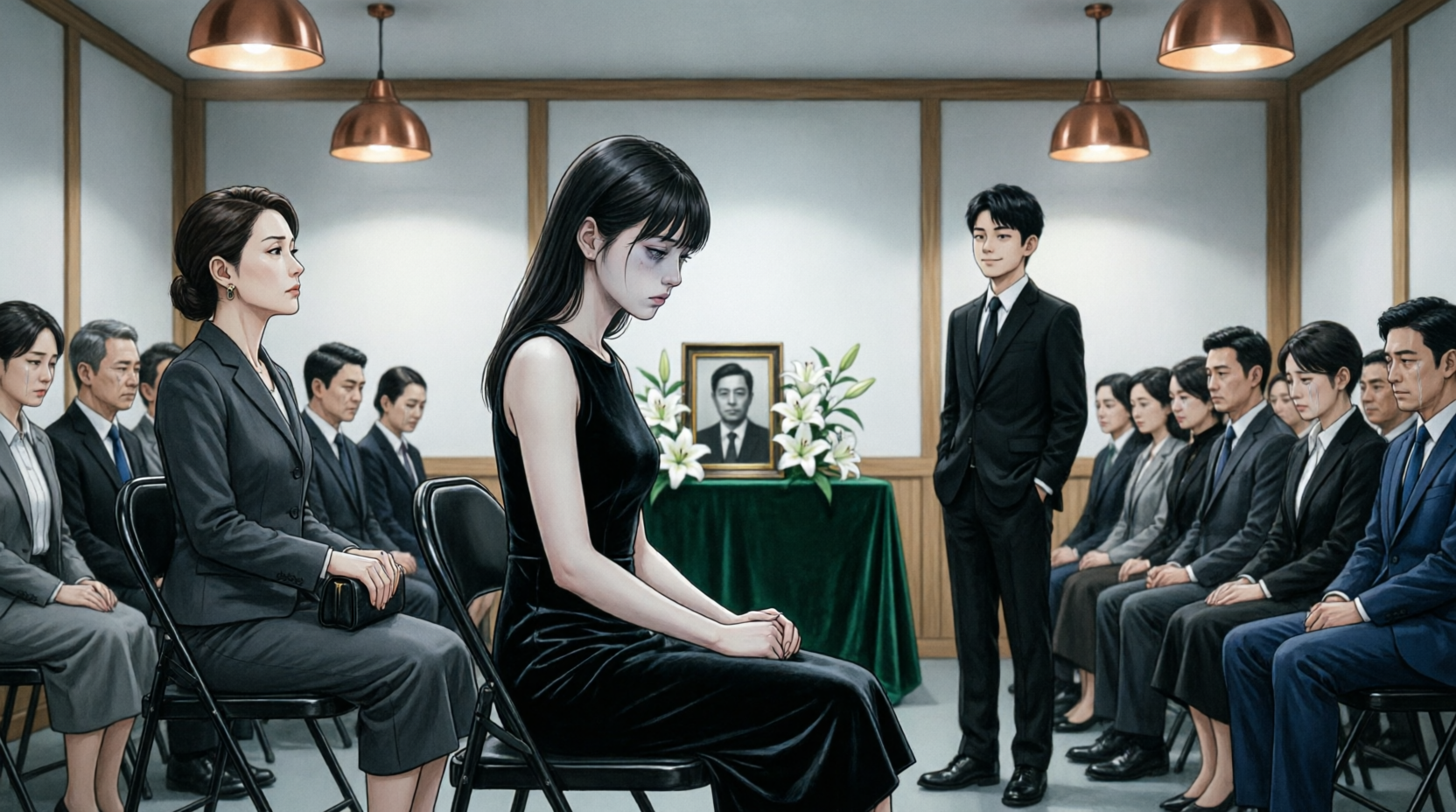
The words hit the room with shocking speed.
I looked up.
He was staring at me with pure hatred.
“You turned him against me. You were in his ear every day. Poor Jada, perfect Jada, martyr Jada, taking him to appointments so he’d feel guilty.”
My mother did not correct him.
That hurt, even though I had expected it.
Mr. Vance placed one hand on the folder.
“Mr. Hudson made these decisions independently.”
“Bullshit,” Wesley snapped. “She manipulated a dying man.”
I stood slowly.
For most of my life, I had answered Wesley with silence because arguing with him was pointless. He took volume for truth and cruelty for strength. But something had changed when my father’s letter entered the room.
His regret had become my permission.
“No,” I said.
My voice shook once, then steadied.
“You don’t get to do that today.”
Wesley’s eyes narrowed.
“Do what?”
“Make your choices my fault.”
He laughed.
“You always think you’re better than me.”
“No. I just stopped cleaning up after you.”
My mother inhaled sharply.
“Jada.”
I turned to her.
“Don’t.”
It was the first time I had ever said that word to her in that tone.
She blinked.
I continued.
“You stood at Dad’s funeral and told me to find somewhere else to live so Wesley could use the house to cover a gambling debt. You did not ask if I was okay. You did not ask what Dad wanted. You did not even wait until he was buried.”
My mother’s eyes flashed.
“Your brother is in danger.”
“So was I,” I said. “For years. Just not in a way you cared about.”
Wesley shoved back his chair.
“If you keep that house from me, you’re killing me.”
“No,” Mr. Vance said sharply. “The people you owe money to may be threatening you. That does not make Jada responsible for your survival.”
Wesley turned on him.
“You stay out of this.”
“I will not,” Mr. Vance said. “Your father also instructed me to contact authorities if any party attempted coercion, fraud, forced sale, or intimidation related to the trust.”
Wesley froze.
“What?”
Mr. Vance’s expression did not change.
“And given your conduct at the funeral and the statements made here, I strongly advise you to leave this house before you create a record that becomes more damaging to you.”
For a moment, Wesley looked genuinely afraid.
Then anger covered it.
He grabbed his coat from the back of the chair.
“This isn’t over.”
He looked at my mother.
“Are you coming?”
She hesitated.
For one strange second, I thought she might stay.
Then she reached for her purse.
Of course she did.
At the doorway, she turned back to me.
“You have no idea what you’ve done.”
I looked at her, at the pearls around her throat, at the careful grief, at the woman who had made me feel temporary in my own childhood home.
“No,” I said quietly. “For the first time, I think I do.”
Part 3
That night was the first night I slept alone in the house on Brookside Lane without listening for my father’s breathing.
The silence was unbearable.
Not peaceful. Not victorious. Unbearable.
The house had been full all day: mourners, flowers, legal words, accusation, my father’s voice resurrected through paper. But by midnight, all of it had drained away, leaving only the hum of old pipes, the occasional creak of wood cooling after sunset, and the empty room at the end of the hall where my father’s hospital bed had already been removed.
I walked through the house in the dark.
The living room still held folding chairs from the reception. The kitchen sink was full of coffee cups. Someone had left a plate of untouched cookies on the counter. My father’s reading glasses sat beside the newspaper he never finished.
I picked them up and nearly came apart.
People think inheritance feels like receiving something.
Sometimes it feels like being handed the full weight of what someone can no longer carry.
I sat at the kitchen table until 3 a.m., reading my father’s letter again and again. The part about the maple tree undid me every time. It was such a small detail. So him. In the middle of legal protections, family conflict, and grief, he had remembered the walkway.
The next morning, I changed the locks.
Mr. Vance arranged it before I even asked. By noon, a locksmith had replaced every exterior lock, changed the garage code, and installed a camera near the front porch.
“That may feel extreme,” Mr. Vance said when he came by with additional documents.
“It doesn’t,” I said.
He nodded, as if the answer told him everything.
For 3 days, my mother did not call.
Wesley did.
First came rage.
Voicemails accusing me of betrayal. Texts calling me greedy, heartless, brainwashed by Mr. Vance. He said I was letting him be destroyed. He said Dad would be ashamed. He said I would never be able to live with myself if something happened to him.
Then came pleading.
He said he had made mistakes. He said he was sick. He said people were threatening him. He said he only needed a short-term loan against the house, not a sale. He promised to pay it back. He promised to get help. He promised things I had heard him promise my father a dozen times.
Then came threats.
Not open enough to hand directly to the police, but close.
You don’t know who you’re dealing with.
People will come looking.
Don’t act surprised when this touches you too.
I forwarded every message to Mr. Vance.
He forwarded them to the proper people.
On the fourth day, 2 men came to Brookside Lane.
They parked across the street in a black truck and sat there for nearly an hour. I watched them from behind the curtain with my heart pounding so hard it hurt. One of them had a shaved head. The other smoked with the window cracked despite the cold.
I called Mr. Vance.
He told me to call the police.
I did.
When the patrol car arrived, the truck drove away.
That evening, my mother finally called.
I stared at her name on my phone for a long time before answering.
“What do you want?” I asked.
There was a pause. She was not used to that tone from me.
“Your brother is unraveling.”
I closed my eyes.
“I know.”
“He says you won’t help him.”
“That’s correct.”
Another pause.
“He could be hurt.”
“Then he should go to the police.”
“You know he can’t.”
“Then he should go to treatment. Or bankruptcy court. Or both.”
Her breath sharpened.
“You sound just like Thomas Vance.”
“No,” I said. “I sound like Dad finally told me I was allowed to stop sacrificing myself.”
That struck something.
When she spoke again, her voice was quieter.
“You think I didn’t love you.”
I looked around the kitchen, at the walls my father had painted, at the chair where he used to sit, at the family photographs still lined along the windowsill. Wesley appeared in most of them. Graduations. Sports. Awards. Vacations. Me, smiling awkwardly at the edge when included, absent when not.
“I think you loved me when it was easy,” I said. “I think you loved Wesley when it cost everyone else.”
She said nothing.
For a moment, I imagined her sitting wherever she was, maybe at Wesley’s apartment, maybe in some guest room, still wearing her pearls, finally hearing the echo of the choices she had made.
Then she said, “Your father was cruel to leave me dependent on you.”
My last hope, small as it was, went still.
“You are not dependent on me,” I said. “Dad left you monthly support through the spousal trust. He made sure you would be comfortable. He just made sure you couldn’t drain everything for Wesley.”
“He is my son.”
“I know.”
“So what am I supposed to do? Watch him suffer?”
The question should have been complicated.
It was not.
“You’re supposed to stop confusing rescue with love.”
She hung up.
A week after the funeral, Wesley was arrested.
Not dramatically, not in some final confrontation on my porch, but in a casino parking garage 2 counties over. He had violated the terms of an earlier agreement with one creditor, written bad checks to cover markers, and apparently tried to convince another lender that he had access to a house he did not own.
The charges were ugly.
Fraud.
Check kiting.
Threat-related complaints tied to the men who had come to Brookside Lane.
My mother called again after it happened, but I did not answer.
I cried that night.
Not for Wesley exactly, though perhaps some part of me did mourn the brother he might have been if he had not been raised to believe consequence was something other people absorbed for him. I cried because my father was not there. Because the family had shattered in the exact way he predicted. Because inheritance had not given me peace, only protection. Because protection and peace are not the same thing.
Months passed.
The house slowly became mine.
At first, I changed almost nothing. Grief made every object sacred. My father’s coat stayed on the hook by the door. His mug remained in the cabinet. His work boots sat in the mudroom, stiff with old dust. I could not bear to move them, because moving them felt like agreeing that he was gone.
Then one morning, sunlight fell across the kitchen table and I noticed the chipped corner near the edge where Wesley had once slammed a plate during an argument and Dad had later sanded it smooth.
I ran my fingers across the repair.
Then I got up and made a list.
Fix the walkway.
Trim the maple tree.
Paint the upstairs hallway.
Clear out the medical supplies.
Donate the clothes.
Keep the blue flannel shirt.
The work became a kind of prayer.
I hired Carl, my father’s old employee, to repair the walkway. He stood beneath the maple tree and shook his head.
“Your dad fought this root for 10 years.”
“I know.”
“He’d want it done right.”
“Then do it right.”
He did.
In spring, the maple filled with leaves so bright and green it looked almost unreal. The roots still lifted the earth beneath them, stubborn and alive, but the walkway was even now. Safe.
That felt like something my father would have appreciated.
Mr. Vance came by one afternoon with the final estate settlement papers. We sat at the kitchen table where he had read the letter months before. This time, there were no lilies, no shouting, no threats. Only documents, coffee, and sunlight.
“There’s one more item,” he said.
I stiffened.
“I thought everything was settled.”
“It is. This is personal.”
He reached into his briefcase and removed a small envelope.
My name was written on it in my father’s hand.
Jada.
I took it carefully.
Inside was a photograph.
It was old, slightly faded, taken in the backyard when I was around 9. I was sitting on the steps beside my father, holding a calculator almost too big for my hands. He was laughing at something I must have said. My mother was not in the picture. Wesley was not in the picture.
Just Dad and me.
On the back, he had written:
This was the day you helped me catch the accounting error that saved the business $700. I knew then you were the smartest person in the family. I should have told you more often.
I pressed the photograph to my chest.
Mr. Vance looked away politely.
For a long time, I could not speak.
When I finally did, my voice was thick.
“Did he suffer at the end?”
Mr. Vance did not answer quickly.
“He worried more than he suffered.”
“About Wesley?”
“About you.”
I swallowed.
“He didn’t need to.”
“Yes,” Mr. Vance said gently. “He did. Because he knew love is not always enough unless it is acted on. The trust was his action.”
I looked around the kitchen.
For the first time, the house did not feel like a battlefield.
It felt like a place entrusted to me.
Not because I was temporary.
Not because I belonged to someone else.
Because I had belonged here all along.
By summer, I opened my own small accounting office in what used to be my father’s den. I kept his old desk but moved it near the window. I took clients who needed careful help: widows trying to understand accounts, small contractors like my father had once been, women untangling finances after divorce, families who needed someone to explain what signatures meant before disaster made those signatures permanent.
I understood all of them better than they knew.
My mother moved into a condominium paid through the spousal trust. She sent one letter, formal and stiff, saying she hoped I was well. I wrote back with 2 sentences.
I am safe. I hope you become honest with yourself.
Wesley entered treatment after his arrest, not because he wanted transformation, I suspected, but because the court liked treatment better than denial. Whether it would hold, I did not know. Whether he would ever reach 5 consecutive years debt-free, I could not guess.
For the first time in my life, his future did not feel like my responsibility.
On the 1-year anniversary of my father’s death, I did not go to the cemetery first.
I stayed home.
I brewed coffee in his old kitchen, opened the back door, and stepped onto the porch. The maple tree stirred in the morning wind. The repaired walkway curved toward the street. The house on Brookside Lane stood quiet around me, no longer waiting to be divided, sold, mortgaged, or sacrificed.
I sat beneath the tree with the photograph in my lap and my father’s letter beside me.
For years, I had believed being overlooked made me smaller.
But my father had seen me.
Not perfectly. Not soon enough. But in the end, clearly.
He had seen the daughter who stayed. The daughter who worked. The daughter who was told she was temporary and built permanence anyway.
At his funeral, my brother tried to erase me from my own life.
My mother agreed.
Forty people watched.
Then a chair scraped at the back of the room, and the truth stood up.
The house was never the real inheritance.
The real inheritance was the moment I finally understood that I did not have to beg for a place in a family that had spent years asking me to disappear.
My father had left me walls, yes.
A roof.
A maple tree.
A deed no one could take.
But more than that, he left me proof.
I was not temporary.
I was not secondary.
I was not the daughter who could be moved aside so a son could be saved from himself.
I was Jada Elise Hudson.
And I was home.