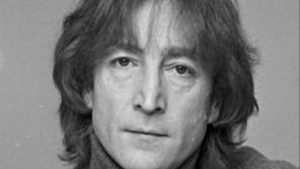
The assassination of John Lennon on December 8, 1980, remains one of the most shocking and meticulously documented tragedies in music history. The “behind the scenes” of his murder reveals a deeply disturbed individual whose motives were rooted in psychological obsession, perceived hypocrisy, and a desperate desire for notoriety.
Here is a detailed look at the circumstances, motives, and events leading up to the tragedy:
1. The Assassin and His Psychological State
Mark David Chapman, a 25-year-old former security guard from Honolulu, Hawaii, had no prior criminal record but was experiencing a severe psychological decline. Psychiatrists later noted that Chapman suffered from identity instability, depression, and an intense obsession with J.D. Salinger’s novel *The Catcher in the Rye*. He deeply identified with the book’s protagonist, Holden Caulfield, and viewed himself as a “phony-killer” tasked with ridding the world of hypocrisy. In a letter to a friend weeks before the murder, Chapman wrote, “I’m going nuts,” and signed it as “Holden Caulfield”.
2. The Motive: Perceived Hypocrisy and Resentment
Chapman was originally a devoted Beatles fan, but his admiration twisted into rage due to a combination of religious fervor and resentment over Lennon’s lifestyle.
– “More Popular than Jesus”: Chapman was deeply offended by Lennon’s infamous 1966 remark that the Beatles were “more popular than Jesus”.
– **Lyrical Contradictions**: Chapman fixated on Lennon’s songs like “Imagine” and “God.” He was enraged that Lennon would sing “imagine no possessions” and reject religious faith, all while living a lavish lifestyle with “millions of dollars and yachts and farms and country estates”. Chapman felt this made Lennon a “phony” who was laughing at ordinary fans who had built their lives around his music.
– **Desire for Notoriety**: In recent parole hearings, Chapman openly admitted that he murdered Lennon out of a “pathetic desire to ‘be a somebody’”. He believed that killing the most famous musician in the world would grant him a twisted form of significance.
3. Behind the Scenes: The Days Leading Up to the Murder
Chapman planned the assassination for months. In late October 1980, he purchased a .38 Special revolver in Hawaii and flew to New York City, having researched how to transport the weapon on a commercial flight.
On December 8, 1980, Chapman checked out of his Midtown Manhattan hotel, leaving behind a deliberate “shrine” for police to find, which included a Bible opened to the Gospel of John with “Lennon” written next to the name. He then bought a copy of *The Catcher in the Rye*, inscribing it with “this is my statement” and signing it “Holden Caulfield”.
He spent the day loitering outside The Dakota, Lennon’s residence on the Upper West Side. In a surreal and tragic twist, Chapman encountered Lennon earlier that afternoon as the musician was leaving for a recording session. Chapman asked for an autograph, and Lennon, known for his kindness to fans, patiently signed Chapman’s copy of the *Double Fantasy* album. Chapman later recalled that Lennon was “very kind” and “cordial,” and even noted that if a nearby fan or photographer had stayed to talk to him that evening, he might have postponed the murder—but only until the next day.
4. The Assassination
At approximately 10:50 p.m., Lennon and his wife, Yoko Ono, returned to The Dakota in a limousine. As Lennon stepped out of the car and walked past Chapman toward the building’s archway, Chapman called out, “Mr. Lennon,” dropped into a combat stance, and fired five hollow-point bullets from his revolver. Four of the bullets struck Lennon in the back and shoulder, and one narrowly missed his head, shattering a glass window above.
Lennon was rushed to Roosevelt Hospital in a police cruiser, where he was pronounced dead on arrival at 11:15 p.m. at the age of 40.
5. The Aftermath and Legacy
Chapman made no attempt to flee. Despite having multiple escape routes, he remained at the scene, calmly reading *The Catcher in the Rye* until police arrived and arrested him without incident.
During his trial, Chapman rejected an insanity defense, pleading guilty to second-degree murder to avoid a potential insanity commitment that would have given him less control over his fate. He was sentenced to 20 years to life in prison. He has been denied parole multiple times, most recently stating that while he no longer believes the act made him “a somebody,” he continues to grapple with the immense guilt of his actions.
The tragedy of John Lennon’s death is amplified by the chilling proximity between his final act of kindness (signing an autograph for his killer) and the senseless violence that followed. His legacy as a musician and peace activist endures, while the event remains a somber case study in the dangers of celebrity obsession and untreated mental illness.