There are moments when even the strongest people are forced to stop and confront something bigger than themselves. For Kathy Bates, a woman known for her fierce on-screen presence and award-winning performances, that moment came not once—but twice.
For years, fans have admired Bates for her resilience, her talent, and her ability to bring unforgettable characters to life. Behind that strength, however, lies a deeply personal battle that she has only recently begun to share more openly. And what she revealed has left many stunned.
In a candid and emotional conversation, Bates disclosed that her fight with cancer didn’t end with her first diagnosis. Many people knew she had bravely overcome ovarian cancer nearly a decade ago. That chapter alone was life-altering—physically, mentally, and emotionally. But what most didn’t know is that her journey took another devastating turn.
Several weeks prior to the interview, Bates received news that would shake anyone to their core: she had been diagnosed with breast cancer.
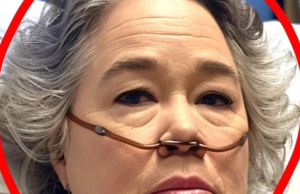
The revelation didn’t come with dramatic buildup or polished statements. It came raw, honest, and direct—exactly the way she’s always carried herself. She described the moment of diagnosis not as something distant or abstract, but as something immediate and terrifying. A reality that hit her all at once.
“You think American Horror Story is scary?” she said, referencing one of her most recognizable roles. “You should’ve been in that room with me.”
That single sentence says everything. It strips away the fiction, the scripts, the characters—and leaves behind the reality of a woman facing a life-threatening condition for the second time.
Cancer is often described as a battle, but for those who live through it, it’s more than that. It’s a constant weight, a lingering uncertainty, and a reminder that life can change in an instant. For Bates, surviving ovarian cancer once might have felt like reaching the finish line. Instead, it turned out to be just one part of a much longer journey.
What makes her story even more powerful is the way she chooses to face it. There is no denial, no attempt to soften the truth. She acknowledges the fear, the shock, and the emotional toll. But she also shows something else—something just as important: endurance.
Nine years after overcoming ovarian cancer, she had every reason to believe that part of her life was behind her. She had earned that peace. Yet life had other plans.
Hearing the word “cancer” again isn’t just about starting over—it’s about reliving everything you thought you had already survived. The hospital rooms. The waiting. The uncertainty. The quiet moments where everything feels fragile.
And yet, Bates continues to stand in the middle of it all.
Her story resonates not because she is a celebrity, but because it reflects something deeply human. Illness doesn’t discriminate. It doesn’t care about achievements, fame, or past victories. It arrives uninvited and demands attention.
But what defines a person isn’t the diagnosis—it’s how they respond to it.
Bates has never portrayed herself as invincible. Instead, she shows what real strength looks like: acknowledging fear while continuing forward anyway. Speaking about something painful instead of hiding it. Letting people see the reality, not just the polished version.
There’s also something important about the way she shares her experience. She doesn’t dramatize it unnecessarily, nor does she downplay it. She tells it as it is. That honesty is what makes people listen.
Her words carry weight because they come from lived experience. When she talks about fear, it’s not theoretical. When she talks about facing cancer, it’s not something she read about—it’s something she’s lived through, twice.
For many fans, this revelation shifts how they see her. Not as a distant figure on a screen, but as someone navigating the same vulnerabilities that millions of people face every day.
It also brings attention to something often overlooked: surviving cancer once doesn’t mean you’re immune to it in the future. The idea of being “done” with it is comforting—but not always realistic.
That reality can be hard to accept. It forces people to rethink what recovery truly means. It’s not always a clean ending. Sometimes, it’s ongoing. Sometimes, it comes back in unexpected ways.
And sometimes, like in Bates’ case, it becomes part of a larger story of resilience.
There’s no denying the emotional toll of what she’s going through. Facing a second diagnosis isn’t just physically demanding—it’s mentally exhausting. It requires a kind of strength that isn’t always visible from the outside.
But if there’s one thing Bates has made clear, it’s that she refuses to let fear define her.
She continues to speak openly, to share her journey, and to confront the situation head-on. That alone is powerful. Not everyone has the ability—or the willingness—to do that.
Her story serves as a reminder of how unpredictable life can be. One moment, everything feels stable. The next, everything shifts.
And yet, even in the middle of uncertainty, there is still room for courage.
Kathy Bates doesn’t present herself as a symbol of perfection or invulnerability. She presents herself as someone who is going through something difficult and choosing to face it with honesty.
That’s what makes her story stick.
Not because it’s dramatic, but because it’s real.
Not because it’s easy, but because it isn’t.
And in a world where people often hide their struggles, that kind of openness stands out.
Her journey isn’t over. It’s still unfolding. But one thing is certain—she’s not backing down.
And that, more than anything, is what people will remember.
Kathy Bates Nearly Walked Away From Acting—Then Matlock Helped Her Make History at 77
Kathy Bates has spent decades making audiences believe that she can survive almost anything on screen. But some of the most remarkable chapters of her life happened away from the cameras.
There is the health journey that drew attention around the world. There is the retirement rumor that made fans wonder whether they were about to lose one of their favorite performers. And there is the extraordinary career milestone she reached at an age when leading roles for women remain far too rare.
At 77, Bates became the oldest performer ever nominated for the Emmy for Outstanding Lead Actress in a Drama Series, earning her historic 2025 nomination for CBS’s Matlock. The network’s official biography recognizes the achievement. For an actress who had considered stepping back, it was a striking new chapter.
The surprising part is how close that chapter came to never happening.
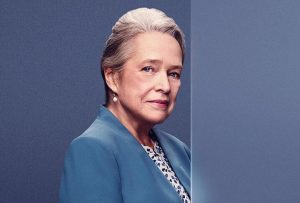
In September 2024, reports about Bates’ possible retirement spread after she described Matlock as her “last dance.” Those words sounded final. For viewers who had followed her through Misery, comedy, and television drama, they suggested that a long and unforgettable career might be approaching its farewell.
But Bates clarified the situation during an ABC red-carpet interview. She explained that she had been considering leaving before she read creator Jennie Snyder Urman’s script. The project changed her outlook, and she wanted the series to continue for years.
The distinction matters. She had contemplated retirement; she had not committed to an immediate departure. A role that excited her had given her a reason to keep working.
For fans, that is an intriguing thought: even an Oscar winner can reach a point when the next opportunity determines whether she keeps going.
And Matlock offered something unusually fitting.
Her character, Madeline “Matty” Matlock, understands what it means to be underestimated. People see an older woman and make assumptions. They overlook her, underestimate her intelligence, or fail to recognize what she is capable of doing. Matty turns those mistakes to her advantage.
In an October 2024 Television Academy interview, Bates described a moment when tourists on the Paramount lot failed to notice her waving. She connected the experience to the sense of invisibility that can accompany gray hair and advancing age.
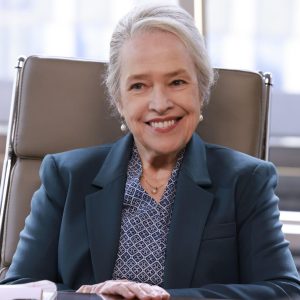
That makes the show’s premise particularly resonant. An actress who understands being overlooked plays a woman who makes being overlooked useful.
The Television Academy also emphasized that this version of Matlock contains more than a change in its lead character’s gender: the pilot establishes a hidden motivation that gives the series its own direction. Bates was enthusiastic about both the role and the possibility of continuing it.
Meanwhile, another part of her life was attracting enormous attention.
In an October 2024 PEOPLE interview, Bates explained that she had lost 100 pounds over several years. A Type 2 diabetes diagnosis around 2017 had motivated her to take her health seriously. She attributed 80 pounds to changes in diet and lifestyle and another 20 to Ozempic. Her account challenged the assumption that medication alone explained the entire transformation.
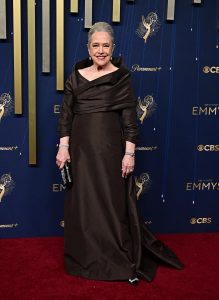
Those details place the photographs in context. The visible change represented a long personal process, rather than an overnight development.
Her health history also includes a struggle that a red-carpet picture cannot fully communicate.
In 2016, Bates invited CBS Sunday Morning to accompany her on a medical visit and spoke openly about lymphedema following her 2012 breast cancer surgery. CBS reported that the removal of lymph nodes during her double mastectomy had left her with fluid accumulation in her arms.
She described anger and distress about the condition. Her willingness to discuss those emotions was especially powerful: the interview showed a person dealing with a difficult, continuing consequence of treatment.
She also became a spokesperson for the Lymphatic Education & Research Network, using her public recognition to bring attention to the condition.
In that same interview, Bates recalled criticism of her appearance early in her career, including comments about her arms and a supposedly maternal look. She acknowledged that those judgments hurt.
Years later, she was using the fame she had earned to speak about the very body others had judged.
There is also a small, surprisingly emotional detail from her past: Bates believed she had omitted her mother from her Oscar speech—until CBS showed her otherwise.
It is a reminder that public achievement and private memory do not always line up neatly. A celebrated moment can still carry an unresolved question for the person who lived it.
Taken together, these accounts make her later career compelling for reasons that go beyond celebrity headlines. She has discussed illness, hurtful judgments, uncertainty about continuing her profession, and the excitement of finding a role worth staying for.
These revelations come from interviews and milestones reported in 2016, 2024, and 2025; they are not announcements of a new medical emergency.
The powerful part of Kathy Bates’ story is that it keeps expanding.
An actress who contemplated stepping away found another demanding lead role. A woman who spoke about being overlooked earned a historic nomination.
Fans may remember her for the characters who made them frightened, moved, or laugh. This chapter gives them another reason to remember her: she was still creating something worth watching when many people might have assumed her biggest moments were behind her.