PART 2: THE WOMAN HOLLYWOOD COULD NOT OVERLOOK
The most surprising twist in Kathy Bates’ story is that the role which helped her make history arrived after she had already considered stepping away.
Think about that for a moment.
An actress with an Oscar, two Emmys, and decades of memorable performances was contemplating a future beyond acting. Then a script arrived that gave her a reason to reconsider.
Bates explained that turning point during her September 2024 ABC red-carpet interview. She had been close to leaving, but reading Jennie Snyder Urman’s Matlock script changed her outlook. She wanted the show to continue for years.
For viewers, it was another television series. For Bates, it was an opportunity to put decades of experience into a character whose greatest advantage was other people’s failure to recognize her abilities.
That is what makes Madeline “Matty” Matlock such an interesting match for the woman playing her.
Matty enters rooms where people make quick judgments. Her age, manner, and appearance encourage them to assume they already understand her. Meanwhile, she notices things, gathers information, and lets their assumptions work in her favor.
In an October 2024 Television Academy interview, Bates connected the show’s theme to her own experience. She recalled waving at tourists on the Paramount lot who did not notice her, and wondered whether her gray hair had made her effectively invisible to them.
An Oscar-winning actress could be standing nearby, and people looking for celebrities could still look past her.
That small anecdote gives the series’ premise an unexpectedly personal edge.
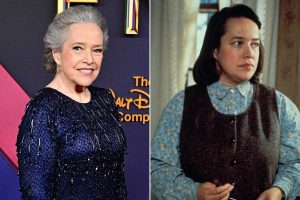
It also raises a question that reaches far beyond Hollywood: how often do we mistake someone’s age for a limit on their ability?
A familiar face can become so familiar that we stop looking closely. We remember the famous performance, the award, the character from years ago. We forget that the person behind those memories is still working, changing, and looking for something meaningful to do next.
Bates’ 2025 Emmy nomination demanded another look.
At 77, she became the oldest performer ever nominated for Outstanding Lead Actress in a Drama Series. CBS’s official biography recognizes that milestone and notes that her nomination was the network’s first in the category in more than a decade.
But the award story is only one part of what makes this chapter compelling.
The physical demands of leading a television show also give her health journey practical significance.
In her October 2024 PEOPLE interview, Bates described losing 100 pounds over several years: 80 through changes in diet and lifestyle, followed by 20 with Ozempic. She said the change had improved her ability to stand, walk, and work through demanding days on Matlock. She also reported benefits for her lymphedema symptoms. Those were her descriptions of her experience at that time.
A photograph can show a change in appearance. It cannot show what it means to feel more capable of doing a job you love.
For an actor, movement is part of the work. So are concentration, repetition, and the patience to perform a scene again when the cameras need another take. The audience sees the finished episode; the performer lives through the working day.
That is why her account deserves more attention than a simple before-and-after headline.
And years before that interview, Bates had already shown that she was willing to discuss experiences celebrity profiles sometimes leave out.
In 2016, she invited CBS Sunday Morning to a medical appointment and spoke about lymphedema following breast cancer surgery. She described the anger she had felt about the condition and explained her desire to use her fame to help others through her work with the Lymphatic Education & Research Network.
That willingness to speak openly adds another dimension to her public life. The woman audiences know for commanding a scene also made room for conversations about frustration, treatment, and the consequences of illness.
There is strength in that kind of honesty, particularly when it leaves the difficult parts intact.
Her story does not require an invented crisis to hold our attention. The documented events already contain an extraordinary reversal: uncertainty about continuing, an exciting new role, and then a historic nomination.
Yet there is another moment in her story that has little to do with ratings, weight loss, or the Emmy record.
It involves her mother—and a memory Bates believed she had gotten right for decades.
During a CBS interview, she learned that she had thanked her mother in her Oscar acceptance speech, despite believing she had forgotten.
For an actress whose work depends on remembering words, that discovery offers a particularly moving next chapter.
Because sometimes the moment that changes how someone sees her own life is an old recording finally played back.