PART 3: THE OSCAR MEMORY THAT BROUGHT KATHY BATES TO TEARS
Kathy Bates knew how the story went.
She had won the Oscar. She had delivered the speech. And she believed she had forgotten to thank her mother.
Then, more than thirty years later, an interviewer told her that she was mistaken.
During her 2024 conversation with CBS Sunday Morning host Ben Mankiewicz, Bates was shown a recording of her 1991 acceptance speech for Misery. There, in her own voice, was the acknowledgment she thought she had left out.
She had thanked her mother.
Watching the footage, Bates brought her hands toward her mouth in surprise. When asked why the discovery mattered so much, she spoke about her mother’s sacrifices and the life she wished her mother could have enjoyed.
The moment was brief, but its emotional weight was unmistakable.
For an audience, an Oscar speech is a few minutes of television. For the person standing at the microphone, it can become a memory revisited for decades.
Who did I mention?
Who did I forget?
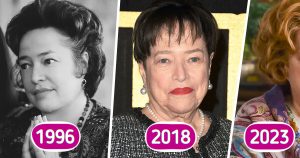
Did I acknowledge the people who helped me get there?
Those are questions many people can recognize, even without a gold statuette on the shelf.
Watching Bates discover the answer offers a moving reminder: sometimes we remember our own shortcomings more clearly than the things we actually did right.
That is an interpretation of the moment, rather than a claim about everything she had felt in the intervening years. What the interview shows is powerful enough: she believed she had omitted someone important, and the recording showed otherwise.
The woman who had convinced millions of viewers that she was the terrifying Annie Wilkes was suddenly watching herself as a daughter.
That shift is part of what makes the interview so memorable.
Actors become familiar through their characters. We remember the threat in a voice, the timing of a joke, the expression that makes a scene unforgettable. Familiarity can make it easy to forget how little of their personal lives we actually know.
An interview like this opens a small window.
It does not explain an entire family relationship. It does not give viewers permission to decide who was right or wrong in every private disagreement. But it reveals that public success can coexist with deeply personal questions.
And Bates’ career has given her plenty of public success.
Her Oscar for Misery was followed by work across very different kinds of television, including Emmy-winning performances in Two and a Half Men and American Horror Story: Coven. The Television Academy highlighted those achievements when discussing her return to a leading role in Matlock.
That range is a fascinating detail in itself.
A performer audiences associate with fear also earned television’s highest recognition for comedy. A woman remembered for one iconic character continued building a career that could not be reduced to that character.
Yet the awards did not mean she would always feel certain about continuing.
In September 2024, Bates explained to ABC that she had been considering stepping away before the Matlock script renewed her interest. Her clarification of retirement reports was direct: the role had excited her, and she wanted the series to have a long future.
Read alongside the Oscar interview, that admission makes this period of her life especially interesting.
She was revisiting an old memory while also embracing a new opportunity.
One recording helped her reconsider what she thought she had forgotten. One script helped her reconsider what she still wanted to do.
There is a human connection between those moments: the past can surprise us, and the future can still offer something we did not expect.
Her next major milestone supplied striking evidence of that second possibility.
In 2025, at 77, Bates became the oldest performer ever nominated for Outstanding Lead Actress in a Drama Series, recognized for Matlock. CBS’s official biography identifies the nomination as a historic achievement.
For fans who had worried that she was preparing to leave acting, the nomination gave that concern an extraordinary follow-up.
She was still taking on substantial work.
She was still being recognized for it.
And the new role gave her a chance to explore a subject she understood personally: how an older woman can be underestimated.
In her Television Academy interview, Bates recalled tourists on the Paramount lot failing to notice her waving. Matlock turns that kind of oversight into part of its central character’s strategy. Matty lets people believe they have understood her before revealing how much they have missed.
It is a compelling fit between actor and role.
But the next chapter of Bates’ story reaches beyond professional recognition.
Years before Matlock, she had already chosen to make another part of her experience public. In a 2016 CBS interview, she discussed lymphedema following breast cancer surgery and her decision to use her celebrity to help bring attention to the condition.
That choice deserves its own closer look.
Because an award can make an audience applaud.
Speaking openly about a difficult health experience can give an audience something different: a reason to listen.
And that is where Kathy Bates’ story takes us next.