Not because it was over.
Because one room had finally said the right sentence out loud.
Outside the courtroom, reporters waited again.
This time, more of them.
David was rushed out by his attorney.
Margaret walked slower.
Still proud.
Still upright.
But no longer untouchable.
A reporter asked:
“Mrs. Whitmore, why didn’t you call 911?”
Margaret stopped.
Just for one second.
Her face remained composed.
Then she said:
“I acted as any concerned grandmother would.”
The sentence was so monstrous in its calmness that even the reporters seemed stunned.
Claire, standing behind her, whispered:
“No, you didn’t.”
Margaret turned.
Mother and daughter faced each other in the courthouse hallway.
For years, Claire had been the absent one.
The delicate one.
The unstable one.
Now she stood under fluorescent lights with cameras watching and said:
“You acted like Margaret.”
Margaret’s face cracked.
Not fully.
But enough.
Then she walked away.
That evening, Detective Harris came to my father’s house.
She did not sit this time.
She stood in the kitchen with her notebook closed.
That frightened me.
“What?”
She looked at me.
“David has been arrested.”
The room went silent.
My father closed his eyes.
I gripped the edge of the table.
“For the assault?”
“Yes.
And related charges are being reviewed.”
I expected relief.
Instead, I felt my whole body tremble.
Harris noticed.
“That reaction is normal.”
“I don’t know what I feel.”
“That is also normal.”
My father asked:
“And Margaret?”
“Not yet.”
Not yet.
Those two words carried weight.
Harris continued:
“The financial side is moving.
The business court monitor found transfers from Whitmore Legacy Strategies to multiple private accounts.
Some tied to Claire.
Some tied to David.
Some tied to older family trusts.”
“Nora Whitmore?” I asked.
Harris looked surprised.
“Attorney Bell told you?”
“In court.”
Harris nodded.
“We are looking into it.”
After she left, Emma came downstairs in pajamas holding the stuffed rabbit.
“Was that the police lady?”
“Yes,” I said.
“Did she catch the bad car?”
I looked at my father.
Then back at Emma.
“She caught one of the people who made things unsafe.”
Emma thought about that.
“Is Daddy in timeout?”
My heart cracked.
I pulled her gently into my lap, careful of my leg.
“Yes, baby.”
“A serious timeout?”
“Yes.”
She rested her head against me.
“Can he learn?”
The question broke me more than any testimony.
Because children want even dangerous parents to become safe.
They want love to repair what fear has shown them.
I kissed her hair.
“I don’t know.”
She was quiet.
Then she whispered:
“I hope he learns far away.”
My father turned toward the sink.
His shoulders shook once.
That night, after Emma slept, I sat alone with the fireproof folder.
It was no longer just my father’s precaution.
It had become a map of every lie.
I added the custody ruling.
The transcript excerpt.
The arrest notice.
The Oak Haven freeze.
Then I wrote one sentence on a blank page and placed it at the front:
Emma is not a door.
Not to money.
Not to control.
Not to forgiveness.
Not to power.
My daughter was not a door.
She was a child.
And for the first time since David shoved me to the floor, the law had begun to say so too.
At 11:52 p.m., Attorney Bell called.
I answered quietly from the kitchen.
His voice was tired but urgent.
“The monitor found something else.”
I closed my eyes.
“What?”
“A restricted ledger.”
“Related to Oak Haven?”
“Older.”
“How old?”
“Thirty years.”
My father, standing in the doorway, went still.
Bell continued:
“It references Alan Pierce.”
The name from my father’s story.
My grandfather’s partner.
The man ruined after discovering irregularities.
My father took the phone from my hand.
“What does it say?”
Bell hesitated.
Then:
“It lists payments made after Pierce threatened disclosure.
Private investigators.
Tax consultants.
Legal pressure.
And one line marked family containment.”
My father’s face went white.
“What family?”
Bell’s voice dropped.
“Yours.”
The kitchen became silent.
Then Bell said the sentence that opened the oldest locked door of all:
“Your grandfather didn’t buy into Whitmore Development only to watch them.
He bought in because they had already come after your family once.”
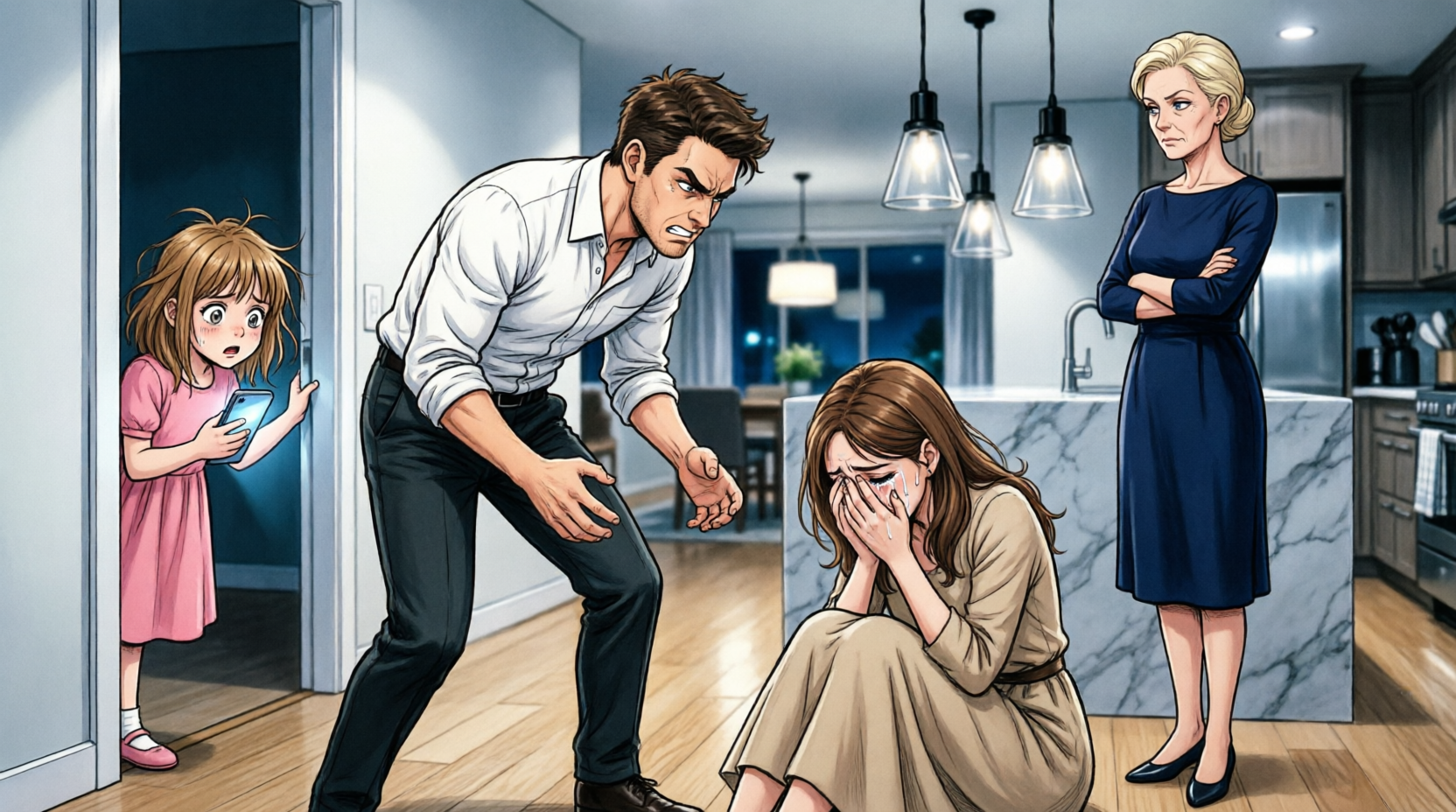
The Old Ledger
For a long moment after Attorney Bell said those words, my father did not move.
Your grandfather didn’t buy into Whitmore Development only to watch them.
He bought in because they had already come after your family once.
The kitchen seemed to shrink around us.
The clock above the stove ticked softly.
The fireproof folder sat open on the table, thick with court orders, medical records, bank alerts, screenshots, and the sentence I had written only hours earlier.
Emma is not a door.
My father held the phone to his ear, but his eyes had gone somewhere else.
Somewhere thirty years behind us.
“Bell,” he said quietly.
“Send it.”
A minute later, his email chimed.
He opened the attachment on his tablet.
The restricted ledger filled the screen.
Old scans.
Yellowed paper.
Typed columns.
Handwritten notes.
Names I did not know.
Amounts I did not understand.
And then one line made my father sit down hard.
CALLAHAN FAMILY CONTAINMENT.
My maiden name.
My family.
My blood.
My father’s hand trembled once before he clenched it into a fist.
“What does that mean?” I whispered.
He did not answer immediately.
He scrolled.
Alan Pierce.
Tax audit pressure.
Bank loan acceleration.
Private surveillance.
Community reputation disruption.
Then another line.
THOMAS CALLAHAN — MONITOR.
My grandfather.
The man whose photograph sat in my father’s study.
The man I remembered only through family stories, pipe smoke, old sweaters, and the way my father still spoke of him as if his approval mattered.
I looked at my father.
“Dad.”
He swallowed.
“Your grandfather found out what they did to Pierce.”
“The partner?”
“Yes.”
“And Whitmore came after him too?”
He nodded slowly.
“Not directly at first.”
There it was.
The Whitmore method.
Never directly at first.
First concern.
Then documents.
Then pressure.
Then public doubt.
My father’s voice roughened.
“They audited his business.
Called his loans.
Spread rumors that he had mismanaged client money.
Your grandmother started getting phone calls late at night.”
My stomach tightened.
“You knew?”
“I was seventeen.”
The age changed everything.
My father had not inherited caution as personality.
He had learned it as a teenager listening to phones ring in the dark.
He continued:
“One night, your grandmother’s car brakes failed coming down Route 9.”
I stopped breathing.
“What?”
“She survived.”
His eyes stayed on the tablet.
“But barely.”
The room went cold.
My father had told me my grandmother died young from complications after an accident.
He had never told me the accident might not have been one.
“Was it them?”
His mouth tightened.
“Your grandfather believed it was.”
“And the police?”
“Found nothing.”
Of course.
Nothing was the easiest thing powerful people arranged.
He scrolled again.
Another entry appeared.
BRAKE INCIDENT — DENY CONTACT.
My hand went to my mouth.
My father closed his eyes.
For the first time in my life, he looked like a son.
Not a protector.
Not a father.
A son who had just seen the shape of his mother’s suffering typed into someone else’s ledger like an invoice.
“They knew,” he whispered.
“They wrote it down.”
I wanted to reach for him, but my own body felt frozen.
The Whitmores had not begun with David.
They had not begun with Margaret’s pearls or the forged signature or the kitchen floor.
They had been practicing for generations.
Against Alan Pierce.
Against my grandfather.
Against my grandmother.
Against Nora Whitmore.
Against Claire.
Against me.
And then against Emma.
The ledger revealed a family business model built from fear and paperwork.
Private investigators.
Friendly tax consultants.
Reputation pressure.
Medical language.
Custody leverage.
Loan manipulation.
Shareholder intimidation.
Every generation had updated the tools.
But the purpose remained the same:
control the person before they can control the story.
Attorney Bell’s voice came through the phone.
“Thomas, are you there?”
My father inhaled slowly.
“Yes.”
“There is more.”
“Of course there is,” I whispered.
Bell continued:
“The ledger indicates your father bought the seventeen percent after the brake incident.”
My father looked up.
“What?”
“The purchase was not only defensive.
It was part of a settlement structure.”
“A settlement?”
“Yes.
It appears Whitmore Development quietly allowed the purchase through a third-party holding arrangement to avoid public litigation after your father threatened to expose the harassment.”
My father laughed once.
Heartbroken.
“So he bought the right to watch them with their own fear.”
“Essentially, yes.”
That sounded like my grandfather.
The kind of man who did not win loudly.
The kind who built locks.
The kind who taught my father to build folders.
And my father taught me.
The file on my table was not paranoia.
It was inheritance.
Not money.
Memory.
Bell said:
“The business court monitor is expanding review into historical misconduct tied to minority shareholders and related family trusts.”
My father’s voice sharpened.
“And Margaret?”
“Her consulting company appears to have inherited old pressure files from Whitmore family archives.”
I looked toward the hallway where Emma slept.
“She used an old playbook.”
“Yes,” Bell said.
“And she personalized it.”
My father looked at me.
No one needed to explain.
Fragile.
Unstable.
Delicate.
Emotional.
The language used against women who became financially inconvenient.
By morning, the old ledger had become part of three investigations.
Business court.
Criminal fraud.
And a historical review of Whitmore Development shareholder abuse.
The press learned only fragments at first.
Old records.
Asset freezes.
Domestic violence case expands into corporate probe.
Whitmore Development under monitor review.
David remained in custody.
Margaret remained quiet.
That frightened me.
Margaret’s silence was never empty.
It was a room being rearranged.
On Wednesday afternoon, Claire came to my father’s house with Detective Harris.
I almost refused to see her.
Then I remembered Nora Whitmore.
Claire at twenty-two.
The word delicate wrapped around her throat for years.
So I let her sit across from me at the kitchen table.
Not close.
Not forgiven.
Just heard.
She looked at the fireproof folder.
“Your father kept everything.”
“Yes.”
“I wish someone had kept things for me.”
The sentence was soft.
It did not ask for pity.
That made it harder to hate.
I asked:
“What happened to Nora Whitmore?”
Claire’s face changed.
“She was my aunt.”
“I know.”
“She objected when Margaret’s father moved her inherited shares into a male-managed family structure.”
“What happened?”
“She was labeled unstable.
Sent away for rest.”
My skin went cold.
“Sent where?”
“A private clinic in Vermont.”
“For how long?”
“Eight months.”
I closed my eyes.
There it was again.
A woman disagreed about money.
A family made her mind the problem.
Claire continued:
“When she came back, her shares were gone.
She never recovered financially.
Or socially.”
“And Margaret knew.”
Claire looked at me.
“Margaret learned.”
That was worse.
Knowing can remain passive.
Learning becomes method.
Claire wiped one tear quickly, as if ashamed of it.
“She did it to me when I tried to leave the company.
Not a clinic.
Different time.
Different tools.
Doctors.
Trustees.
Frozen accounts.
Family statements.
She said I was delicate until everyone repeated it.”
I looked at her carefully.
“And then you helped her do it to me.”
Claire nodded.
No defense.
No excuse.
“Yes.”
“Why?”
Her mouth trembled.
“Because when you grow up inside a machine, sometimes the first way you feel safe is by helping it point away from you.”
That answer did not absolve her.
But it explained enough to keep me listening.
She slid a flash drive across the table.
“What is this?”
“The investigator archive.
All of it.
Not just what I gave Detective Harris.”
My father, standing behind me, stiffened.
Claire looked at him.
“I copied everything because I was afraid Margaret would decide I was the weak link.”
“She did,” I said.
Claire gave a small, bitter smile.
“She always does.”
The archive contained months of surveillance.
Photos of me at the pharmacy.
Me entering therapy.
Me at the bank.
Me walking Emma into preschool.
My father grocery shopping.
Emma holding his hand.
Notes beside each image.
Subject appears fatigued.
Subject relies heavily on father.
Child attached to maternal grandfather.
Household security increased.
Potential evidence of instability.
I wanted to scream.
Instead, I printed them.
Every page.
Every ugly caption.
Every attempt to turn protection into pathology.
Then we found the final folder.
MARGARET PERSONAL.
Inside was a video.
Claire looked confused.
“I haven’t seen that.”
Detective Harris played it on my father’s laptop.
The video showed Margaret in her home office.
Not formal.
Not public.
No scarf.
No courtroom face.
She sat at her desk speaking to someone off camera.
David.
His voice was faint but clear.
“She won’t sign if her father is involved.”
Margaret answered:
“Then remove him from the equation emotionally.”
David said:
“How?”
Margaret sighed.
“Make Sarah choose between being a daughter and being a mother.
Women break when they believe protecting one love betrays another.”
The kitchen went completely silent.
My father’s face went white.
Claire began crying.
I stared at the screen and felt no surprise.
Only recognition.
Because that was what they had tried to do.
Make me feel that needing my father made me less of a mother.
Make me feel that protecting Emma required surrender.
Make me feel that love itself was a trap with only one exit.
Margaret continued on the video:
“If she becomes injured or medically overwhelmed, we do not force anything.
We guide.
We document.
We let the court see what motherhood under stress looks like.”
David’s voice lowered:
“And if she tells people I hurt her?”
Margaret looked directly toward the camera by accident.
Her face was cold.
“Then we remind everyone she has always been fragile.”
Detective Harris stopped the video.
No one spoke for a long time.
Then my father said:
“That is enough.”
And this time, everyone knew he did not mean emotionally.
He meant legally.
By Friday, Margaret Whitmore was no longer silent.
She was indicted.
Not for everything.
Not yet.
But for enough:
conspiracy related to financial fraud,
witness intimidation,
false documentation,
and actions tied to the surveillance and custodial manipulation scheme.
Reporters waited outside her estate when she was escorted out.
She wore black again.
Her hair perfect.
Her face composed.
One reporter shouted:
“Mrs. Whitmore, did you call Sarah fragile to take her money?”
She did not answer.
Another shouted:
“Did you use your granddaughter’s name to hide assets?”……………………………………