She looked toward the cameras then.
For one second, I thought she might speak.
Instead she smiled.
Small.
Cold.
Unapologetic.
That smile told me something important:
Margaret still believed dignity could outlive truth.
Maybe in some circles, it could.
But not in mine anymore.
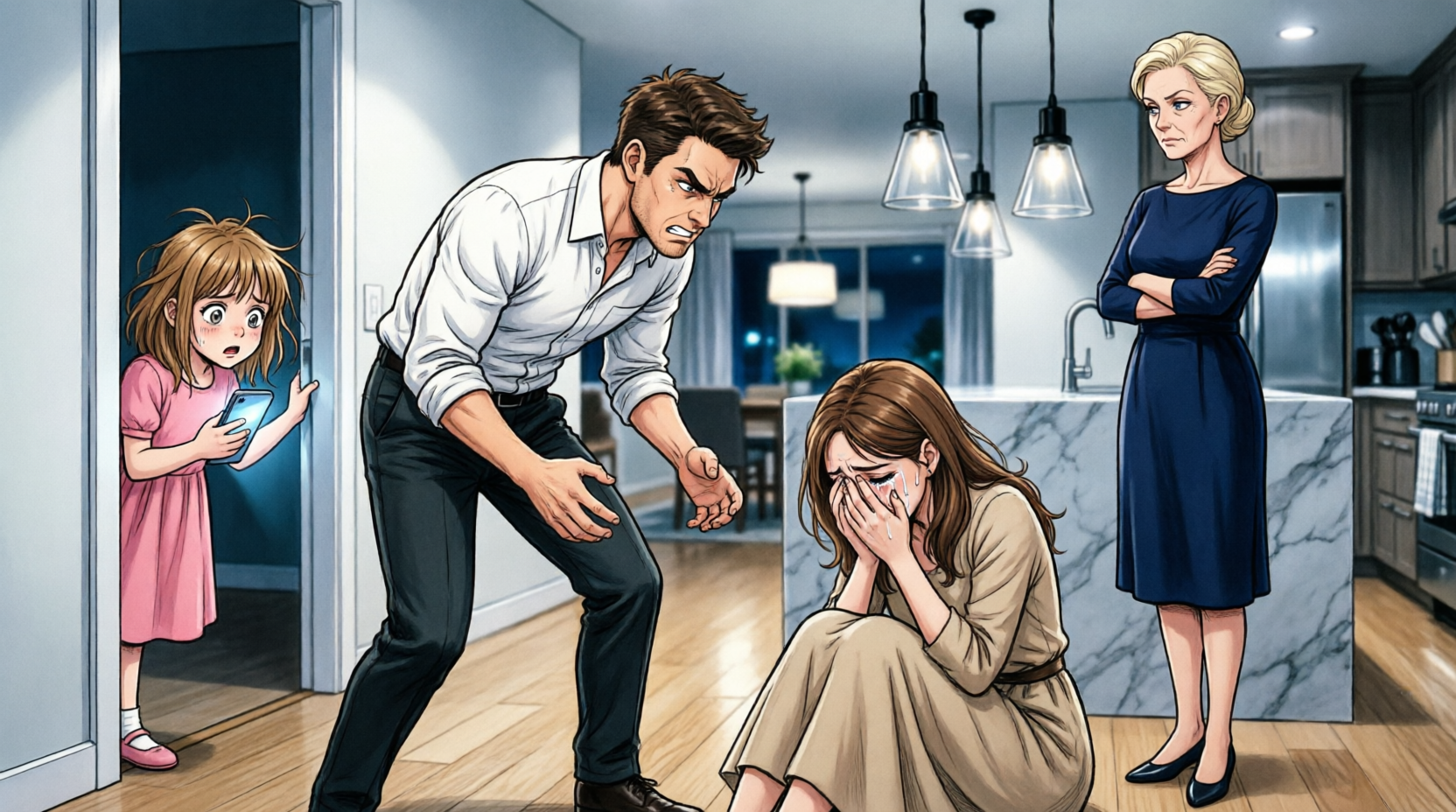
The Door Emma Opened
The legal battles lasted nearly three years.
That is the part nobody wants in stories.
They want the arrest to be the ending.
The confession.
The courtroom gasp.
The villain exposed beneath bright lights.
But real endings come slowly.
In filings.
Depositions.
Therapy appointments.
Bank reviews.
Custody evaluations.
Nights when a child asks the same question again because healing is repetition before it becomes peace.
David eventually pleaded guilty to assault and financial crimes tied to the attempted trust access.
He did not become noble.
He did not become fully honest.
But he became documented.
That mattered.
Margaret fought longer.
Of course she did.
She challenged everything.
Signatures.
Jurisdiction.
Intent.
Context.
Privilege.
Medical wording.
Family tradition.
She tried to make every crime sound like concern.
But the emails held.
The side letter held.
The surveillance invoices held.
Claire’s testimony held.
The video held.
And most of all, Emma’s call held.
Grandpa, Mommy looks like she’s going to die.
That little voice remained the thread no lawyer could cut.
Whitmore Development did not collapse overnight.
Companies rarely do.
But the monitor uncovered enough historical abuse to force resignations, settlements, federal review, and restructuring.
The seventeen percent trust became a lever my grandfather had left behind without ever meeting the great-granddaughter it would help protect.
Alan Pierce’s family received a public acknowledgment.
Nora Whitmore’s records were corrected.
My grandmother’s brake incident was reopened, though too much time had passed for the justice my father deserved.
Still, one line in the historical report mattered:
Evidence suggests the Callahan family was subjected to coordinated intimidation after challenging Whitmore Development practices.
My father read that sentence at the kitchen table.
Then he took off his glasses and cried.
Quietly.
Only once.
But I saw.
I placed my hand over his.
“You were right.”
He shook his head.
“My father was.”
“You both were.”
Emma was seven by then.
Old enough to read simple books.
Old enough to remember some things clearly and other things like shadows.
David had supervised contact for a time, then less, then none after he violated conditions by sending messages through a family acquaintance.
Margaret never saw Emma again.
Claire did, eventually.
Not soon.
Not easily.
Only after therapy.
Only after accountability.
Only after Emma herself, years later, asked about the aunt who helped “tell the truth late.”
That became Claire’s place in our family language.
The one who told the truth late.
Not hero.
Not villain only.
Something harder.
Human.
Emma grew.
The two-finger signal became part of our history, not our daily life.
At first, she used it whenever she felt overwhelmed.
At loud restaurants.
During thunderstorms.
Once at a birthday party when a father yelled too sharply across the room.
Every time, I came.
Every time, I knelt and said:
“I see you.
You are safe.
You did exactly right telling me.”
Eventually, she stopped needing the signal.
Not because she forgot.
Because she learned her voice worked without it.
That was the real victory.
Not court.
Not money.
Not headlines.
A child learning she did not need secret signs to be believed.
My leg healed badly at first.
Then better.
I walked with a cane for almost a year.
Sometimes I still felt pain when rain came.
The body remembers weather.
So does the heart.
But pain became information instead of prison.
On the third anniversary of the night Emma called my father, I opened the fireproof folder again.
It was enormous now.
Too full for its original clips.
Inside were the first trust packet, the bank alert, the emergency call transcript, medical records, court orders, corporate findings, custody rulings, historical reports, and one crayon drawing Emma had made at four:
a house with a huge red phone beside it.
Under the picture, in crooked letters, she had written:
GRAPA FONE SAV PEPOL.
Grandpa phone save people.
I laughed until I cried.
My father framed it.
He hung it in the hallway by the front door.
Not as a sad reminder.
As a family coat of arms.
One spring afternoon, years after the court cases ended, Emma and I drove past the old Oak Haven house.
I did not plan to.
A road closure sent us that way.
The mansion looked smaller than I remembered.
Still large.
Still polished.
Still beautiful in that empty way expensive houses can be.
But smaller.
The gate was changed.
The flowerbeds overgrown.
No chandelier visible from outside.
No marble floor.
No Margaret at the counter with wine.
No David saying nobody would come.
Emma looked through the window.
“Is that the house?”
“Yes.”
She was quiet.
Then she said:
“It looks lonely.”
I swallowed.
“It was.”
She reached for my hand.
“Are you sad?”
I thought about it.
About the woman I had been there.
About the fear.
The silence.
The two fingers.
The crack of bone.
The phone call.
My father’s voice.
“No,” I said.
“Not anymore.”
Emma nodded.
“Good.”
We drove on.
That evening, my father made pancakes for dinner.
Still badly.
Still insisting crispy edges were a style.
Emma, now old enough to know better, still pretended to believe him.
After dinner, she asked if she could hear the story again.
Not the whole ugly story.
Her version.
The child-sized truth we had built carefully over years.
So I told her.
I told her that once, Mommy got hurt.
That Emma remembered the safety signal.
That she called Grandpa.
That Grandpa called help.
That doctors fixed Mommy’s leg.
That lawyers and judges helped make rules.
That bad choices had consequences.
That Emma was brave, but never responsible for what adults did.
She listened seriously.
Then asked:
“Was I the hero?”
My father opened his mouth.
I shook my head gently.
Then I looked at her.
“You were a child who told the truth.”
She frowned.
“Is that different?”
“Yes.”
I touched her cheek.
“Heroes in stories have to save everyone.
Children should never have to.
You told the truth, and the grown-ups finally did their job.”
She thought about that.
Then smiled.
“I like that better.”
So did I.
Years later, people would ask me when I knew I was free.
They expected me to say the arrest.
The conviction.
The custody ruling.
The day the money returned.
The day Margaret lost her power.
But freedom came more quietly.
It came one ordinary morning when Emma spilled orange juice across my father’s kitchen table.
The glass tipped.
The juice spread fast.
For one split second, Emma froze.
Old fear flashed across her face.
Then she looked at me and said:
“Oops.
I need a towel.”
No panic.
No trembling.
No apology for existing.
Just a spill.
Just a towel.
Just a child safe enough to make a mess.
That was freedom.
I handed her the towel.
My father winked at her from the stove.
The pancakes burned.
The morning light filled the kitchen.
And nobody was afraid.
The fireproof folder stayed in the hallway cabinet after that.
Not hidden.
Not worshiped.
Just kept.
A reminder that love with records can become protection.
That charm without accountability is danger.
That children hear more than adults think.
That calling someone fragile can be the first step in stealing their voice.
And that sometimes the smallest hand in the house opens the only door out.
David once whispered, “Nobody is coming for you.”
He was wrong.
Emma came.
My father came.
The truth came.
And finally, after years of locked doors, courtrooms, ledgers, and lies, I came for myself.